
Gorilla Youngster Moke Is Leaving the National Zoo. Here’s Why It Matters

April is always an eventful month at the Great Ape House, as we have three western lowland gorilla birthdays to celebrate. Our oldest gorilla, Mandara, turned 44 years old on April 5. Our silverback, Baraka, turned 34 years old on April 11. Last but not least, our rambunctious youngster Moke turned 8 on April 15. We threw a “garden party” for the three of them, complete with a festive fruitsicle cake, the morning of Baraka’s birthday.
For the primate team, the celebration was bittersweet. Later this spring, we will bid farewell to Moke as he takes the next step towards growing up. He will be moving to Franklin Park Zoo in Boston, Massachusetts, following a recommendation from the Species Survival Plan. There, he’ll join a bachelor group with two other young males (called “black backs”).
Luckily, Franklin Park Zoo has a Gorilla Cam, so Moke’s fans in Washington, D.C., and beyond will be able to keep tabs on him. Personally, I am looking forward to watching him roughhouse with some youngsters his age who can match his boundless energy!

Moke explores the gorilla habitat on March 26, 2026. (Roshan Patel/Smithsonian)
As much as we will miss Moke, this is a great move and positive development. In the wild, black backs naturally separate from their natal groups. They find other young males, form bachelor groups and live together until they’re old enough to establish a troop of their own.
Zoos that participate in the Western Lowland Gorilla SSP replicate this, too. In choosing which black backs to put in a bachelor group, SSP scientists look for males that are about the same age and size and that have similar personalities. At this age, they are open to getting to know each other and quickly become playmates.
As they mature, male gorillas may start vying for dominance. Those that have been in a bachelor group and have built bonds with one another tend to work out their disagreements. This builds the skills they will need when they become silverbacks and lead troops of their own. We are many years away from Moke potentially being paired with a female. Males typically receive breeding recommendations around age 20, though some remain in bachelor groups for the remainder of their lives.
Being present for Moke’s birth and first breaths was a monumental experience—one I will never forget. At the time, Calaya was a first-time mother. Just like humans, gorillas have different parenting styles. Calaya allowed both Moke and his 2-year-old sister, Zahra, a lot of freedom from a very young age. Rather than keeping them on her back at all times, she would place them on the ground and allow them to toddle away. At the same time, she can be impatient and likes things done her way. I see a lot of that personality trait in Moke, in particular.
During positive reinforcement training sessions, we have to go at Moke’s speed—which is very fast! Moke has a short attention span and tends to rush through behaviors in order to get his favorite treat—peanuts—as his reward.
When Moke was just a few months shy of turning 2 years old, he was already learning medical behaviors! In this video, primate keeper Erin Stromberg places a heart rate monitor on young Moke's finger to obtain his heart rate.
Still, that hasn’t stopped him from mastering advanced medical behaviors, including presenting body parts on keepers’ cues, offering his ear for temperature checks, presenting his hip or arm for vaccinations, sitting still for EKG monitoring and more. Even from a young age, Moke picked up these behaviors quickly. He is always excited to train with us, though, like Calaya, he can be a little impatient at times.

Baraka. (Skip Brown/Smithsonian)
Because of his free and independent upbringing, Moke is no stranger to testing boundaries. This is especially true with his dad, Baraka, who is a patient and tolerant silverback. He allows Moke to be a kid and get away with many antics, but he will certainly step in and discipline his son when need be. It doesn’t happen often, but when Baraka gives Moke a stern look, briefly chases him or stands over him, he makes it clear that it’s time to cut it out!

Western lowland gorilla Mandara. (Roshan Patel/Smithsonian)
Of all the gorillas, Moke seems to push Mandara’s buttons the most. Mandara proved to be an exceptional mother to all six of her offspring, and even served as a foster mother to Baraka when he was an infant. Whereas Calaya’s parenting style is more laid-back, Mandara’s is more rigid. She is not shy about keeping Moke in line and will chase after him and bark to discipline him. Most days, she prefers to just lay low and stay away from him.

Kibibi. (Melba Brown/Smithsonian)
Mandara’s daughter, Kibibi, was Moke’s best bud when he was little. She still is a great playmate to both him and Zahra today, though she is trying to find her role in the group now that she is more mature.

Zahra. (Skip Brown/Smithsonian)
Moke’s number one playmate, though, is his little sister. Even though Zahra is much smaller than Moke, she plays in the same rough-and-tumble style as him. She will throw things, beats her chest and gets a kick out of running up behind the other gorillas and playfully smacking them—Moke's signature move! For a little girl she’s a bit of a bruiser. She really looks up to her big brother. Likewise, he seems to really enjoy doting on his little sister.

Western lowland gorilla Moke enjoys some breakfast at the Great Ape House. (Roshan Patel/Smithsonian)
Watching Moke grow from a cute and curious infant to an observant, bright and rambunctious black back has been so much fun. Any zoo would be lucky to have Moke, and I am sure that the Franklin Park Zoo staff and visitors will grow to love him just as much as we do! Before he heads off, we hope you will stop by the Great Ape House to see him and wish him well on his next big adventure.
How do keepers tell the western lowland gorillas apart? This introductory guide will help you spot each of the six residents of the troop. Want to visit them in person? Reserve your free Zoo entry pass here. And don’t miss the primate keeper talk at 11:30 a.m. daily!
Related Species:
Continue Exploring
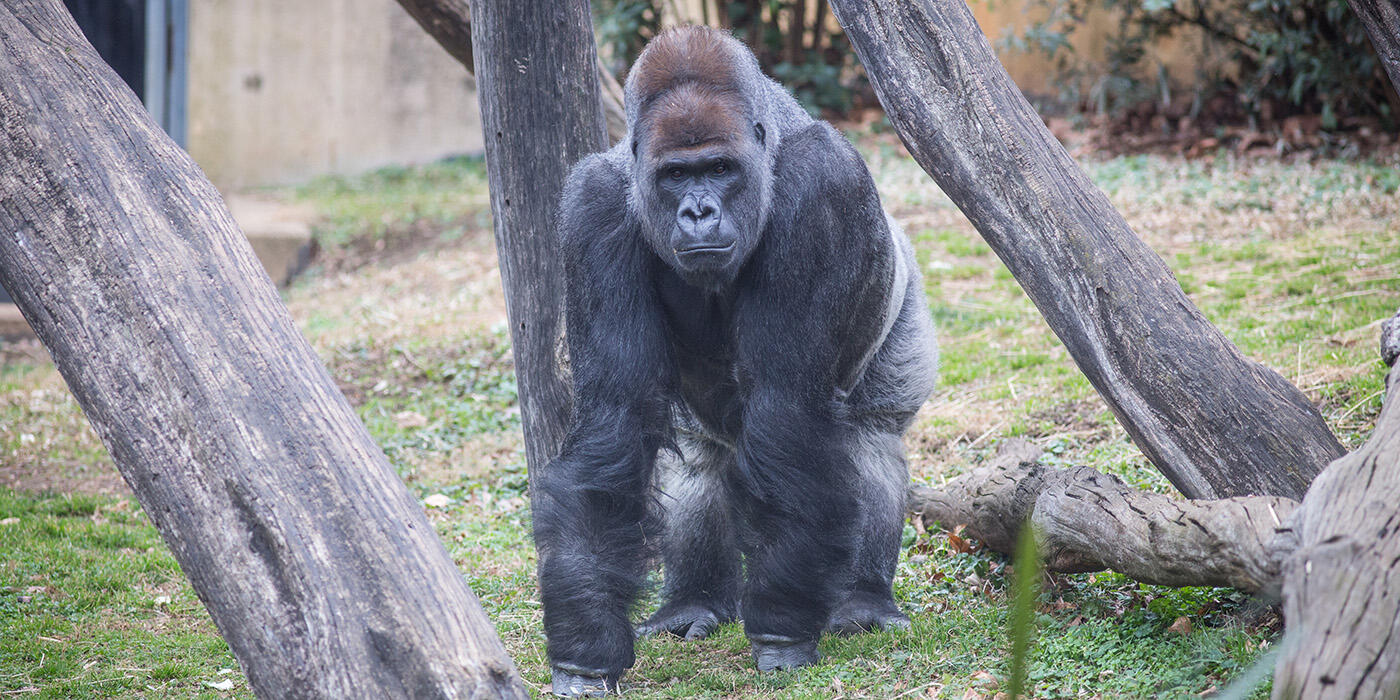
Get to Know the Gorilla Troop Living at the Zoo
Want to tell the western lowland gorillas apart? Before your next visit, read this introductory guide and learn the differences.
Zoo Mourns Bornean Orangutan Kyle
Primate staff are mourning the loss of Kyle, a 28-year-old male Bornean orangutan who died Jan. 10.
Happy World Gorilla Day
This summer has been eventful for our youngest western lowland gorilla, Zahra, who will be 16 months old on Sept. 27. Read primate keeper Francesca Bozzo's update!