

How Do Zookeepers Know When It’s Time to Say Goodbye to an Aging Animal?
The Great Cats Team Reflects on African Lion Shera’s Life and Legacy

African lion Shera has lived at the Smithsonian’s National Zoo and Conservation Biology Institute’s Washington, D.C., campus for 19 years. Born at a private reserve in South Africa in November 2004, she and her late sister Nababiep (“Naba” for short) arrived at the Great Cats exhibit as youngsters in October 2006. They were accompanied by a young male, Luke, with whom they had a recommendation to breed.
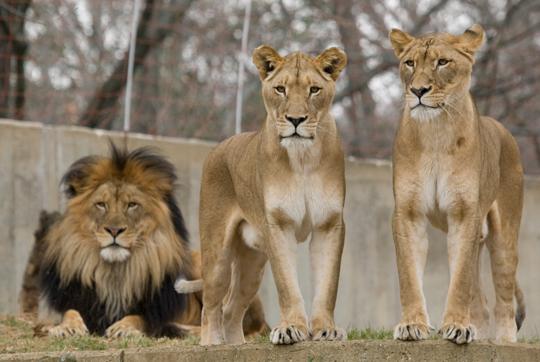
African lions Luke, Nababiep and Shera. (Mehgan Murphy/Smithsonian)
Shera took on many roles over her lifetime: a protective sister to Naba, a flirty and bossy mate to Luke, a doting mother to her eight cubs and a terrific aunt to her five niblings (nieces and nephews). Zoo visitors have been able to witness all these moments, and more. She’s earned her place as a “matriarch” in the Zoo, and as an ambassador for her species.
Now, we’re coming to the end of her beautiful journey.

African lion Shera explores the Great Cats exhibit's outdoor enclosure on May 1, 2026. (Brett Kuxhausen/Smithsonian)
Shera is 21 years old—one of the two oldest living lions in Association of Zoos and Aquariums (AZA)-accredited zoos. In her advanced age, Shera has slowed down considerably, and the severity of her mobility issues has prompted our animal care team to make a very difficult but necessary decision. We are planning to say goodbye to Shera in early May.
The decision to euthanize an animal is never taken lightly and never conducted independently. Multiple teams—including the animal husbandry team and veterinary team—work together to assess the animal’s quality of life. Shera has been closely monitored for years, with recent attention focused on her mobility and overall demeanor.

Great Cats keeper Charlie Shaw places medications into African lion Shera's diet of beef chunks. (Brett Kuxhausen/Smithsonian)
Shera’s long life can be accredited to the excellent care she has received. For many years, she has voluntarily participated in husbandry and medical training, including voluntary injections and blood draws. As noted in our last update on Shera’s care, these behaviors allow our veterinarians to assess Shera’s health and prescribe appropriate medications.
Keepers and veterinarians have been quite successful in managing some of Shera’s medical conditions, including liver and kidney issues that are common in elderly lions. Like many aging animals, Shera has osteoarthritis, a degenerative disease affecting joint cartilage and the underlying bone with associated pain and stiffness.

Great Cats keeper Charlie Shaw feeds African lion Shera a beef chunk containing her medications. (Brett Kuxhausen/Smithsonian)
Although her arthritis is pretty severe, we are able to keep her pain levels low. We assess her comfort, in part, based on how much she willingly moves around her indoor and outdoor habitats. To move between and around these spaces, she has to use stairs, boulders and other lifts. In recent weeks, she has become less sure-footed in navigating her enclosures, calling into question her ability to safely move around her living space.

African lion Shera in her outdoor habitat at the Great Cats exhibit on May 1, 2026. (Brett Kuxhausen/Smithsonian)
Although Shera is a very tough lion, her body is no longer able to keep up. Even though she isn’t feeling much pain, we know that she is going to continue to deteriorate. We are fortunate to be able to plan Shera’s end of life thoughtfully before she experiences debilitating pain, becomes unable to move between exhibit spaces or has trouble enjoying life. We want to say goodbye to our friend and matriarch with the care and dignity she deserves.

African lion sisters Naba and Shera and their cubs. (Connor Mallon/Smithsonian)
It’s been an honor to care for Shera throughout her life, but especially in these last few golden years. We’ve all enjoyed spoiling her every day and doing whatever works best for her as she ages.
It’s difficult to imagine the Zoo without Shera, and her presence will be missed for a long time—just as we still miss Luke and Naba. All three leave behind an excellent legacy, having contributed 13 cubs to their species’ survival. Today, the trio have almost 50 descendants in zoos across the United States! Two of Shera and Luke’s sons, Shaka and Jumbe, can be seen at the Great Cats exhibit.

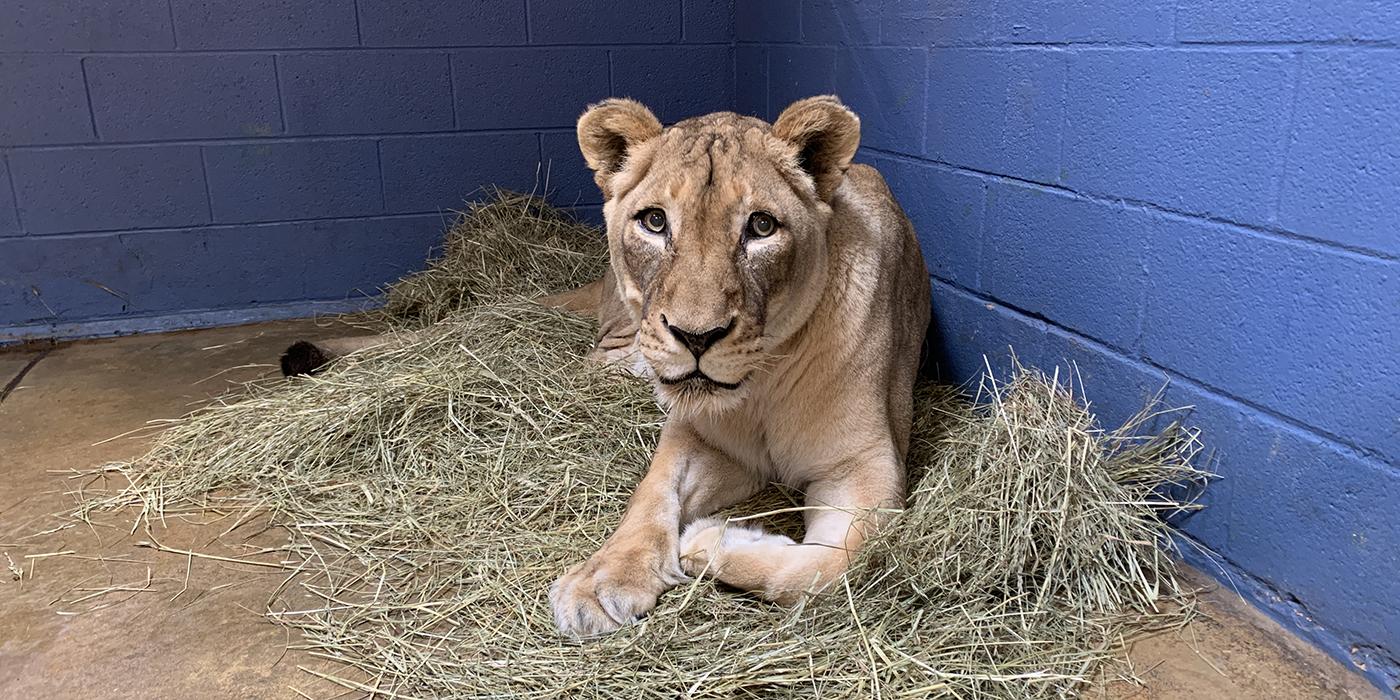
African lion Shera rests on a bed of hay in her indoor enclosure at the Great Cats exhibit. (Leigh Pitsko/Smithsonian)
Over the years, our lion pride—with Shera as the “Queen Bee”—gained a robust fanbase. We hope that all who were lucky enough to meet Shera are able to see her one last time and say goodbye, knowing that Zoo staff are doing the same. Shera will be fondly remembered by staff for her indomitable spirit, independent attitude, intelligence and love of food.
Want to visit the lions in person? Reserve your free Zoo entry pass here. And, watch Shaka and Jumbe on the Lion Cam while you’re at home or on the go.
Related Species:
Continue Exploring

African Lion Dies at Smithsonian’s National Zoo ›
Zoo staff are mourning the loss of Shera, a female African lion who was humanely euthanized May 7.
An Update on Shera ›
Recently, our Great Cats team bid farewell to African lion Amahle, who moved to another zoo to breed. Keeper Katy Juliano shares how Amahle's mother, Shera, is adjusting in this update.
Fun Facts About Lions ›
Few animals are as regarded—and feared—as the largest carnivores of the African savannah. But how much do you really know about lions?