
SUIT UP FOR BOO AT THE ZOO!
Our beloved Halloween experience is back Oct. 16–18! Grab your favorite costume and explore an evening of candy, costumes and all-ages fun.
News
Displaying 2401 - 2425 of 2425

Better Late than Never… ›
Practically all of the birds have arrived from their migration and spring is in full swing when the eastern wood-pewee decides to grace us with its presence.
Fiery Gem ›
Those of you who have suffered from "warbler neck" may well have acquired this common birding malaise while attempting to find our Bird of the Month, high in the top of a spruce or hemlock tree. But as patient birders know, that pain in the neck can certainly yield rich rewards with even a glimpse...
Alwright, I Finally Got a Name ›
Out on the range, in the sage and pine lives the Great Basin's indomitable, spirited Empidonax, the Gray Flycatcher. The subject of much confusion in the late 19th and early 20th Centuries, this enigmatic, little gray bird was hopelessly misunderstood by ornithologists. It looks very similar to the...
Wind-surfers of the Sky ›
Standing on a hilltop in central Panama in October, you might suddenly notice that the midday sky has gone dark. Sure, clouds have rolled in as usual during the rainy season, but this dark cloud takes on a different shape—the shape of thousands of birds! Hawks, on their annual migration are flying...
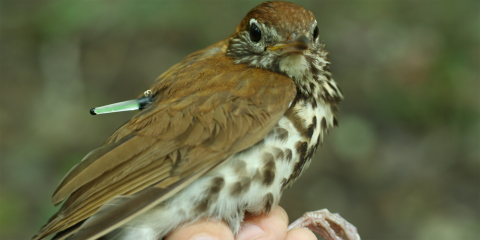
A "Sing"-ular Sensation ›
Over the quiet murmur of a woodland stream and the subtle whisper of breezes through the leaves of tall trees, the rich, liquid song of a Wood Thrush resonates through the morning air.
Oh, Give Me a Home… ›
The largest of the nine swallow species that breed in North America north of Mexico, the purple martin (Progne subis) maintains a geographic range that swoops from the western to the central provinces of Canada, dives across the equator, and glides into the South American continent east of the...

When it Comes to Pesticides, Birds are Sitting Ducks ›
The word pesticide is a catch-all term for chemicals that kill or control anything that humans have deemed to be a pest. A danger inherent to the use of synthetic poisons is that once the chemicals are released into the environment, they may harm unintended victims and have unanticipated effects.
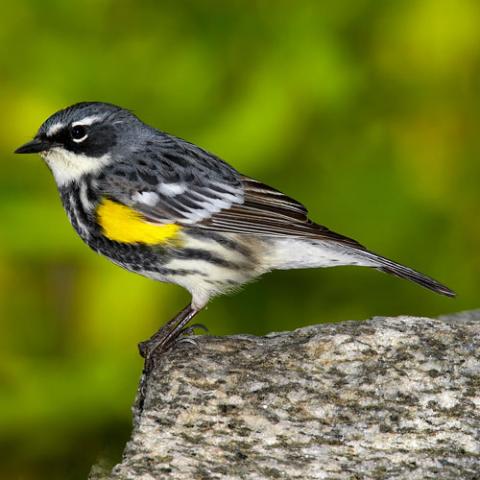
This Bird is Bound to Berry ›
January winds in Nantucket are wicked, a ferocious combination of arctic cold and New England dampness. Downtown streets and rural woods are nearly empty—tourists and birds alike having fled for warmer climes. The island is hospitable only to the large, heavy-coated northerners, like eiders and...
Bird of the Cowboys and Gauchos ›
The appearance and behavior of Swainson's Hawk is much like its close North American relatives; Red-tailed ( Buteo jamaicensis), Broad-winged ( Buteo platypterus), White-tailed ( Buteo albicaudatus), Short-tailed ( Buteo brachyurus), and Ferruginous ( Buteo regalis) Hawks. Although its overall...
The Dancing Shorebird ›
With outstretched wings, a male Buff-breasted Sandpiper tilts its bill upward and does the "shake". Several females scrutinize his dance in their search for the best male to father their young. Nearby, other males dance at their mating posts hoping to attract female attention. Sometimes a renegade...
A Stellar Migrant ›
One constellation most people can recognize is the Big Dipper. Did you know that the two stars farthest from the handle of the Big Dipper point toward the Little Dipper, and that the last star in the handle of the Little Dipper is the North Star? Did you also know that the North Star is the star...
The Moveable Feaster ›
Like a centurion standing guard, the Cedar Waxwing strikes a commanding pose with its natty garb and erect profile. It's very name, Bombycilla , speaks of well-kempt fashion. "Bombux" or "bombukos" comes from the Greek root for "silk". The "cilla" comes from Modern Latin, and (mistakenly by Viellot...
Bird of the Clouds ›
In the cool mist of a waterfall, several black arrows dart back and forth to the recesses behind the falls. Behind this veil of cascading water in the damp moss-laden cliffs, hidden and safe from predators, are nests of the northern subspecies (borealis) of the Black Swift. Restricted to the...
The Prairie Home Companion ›
Rice bird, meadow-wink, skunk blackbird, reed bird, butter bird—these various names for the member of the blackbird family most commonly known as the bobolink reflect the diversity of ways in which humans have looked upon this gregarious songbird. The bobolink has been the source of inspiration for...
The Swamp Songster ›
Bottomland forest on a hot June day. Dark and murky. Quiet except for the buzz of a million mosquitoes and the sounds of occasional splashes and bubbles in the tea-stained water. Suddenly, a flash of golden-yellow darts across the background of muted greens and browns. The bird lands, throws back...
Travel Alert for Migratory Birds: Stopover Sites in Decline ›
Imagine you have been travelling in your car for hours. You are hungry, thirsty, tired, and need to stop soon for a break.
Migrant Landbirds in the Andes ›
When we think about birds migrating to the tropics, we often focus on nearby areas such as Mexico and the Caribbean. However, each fall, millions of songbirds migrate from North America to their wintering areas in the northern Andes of South America.
Prairie Dove ›
When first described by scientists in 1830, this species was named the “Franklin's Rosy Gull” for its rose-colored breast and belly. However, for those of us familiar with the seagulls of the coast, this beautiful and delicate gull seems more aptly named the “Prairie Dove” as dubbed by the early...
Role Reversal ›
From mid-June to late August thousands of birds foraging on brine shrimp and fly larvae dot the large saline and alkaline lakes of the West with whirling, spinning patterns. Many of these are Wilson's Phalaropes who along with their cousins, the Red-necked Phalaropes, congregate in flocks of up to...
The Flying Tiger ›
At top speed, a needle-like bird beak, flared with chestnut and horns of gold and followed by bright black-and-yellow tiger stripes, hurtles towards its target. This is the view that many birds have of the beautiful but aggressive male Cape May Warbler as it chases all comers from a favorite tree...
Have Wings, Will Travel: Avian Adaptations for Migration ›
Flight affords the utmost in mobility and has made possible the evolution of avian migration as a means of exploiting distant food resources and avoiding the physiological stress associated with cold weather.
Western Rivers: Magnets for Migrants ›
Imagine. It is dark and you have been traveling at an altitude of 5,000 feet for eight hours over arid desert, crossing the Mexican border at midnight. You have been flying on your own two wings, fueled by body fat and guided by the celestial map of the constellations. The sun begins to rise, and...
Brown-Headed Cowbirds: From Buffalo Birds to Modern Scourge ›
The brown-headed cowbird ( Molothrus ater) is a brood parasite that lays its eggs in the nests of other birds. These "foster parents", called hosts, usually raise cowbird young at the expense of their own eggs or young.
How Birds Keep our World Safe from the Plagues of Insects ›
Several species of insects including the Western Spruce Budworm, Gypsy Moth, Western Pine Beetle, and the Eastern Spruce Budworm experience population cycles in which populations remain low for several years and are followed by outbreaks (population explosions). During non-outbreak years, these...
Why Migratory Birds are Crazy for Coffee ›
In the midst of altered and shrinking habitat in both North and Latin America, migratory birds have found a sanctuary in the forest-like environment of traditional coffee plantations. In eastern Chiapas, Mexico, Smithsonian Migratory Bird Center biologists found that traditionally-managed coffee and...