News Archive
Filter By
Displaying 1201 - 1225 of 2496 articles.
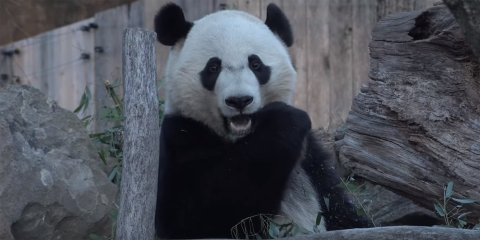
Happy Lunar New Year 2018 from Bei Bei ›
Giant panda Bei Bei celebrated the Lunar New Year with some special Year of the Dog enrichment!
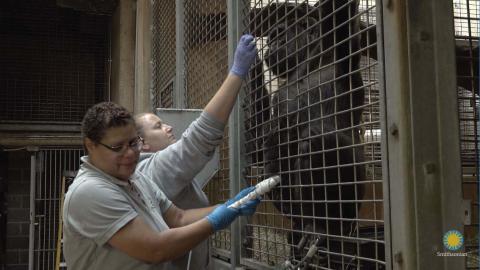
#GorillaStory: Ultrasound Training with Calaya ›
Primate keeper Melba Brown trained the Zoo’s pregnant western lowland gorilla, Calaya, to participate in ultrasounds.
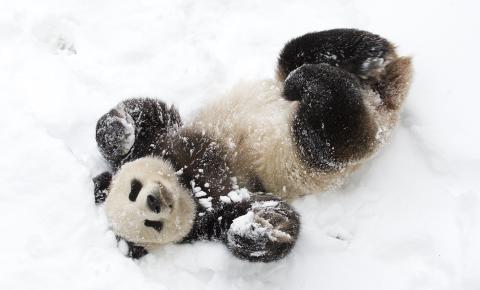
Winter Olympics, Animal-style! ›
Congrats and best wishes from our wild and furry team to Team USA at the 2018 Winter Olympics in PyeongChang, South Korea!
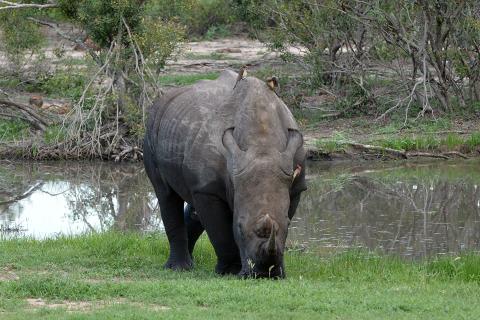
Saving Rhinos Using DNA ›
The future of rhinos could depend on their DNA. Scientists In collaboration with researchers in the United States, South Africa and Russia, Smithsonian Conservation Biology Institute scientist Klaus-Peter Koepfli has helped to pioneer new technology to save some of the most poached animals on our...
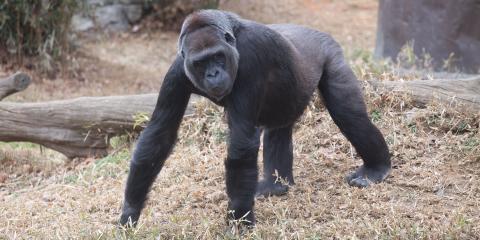
#GorillaStory: Maternal Training with Calaya ›
When it comes to caring for babies at the Smithsonian’s National Zoo, it takes a village. For western lowland gorilla Calaya, her village of support is the great ape animal care team and her primary keeper, Melba Brown. Every day, keepers use positive reinforcement training to teach the gorillas...
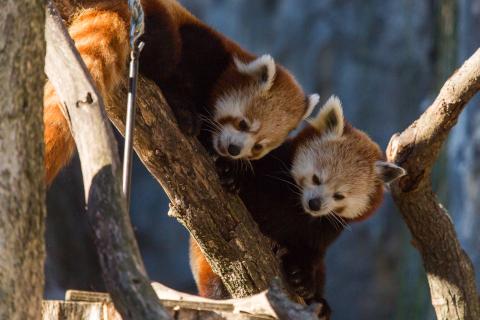
New at the Zoo: Meet Red Pandas Nutmeg and Jackie ›
Just in time for Valentine’s Day, two animals that are red and white and beloved by everyone made their debut on Asia Trail! Meet Nutmeg and her son, Jackie, who came to the Zoo from the Smithsonian Conservation Biology Institute in December. In this Q&A, get the scoop on the Zoo’s new red panda...

Pachyderms by the Pound ›
If Smithsonian Conservation Biology Institute (SCBI) endocrinologist Janine Brown could make a New Year’s resolution on behalf of North America’s elephants, it would be for them to get in shape. To better understand the role diet and exercise play in elephant health, she studied the animals’...

#OrangutanStory Update: A Redd Winter ›
At 16 months old, Bornean orangutan infant Redd is growing stronger and more independent every day. Read all about Redd’s progress and favorite activities in the latest Q&A with animal keeper Erin Stromberg. How is Redd doing? Redd is doing very well! Over the past several months, he has sharpened...

Hartmann’s Mountain Zebra Dies at the Smithsonian Conservation Biology Institute ›
Hoofstock keepers at the Smithsonian Conservation Biology Institute (SCBI) are mourning the loss of Raylan, a 4-year-old male Hartmann’s mountain zebra who was humanely euthanized yesterday.
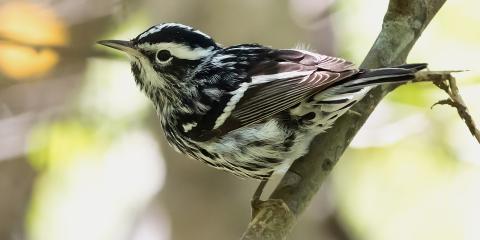
Saving Species One Cup of Coffee at a Time ›
A cup of coffee can do more than provide a wake-up boost. Consumer choices can either help or hinder the survival of migratory bird species, which spend the spring and summer in North America but overwinter in Central and South America’s forests and coffee plantations. Get the scoop on how Bird...

Bringing Back Guam Rails ›
The Smithsonian Conservation Biology Institute (SCBI) is experiencing a Guam rail baby boom. Three chicks, covered in black downy feathers with oversized feet, hatched in January.
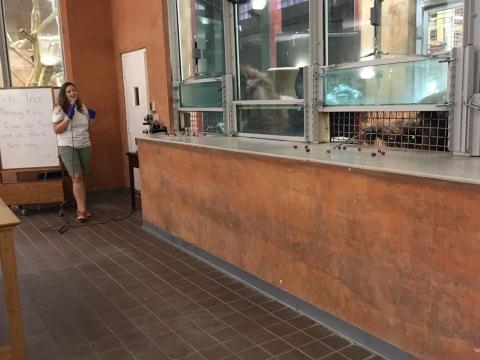
Understanding the Cognitive Abilities of Great Apes ›
With the support of the David Bohnett Foundation, the Smithsonian’s National Zoo is helping address the important question of whether apes can attribute mental states to others.
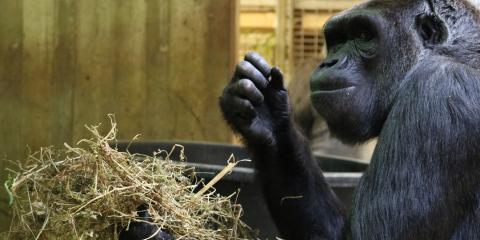
#GorillaStory: Nest Building ›
Everyone likes to have a cozy place to sleep. Western lowland gorillas, however, rarely sleep in the same bed twice. With the exception of young infants, each gorilla in a troop constructs his or her own nest. Gorillas forage where resources are available, so they are often on the move, leaving...
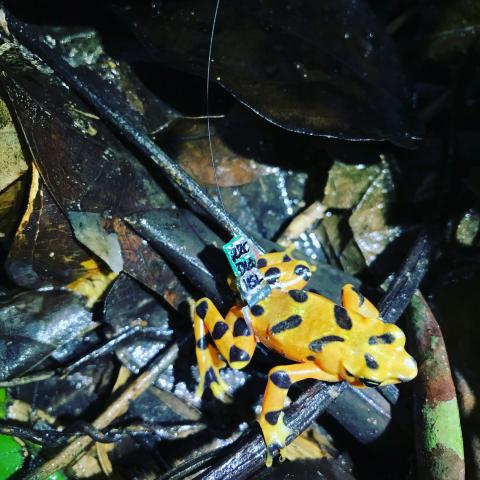
Variable Harlequin Frogs Return to the Wild ›
Through years of research and breeding, Smithsonian scientists have created a thriving variable harlequin frog colony in human care and released approximately 500 healthy frogs in Panama’s Colon province.
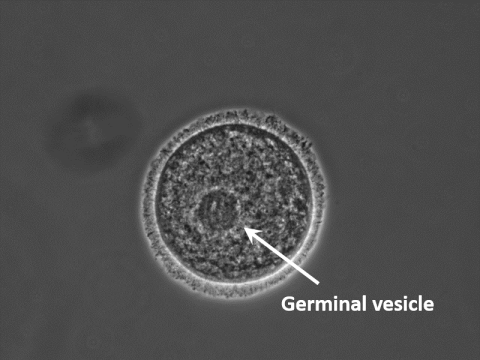
Proteins Provide Clues to Likelihood of Fertilization in Endangered Felines ›
An egg-citing new finding from the Smithsonian Conservation Biology Institute could help bolster the success of assisted reproduction for some of the most endangered species—with implications for human reproduction, too.
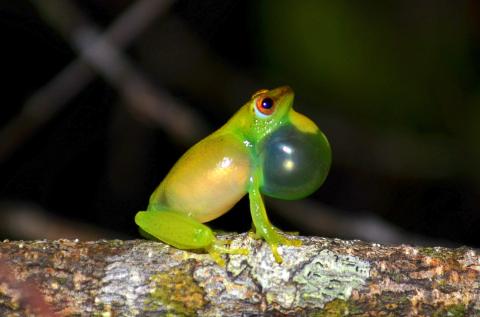
DNA Barcoding Untangles Gabon’s Complex Web of Frog Species ›
When Smithsonian Conservation Biology Institute (SCBI) conservation biologist Jessica Deichmann joined a project to determine how the construction of a road in Gabon’s Moukalaba-Doudou National Park would affect amphibians in the area, she quickly realized something surprising: the frogs are masters...
Smithsonian Releases Endangered Frogs in Panama ›
Once common along highland streams in western Costa Rica and Panama, the variable harlequin frog, Atelopus varius, is endangered throughout its range, decimated by a disease caused by the amphibian chytrid fungus. On Jan. 17, 2018, Smithsonian researchers released approximately 500 frogs at First...

Bringing DNA Metabarcoding to Lebanon's Cedar Forests ›
Lebanon’s majestic cedar forests are the country's national symbol. Yet the famous forests and the animals that live there have declined precipitously as the result of logging, invasive species, human encroachment and hunting. Smithsonian Conservation Biology Institute’s (SCBI) Center for...

What’s in the Zoo’s Toy Box? ›
Elephants playfully roll in sand dunes. Sloth bears lounge in hammocks, woven by keepers. Giant pandas gobble up birthday cakes garnished with their favorite foods. Enriching toys, environments, foods and experiences abound at the Smithsonian’s National Zoo as part of the Animal Enrichment and...
Elderly Two-toed Sloth Dies at Smithsonian's National Zoo ›
Ms. Chips, a two-toed sloth and longtime resident of the Smithsonian’s National Zoo, died overnight Jan. 2. She was 46 years old. The median life expectancy for female two-toed sloths in human care is 15 years old.

New At the Zoo: Amur Tiger Pavel ›
In this Q&A, get the scoop on Pavel from Great Cats curator Craig Saffoe.

A Day in the Life of a Cheetah Conservation Station Keeper ›
Some of the most endangered species on the planet can be found at the Smithsonian’s National Zoo’s Cheetah Conservation Station. Get a glimpse behind-the-scenes at a day in the life of keepers who work with animals, ranging from the graceful dama gazelle to the speedy cheetah, from assistant curator...