News Archive
Filter By
Displaying 1251 - 1275 of 2496 articles.

Smithsonian Conservation Biology Institute Seeking Names for Kiwi Chick ›
The Smithsonian Conservation Biology Institute in Front Royal, Virginia, and the Embassy of New Zealand in the United States are asking animal lovers to help name an endangered female brown kiwi chick.

Tracking Takhi on the Steppe ›
In September, Conservation Ecology Center Postdoctoral Research Fellow John McEvoy traveled to Mongolia to track wolves and to study the movement behavior of reintroduced Przewalski’s horses—the last of the truly wild horse species. The following is an excerpt from his travel log. When I am not...
Smithsonian Scientists Help Pave Path To Large-Scale Coral Reef Restoration ›
As global warming, acidification and disease threaten a healthy future for the world’s coral reefs, conservationists in recent years have turned to the lab to study advanced reproductive methods, especially cryopreservation—or the freezing of coral eggs, sperm and other material—as a tool to produce...
ZooLights, Powered by Pepco, Begins Nov. 24 at the Smithsonian’s National Zoo ›
ZooLights—powered by Pepco—at the Smithsonian’s National Zoo is wilder than ever and a perfect holiday event for everyone in the family. Now in its 11th year, the annual free lights festival twinkles for 36 nights—from Nov. 24 through Jan. 1, 2018 (except Dec. 24, 25 and 31) from 5 p.m. to 9 p.m.
Prehensile-tailed Porcupine Born at the Smithsonian’s National Zoo ›
Small Mammal House keepers at the Smithsonian’s National Zoo welcomed a baby prehensile-tailed porcupine Oct 19.
White-cheeked Gibbon Euthanized at the Smithsonian’s National Zoo ›
Tuyen, a 10-year-old female white-cheeked gibbon at the Smithsonian’s National Zoo, was humanely euthanized Oct. 12, after suffering from progressive neurologic disease and acute seizures.
Male Sloth Bear Arrives at the Smithsonian’s National Zoo ›
The Smithsonian’s National Zoo recently welcomed a new sloth bear into its zoological family. Niko, a 2-year-old male, arrived Oct. 6 from NaturZoo Rheine in Germany and joins 3-year-old female sloth bear Remi at the Zoo’s Asia Trail exhibit.

Monkey Business: 2017 Gala ›
On Sept. 28, 450 party animals gathered for some Monkey Business—the Smithsonian's National Zoo and Conservation Biology Institute’s first-ever gala. Set in the tropical rainforest of Borneo, the evening honored Harrison Ford and Betty White with the James Smithson Bicentennial Medal for their many...
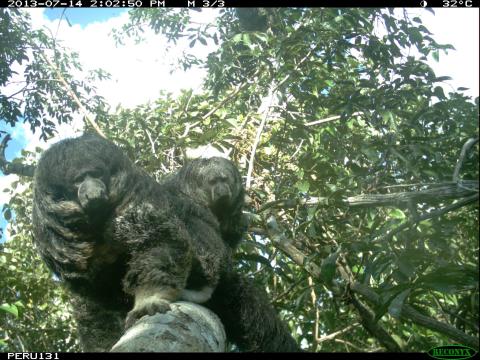
Taking a Swing at Connecting Habitat with Treetop Bridges ›
How do arboreal species in South America—such as the spider monkey and the tamandua—use tree canopies to move from place to place? Smithsonian Conservation Biology Institute biologist Tremaine Gregory scaled the forest to find out. As a member of the Center for Conservation and Sustainability team...
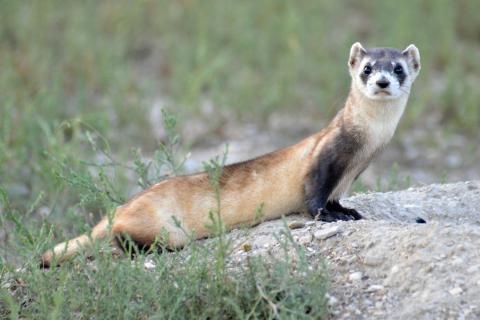
Black-Footed Ferret Update ›
SCBI is part of the Black-footed Ferret Recovery Program, which currently has a genomics workgroup that’s focused on better understanding the species genome and its role in breeding success.
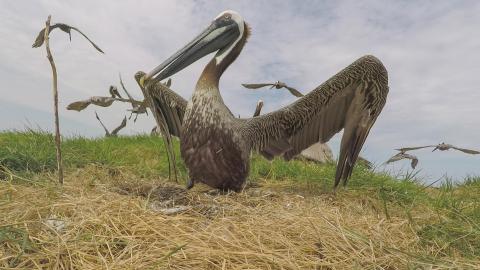
Where Do You Go, Brown Pelican? ›
For the first time ever, the Smithsonian Migratory Bird Center has teamed up with the Maryland Department of Natural Resources to track the migration of brown pelicans. In this Q&A below, research ecologist Autumn-Lynn Harrison talks about the migration.
Smithsonian Scientists Find Deadly Pathogen Not Present in Pet Salamanders in the United States ›
In 2016, the international import of 201 salamander species into the United States was restricted in an effort to prevent the newly discovered deadly salamander fungal disease, Batrachochytrium salamandrivorans (Bsal), from entering the country. In a new study, Smithsonian Conservation Biology...
Red Panda Cub Euthanized at the Smithsonian Conservation Biology Institute ›
We are sad to share that one of red panda Nutmeg’s cubs born June 14 at the Smithsonian Conservation Biology Institute in Front Royal, Virginia, was euthanized Oct. 4. Keepers rushed her to the veterinary hospital after they noticed that she was minimally responsive and had lost weight since her...

Bats in the Lab: Tracking the Path of White-Nose Syndrome ›
These bats have been dead for more than a century, but they are finding a second “life” as a research specimen. It may sound like a spooky science fiction story, but it is actually the work of scientists at the Smithsonian Conservation Biology Institute’s Center for Conservation Genomics and the...
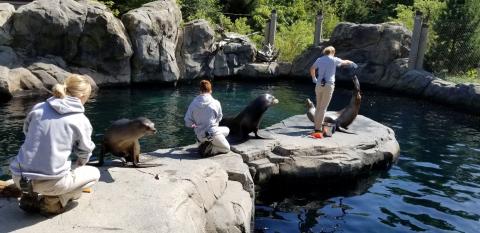
A Day in the Life of an American Trail Keeper ›
A stroll down American Trail brings visitors face-to-face with swimming sea lions, busy beavers and resourceful ravens. What visitors may not see are the dedicated keepers working hard behind the scenes preparing diets, training animals and cleaning habitats. Get a glimpse into a day in the life of...
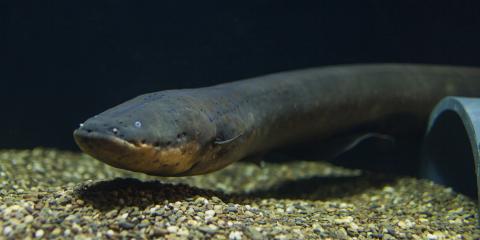
It’s Electric (Fishes)! ›
Video Visitors seeking to inject a jolt of fun into their trip to the Smithsonian’s National Zoo need look no further than Amazonia’s Electric Fishes Demonstration Lab! The exhibit, which opened Oct. 6, features six species of fish that emit powerful charges, pulses and waves in order to navigate...
New Electric Fishes Exhibit Opens at Smithsonian’s National Zoo ›
The Amazonia Exhibit at the Smithsonian’s National Zoo is buzzing with a current from a brand-new Electric Fishes Demonstration Lab, opening Oct. 6 at 10 a.m. The multisensory lab is home to a 5-foot-long electric eel, capable of generating up to 800 volts of electricity, four black ghost knifefish...
Smithsonian Conservation Biology Institute Releases Birds to the Wild ›
Two female Guam rails born at the Smithsonian Conservation Biology Institute in Front Royal, Virginia, were released to the wild in the Commonwealth of the Northern Mariana Islands Sept. 18. This month’s release marks the first time since 1985 that there are more Guam rails in the wild than in human...
Alpaca Dies at Smithsonian's National Zoo ›
The Smithsonian's National Zoo is mourning the loss of 12-year-old alpaca, Ziggy, who died Sept. 23.
Smithsonian Conservation Biology Institute Open to the Public for Conservation Discovery Day ›
The 3,200-acre Smithsonian Conservation Biology Institute (SCBI) in Front Royal, Va.—which is the headquarters for the Smithsonian’s National Zoo’s conservation science initiatives and is normally closed to the public—will open its gates Saturday, Oct. 7 from 9 a.m. to 4 p.m. for Conservation...
Two Dama Gazelle Calves Born at the Smithsonian’s National Zoo ›
The Cheetah Conservation Station at the Smithsonian's National Zoo is celebrating a baby boom of critically endangered dama gazelles. Three calves were born Aug. 30, Sept. 16 and Sept. 18 to mothers Adara, Fahima and Zafirah, respectively.
Giant Panda Mei Xiang Is Not Pregnant ›
The giant panda team at the Smithsonian’s National Zoo and Conservation Biology Institute has determined that Mei Xiang (may-SHONG) will not give birth this year.
Smithsonian Scientists Publish First Book on the Genetic Management of Fragmented Species Populations ›
On Sept. 13, Smithsonian scientists and partners published a groundbreaking new book, "Genetic Management of Fragmented Animal and Plant Populations," which addresses one of today's greatest conservation challenges.