News Archive
Filter By
Displaying 1326 - 1350 of 2496 articles.
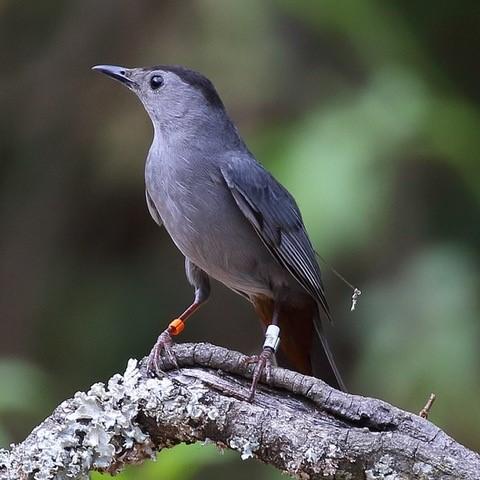
Tracking Catbirds with Conservation Technology ›
Fitted with a GPS device the weight of a paperclip, a gray catbird in the Washington, D.C., area flies south, unaware that the device records its every move. That data is key for conservation biologists, like Brandt Ryder of the Smithsonian Migratory Bird Center, who aim to understand the threats...
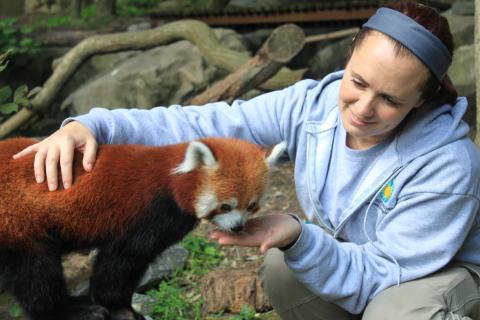
A Day in the Life of an Asia Trail Keeper ›
Training sloth bears, making an otter puzzle feeder and researching red pandas by studying their poop. It’s all in a day’s work for animal keeper Tallie Wiles! Follow her story for a behind-the-scenes glimpse into a day in the life of an Asia Trail keeper. Asia Trail is home to the Smithsonian's...
Scimitar-horned Oryx Humanely Euthanized ›
The Smithsonian Conservation Biology Institute (SCBI) humanely euthanized a 10-year-old female scimitar-horned oryx, named Jenna, on June 18.

Critically Endangered Bourret’s Box Turtles Hatch at the Smithsonian’s National Zoo ›
Keepers at the Smithsonian’s National Zoo are celebrating a conservation success five years in the making: a pair of Bourret’s box turtle hatchlings.
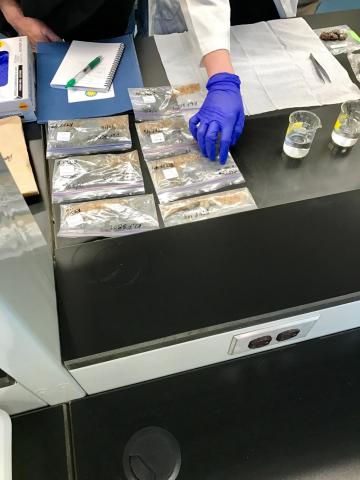
Genomics: The New Frontier ›
On May 10, inquiring minds spent a day with Smithsonian scientists at the fourth annual Conservation Immersion Seminar – Genomics: The New Frontier. The seminar was held at the Zoo’s Rock Creek Science Building where participants learned how genomics can be applied to conservation, saw DNA...
Natural Canopy Bridges Maintain Vital Connections for Arboreal Mammals in Fragmented Forests ›
In the largest camera-trap study ever conducted in a forest canopy, Smithsonian scientists and partners found that tree-dwelling mammals were willing to travel using intentionally preserved natural bridges.

Guarding the Nest ›
It's nesting season. In April, the Reptile Discovery Center's Cuban crocodile Blanche built up a large mound nest. She constructed the nest by kicking up the mulch in the exhibit into a central location.
Harrison Ford and Betty White To Receive Medals From Smithsonian ›
The James Smithson Bicentennial Medal will be presented Sept. 28 to Harrison Ford and Betty White to honor their commitment to wildlife and efforts to create a sustainable planet. The medals will be presented by Smithsonian Secretary David Skorton at the Smithsonian’s National Zoo and Conservation...
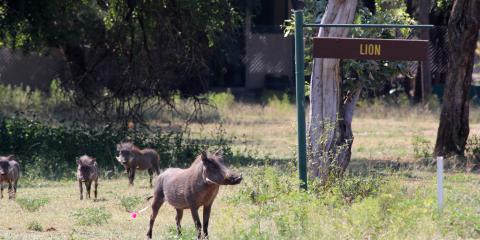
The Case of Warthog Disease ›
The Smithsonian’s National Zoo isn’t home to any warthogs. So why is its chief veterinarian, Don Neiffer, interested in studying the species? Why study warthog health in South Africa? Humans are putting pressure on wildlife populations by expanding into their native habitats, bringing our livestock...

Solving the Perilous Puzzle of Bird Migration ›
Neither wind, nor rain, nor dark of night can stop a songbird’s migration. Crossing the Gulf of Mexico, a popular stopover site, can take a 24 hour non-stop flight. Smithsonian Migratory Bird Center scientist Emily Cohen is studying how they survive against tremendous odds.
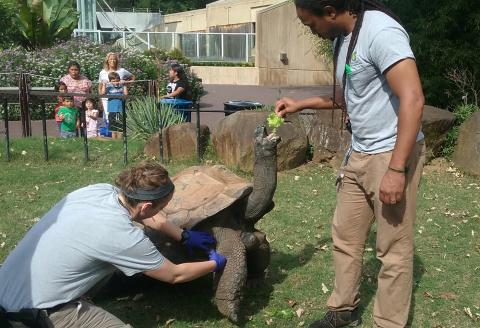
A Day in the Life of a Reptile Discovery Center Keeper ›
Venture into the Reptile Discovery Center and find more than 70 species, including crocodilians, snakes, lizards, turtles, frogs and salamanders, among others. Follow keepers Kyle Miller and Matt Neff as they train, enrich and care for some of the most charismatic (and dangerous) animals at the...
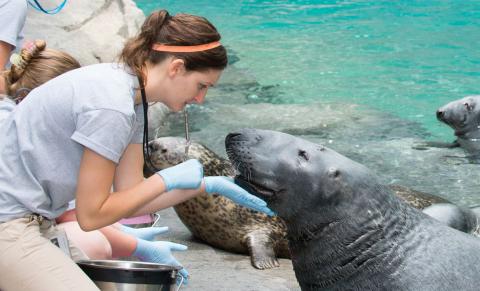
Gray Seal Gets a Visit from the Dentist ›
How do keepers ensure a gray seal’s teeth are healthy? American Trail animal keeper Diana Vogel is training the Zoo’s 26-year-old male gray seal, Gunther, to voluntarily participate in dental radiographs. Why does Gunther need dental radiographs? When we ask our gray seals to open their mouths on...
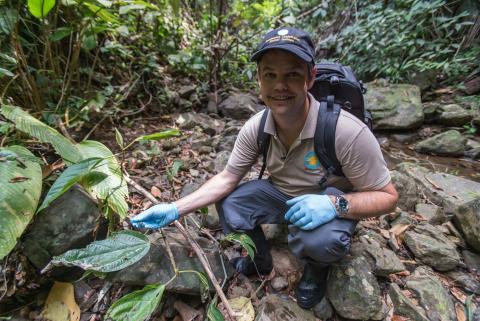
Smithsonian Scientists Release Frogs Wearing Mini Radio Transmitters Into Panamanian Wilderness ›
Ninety Limosa harlequin frogs bred in human care are braving the elements of the wild after Smithsonian scientists sent them out into the Panamanian rainforest as part of their first-ever release trial in May.
Smithsonian's National Zoo and Conservation Biology Institute Scientists Artificially Inseminate Giant Panda Mei Xiang ›
The Smithsonian’s National Zoo and Conservation Biology Institute’s team of reproductive scientists, veterinarians and panda keepers performed two artificial inseminations on female giant panda Mei Xiang.
Desert Tortoise Paternity Assignments Highlight Unexpected Shortcomings of Common Conservation Strategy ›
Four years after conservationists relocated 570 desert tortoises in California from a threatened habitat to a nearby location, the tortoises outwardly appeared to have successfully acclimated. Genetic paternity testing of 92 hatchlings by SCBI geneticists, however, has revealed that the translocated...
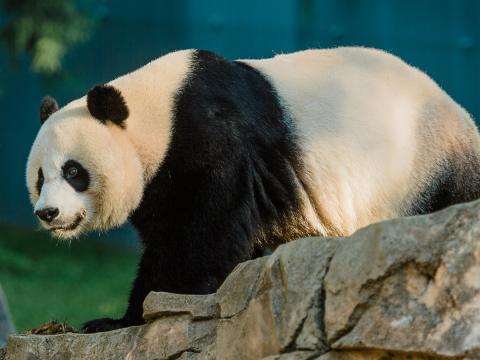
Mei Xiang is Showing Signs of Estrus ›
Mei Xiang, the Zoo’s 18-year-old female giant panda, is showing behavioral and physical signs of estrus.
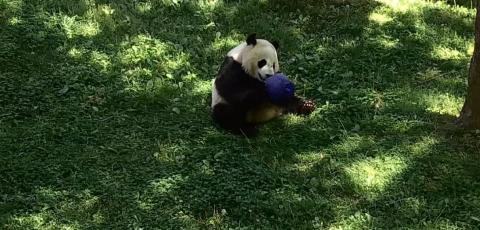
How Bei Bei Has Started His Summer ›
Bei Bei is a bit of a daredevil. Although eating and sleeping are still his favorite pastimes, the giant panda cub also loves to climb trees. Lately, he has been climbing trees in his yard and sliding back down. Giant pandas are excellent climbers, but they are also built to withstand falls.
Myanmar's Extensive Forests are Declining Rapidly Due to Political and Economic Change ›
The loss of intact forest cover in Myanmar has accelerated over the past decade, according to a study by Smithsonian Conservation Biology Institute (SCBI) scientists and partners published May 17 in PLOS ONE.
Baby Boom at the Smithsonian Conservation Biology Institute ›
The Smithsonian Conservation Biology Institute (SCBI) is celebrating the upcoming Endangered Species Day (May 19) with a slew of new births of endangered and vulnerable species. The births have ranged from mammals to birds, and some of the new arrivals will be reintroduced to the wild later this...

Mad Island Spring Migration Expedition Blog 2017 ›
Smithsonian Migratory Bird Center scientists have been banding migrating birds at some of the first resting and refueling habitats for northward migrants that have flown hundreds of miles non-stop across the Gulf of Mexico, including The Nature Conservancy's Clive Runnells Family Mad Island Marsh...
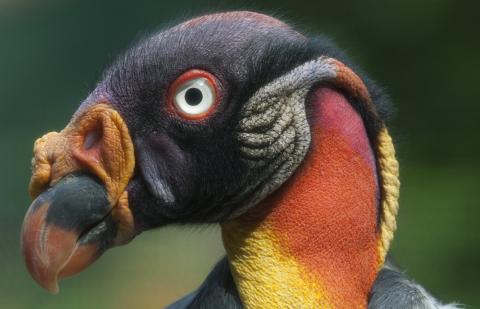
Fun Facts About King Vultures ›
This story appears in the May 2017 issue of National Zoo News. Learn more about king vultures at the Bird House outdoor exhibit!
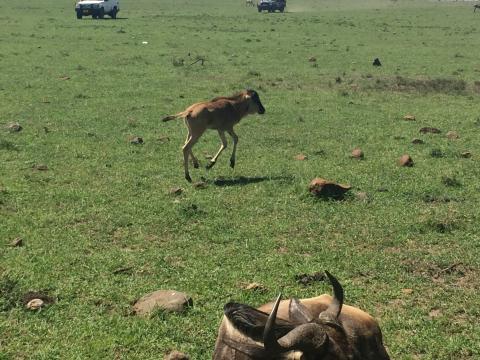
Fantastic Wildebeests and Where to Find Them ›
It’s not easy to be low on the food chain. But white-bearded wildebeests face a threat even greater than lions and leopards. Habitat loss and fragmentation are causing an alarming collapse in their numbers, says Smithsonian Conservation Biology Institute scientist Jared Stabach. In March, he...