
Virtual Field Trips Bring the Smithsonian—and Its Animals—to Preschoolers Everywhere

At the Kids’ Farm inside the Smithsonian’s National Zoo, animal keeper Nikki Maticic cradles a small goat named Betty in her arms. She fields a question: “Betty’s eyes look kind of different. How come?” Without missing a beat, Nikki answers brightly. “That’s an adaptation. It’s something goats have that’s special to them.”
Nikki isn’t speaking to a curious preschooler. She’s live and on camera, being interviewed by a fuzzy pink puppet named Pinky Jackalope, while broadcasting to thousands of classrooms and homes across the country. It’s one of many unique educational moments facilitated by Get a Head Start With the Smithsonian, a live virtual field trip program where educators from across the Smithsonian partner with the National Head Start Association to combine live animal encounters, singing, dancing, and storytelling into high-quality learning experiences for children ages 0-5.
“It’s like Sesame Street with live animals,” said Zoo educator Bethany Wells.
From the Zoo to the Screen
Since launching in 2022, the Smithsonian’s National Zoo and Conservation Biology Institute has produced more than a dozen of these virtual field trip programs. Each one features a mix of live animal segments, pre-recorded content, catchy songs, interactive movement, and friendly banter with puppet host Pinky, who serves as the curious stand-in for young viewers.
And unlike most television shows, this isn't a one-sided delivery of content, said Emily Porter, manager for early childhood and family learning experiences at the Zoo. The programs are filmed live, so the viewers get a chance to chat and interact with the hosts and Smithsonian experts in real time. After the livestream ends, the entire program is archived on the Zoo’s website, available for anyone to watch for free.
“This program makes high-quality STEAM learning available for every child, no matter where they are and no matter what their background is,” said Porter.
While hands-on learning is always best, digital lessons are a great option when in-person interaction may not be possible, explained Porter. That’s especially important for students from inner city neighborhoods, rural communities, Tribal Nations, and U.S. territories, who might not live near a Zoo or a museum.
Because the curriculum is targeted to young children, the team takes great care to make each lesson engaging and relevant to their lives.
“At that age, you’re not just learning facts. You’re learning how to be in the world,” said Porter. “That means we have to think very differently about how we frame content for this age group.”
Sharing the Treasures of the Smithsonian
The animals are usually the stars of the show – which makes sense, since each program is filmed and edited by Zoo staff. But through collaborative partnerships across the Smithsonian’s museums, the animal segments often act as springboards for exploring the institution’s wider collections.
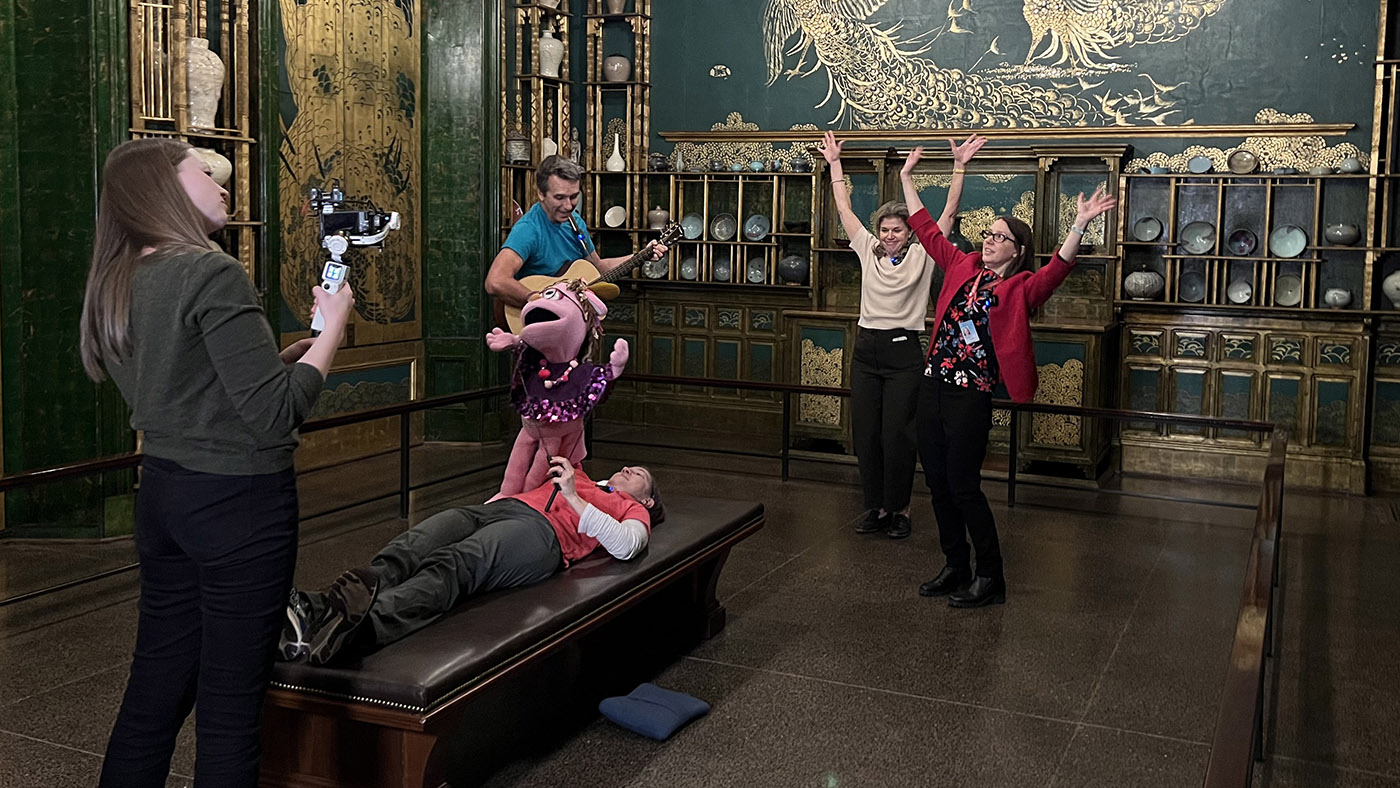
A behind the scenes look at a filming session at the National Museum of Asian Art’s Peacock room. Zoo educators lead the collaborative effort to film segments at more than a dozen Smithsonian museums and research centers. (Emily Porter/Smithsonian)
Each program is built around a core preschool theme — like food, weather, or math — and integrates content from across the Smithsonian’s museums and research centers. A recent program on colors, for example, highlighted a bright green iguana at the Zoo’s Reptile Discovery Center, but it also brought students into the Peacock Room at the National Museum of Asian Art and in the mineral gallery at the National Museum of Natural History.
Bethany Wells, who films, edits, and coordinates each program, said the technical setup is simple and flexible. A laptop, vlogging camera, and a wired internet connection are usually the only tools required to produce a live show.
Watch the next program on Oct. 9: Three Cheers for Trees | Smithsonian's National Zoo and Conservation Biology Institute
Topics are chosen based on what preschool teachers are likely to cover in class and what children are already curious about. Once a theme is chosen, the Zoo’s education team works with animal keepers and museum experts to develop content, align resources and identify the right animals for each program. Before each live program airs, the team produces a “virtual backpack” for teachers — filled with activity sheets, supplemental videos, and how-to guides — that reinforce the lesson.
Of course, the animals have a say in how they want to be included. If a tiger decides she’s not interested in participating (as happened during one pre-recorded segment), the team pivots. Before each film session, keepers take care to slowly introduce Pinky the puppet to the animals during prep sessions, giving them the choice to engage or not, said Porter.
Ensuring the animals are comfortable with Pinky can also lead to some unique animal reactions that visitors would never be able to experience on a regular Zoo day. During one session at the now-under-renovation Africa Trail exhibit, for example, “Lita [the cheetah] was very interested in Pinky,” Porter laughed. “She got up close to Pinky and started purring.”
Growing a National Platform
Like many remote learning programs, Get a Head Start with the Smithsonian can trace its origin to the pandemic. But a timely partnership with the National Head Start Association (NHSA) is what helped the program grow from a temporary offering into something more permanent.
While the Smithsonian provided a talented core of educational specialists and a film-worthy collection, the NHSA provided veteran leadership, a ready-built distance learning network and the national reach to match the Smithsonian’s ambitious goals.
Hosted by educators Rachel Hutchison (who brings Pinky to life) and Nick “The Music Man” Young, the virtual programs quickly became a hit with both children and teachers. In just over three years, Get a Head Start with the Smithsonian has reached more than 317,000 students from all 50 states, U.S. territories, and dozens of Tribal Nations. Last year alone, more than 138,000 children tuned into the program.

The faces behind Get a Head Start with the Smithsonian—from left, Emily Porter, Julia Smith, Rachel Hutchison, Bethany Wells, and Nick Young. In 2025, the team won the 2025 One Smithsonian Education Award for their efforts. (Bethany Wells/Smithsonian)
As the program gained popularity, requests from educators began rolling in — not just for more episodes, but for classroom resources and teaching tools that could be used alongside the lessons. This upcoming school year, the Zoo’s education team is focused on expanding their offerings to include professional development and other resources for early-career educators.
The main objective is always to provide meaningful and inspiring lessons for children, but Zoo educators say they take pride in how much joy the program brings to adults, too.
“It’s been so great to watch [animal keepers] light up as they chat about their animals or dance along with a puppet,” said Wells. “And that enthusiasm comes through on screen. It’s a big part of what makes the experience so special.”
Watch past field trips and get free classroom resources here: Get a Head Start With the Smithsonian
Get a Head Start with the Smithsonian is funded in part by the Jeff Bezos gift to the National Air and Space Museum.
Continue Exploring

How to Keep Classroom Pets Healthy ›
This blog from a Smithsonian intern highlights the joys of classroom pets, and outlines the steps necessary to keep students and animals safe.
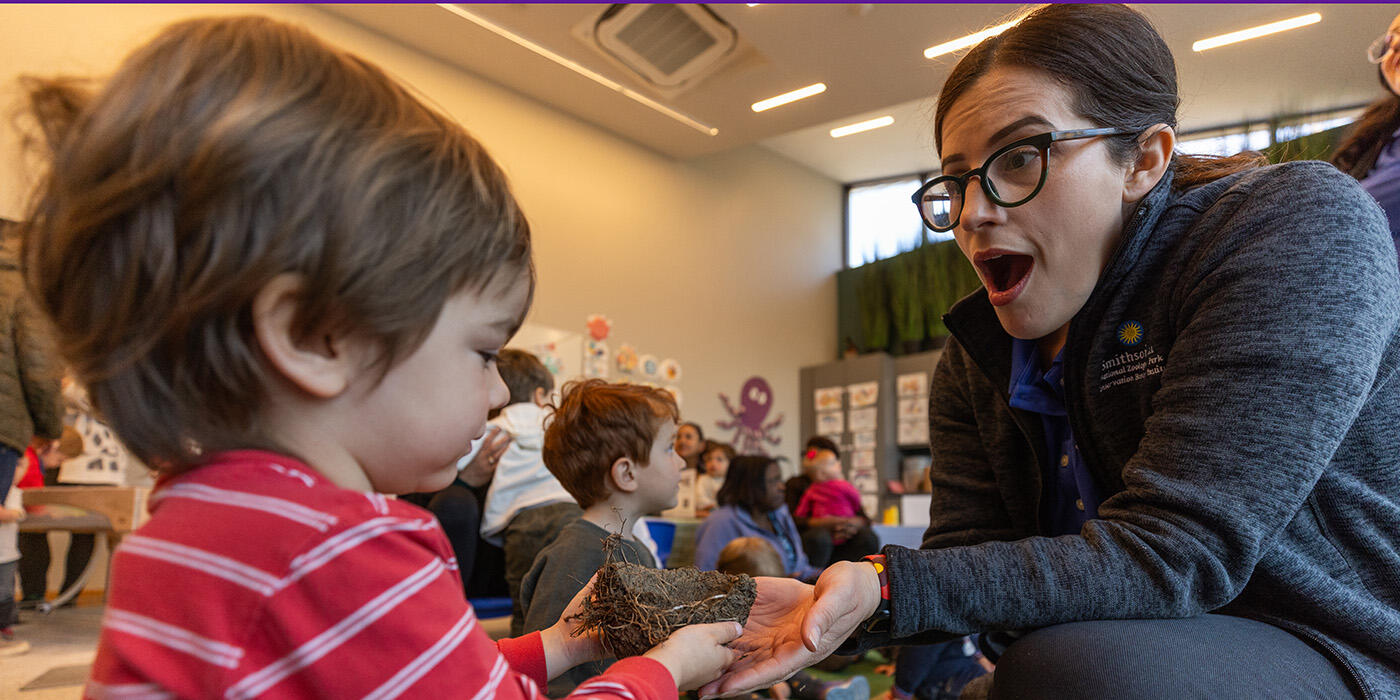
With 'Little Critters', Kids Can Play Hands-On With Nature ›
At the Zoo's Little Critters: Nature Play area, young children and their caregivers can have fun with free, nature-based play activities.
Reach Children Nationwide ›
The Smithsonian’s National Zoo and Conservation Biology Institute (SNZCBI) and National Head Start Association (NHSA) have announced today, March 31, a yearlong partnership to provide free nature- and conservation-based learning...