

Saving Asian Elephants
In nearly every part of their natural range, Asian elephant populations are declining. What is being done to save them?
Asian elephants are endangered and may go extinct. Fewer than 50,000 remain in the wild, and their numbers continue to fall.
At the Smithsonian’s National Zoo and Conservation Biology Institute, we’re committed to conserving Asian elephants and their habitats. By studying these remarkable animals in the wild and in human care, we’re helping build a better future for elephants.
Rewilding Captive Elephants
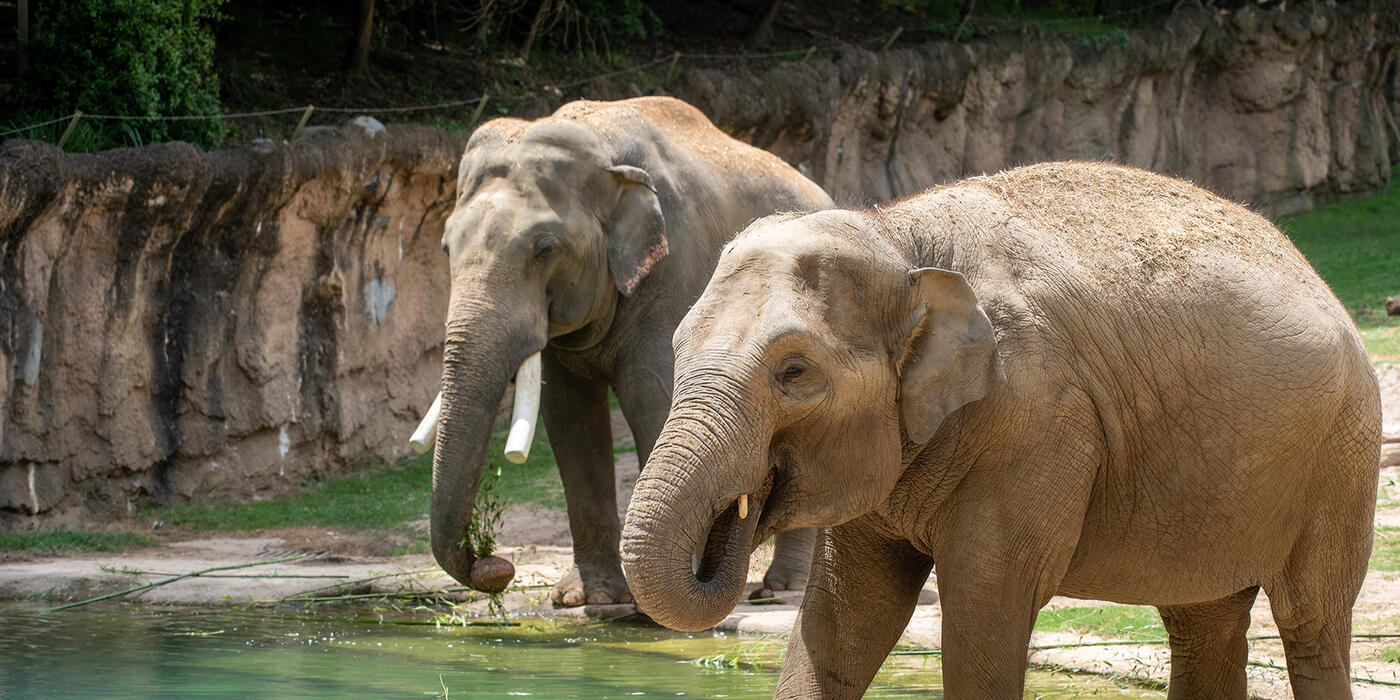
We cooperate with local teams in Laos to reintroduce former work elephants into protected wild habitats.

We study earlier releases to learn how elephants adapt and thrive in their new homes.

We facilitate partnerships to strengthen conservation efforts where elephants and people live side by side.
Unraveling the Secrets of Elephant DNA

We study blood samples to uncover hidden clues about elephant health.

We train local staff on analysis techniques, expanding the network of people protecting elephants.

The practices we promote help zoos and conservationists worldwide care for elephant populations.
Stomping Out Elephant Diseases

Our National Elephant Herpesvirus (EEHV) Laboratory provides critical testing and data on this deadly disease.

We collaborate with global partners to advance EEHV research and treatments.

Our lab diagnoses elephants across North America for hard-to-detect herpes strains.
Tracking Wild Elephants with Modern Technology

We designed and tested tracking collars to safely study elephant movement.

Working with partners we have been using elephant collars across Asia as part of conservation efforts.

By studying elephant movements, we help reduce human-elephant conflict on the ground.
See Them at the Zoo, Help Them in the Wild

1. For more than 100 years, our Zoo has inspired visitors to care about elephants.
2. What we learn in the field directly informs the excellent care our elephants receive here at the Zoo.

3. Virtual and on-site programs bring the Elephant Trails exhibit to classrooms across the country.
Our Research Centers
From our Zoo in Washington, D.C. to Asia’s forests, our research centers bring together world-class science to save Asian elephants — and many other endangered species.
Meet Our Scientists

Peter Leimgruber
Peter leads a team of ecologists to ensure the survival of elephants and other species in the wild.

Melissa Songer
Melissa focuses using advanced geospatial technologies to protect endangered mammals in Asia.

Janine Brown
Janine is one of the world's leading researchers on the elephant endocrine system, uncovering how hormones shape elephant health and reproduction..