
Elephant Cam


Get a glimpse into the complex social lives of Asia's largest land mammals.
The Elephant Cam is live from 7 a.m. to 7 p.m. ET daily. After 7 p.m., the cam feed will switch to a pre-recorded view of the last 12 hours.
About the Elephants
How does a herd of elephants spend its day? From courtship to communication, much about the lives of these gentle giants remains mysterious. That's why Smithsonian scientists are working to understand the secrets of the elephants in our care.
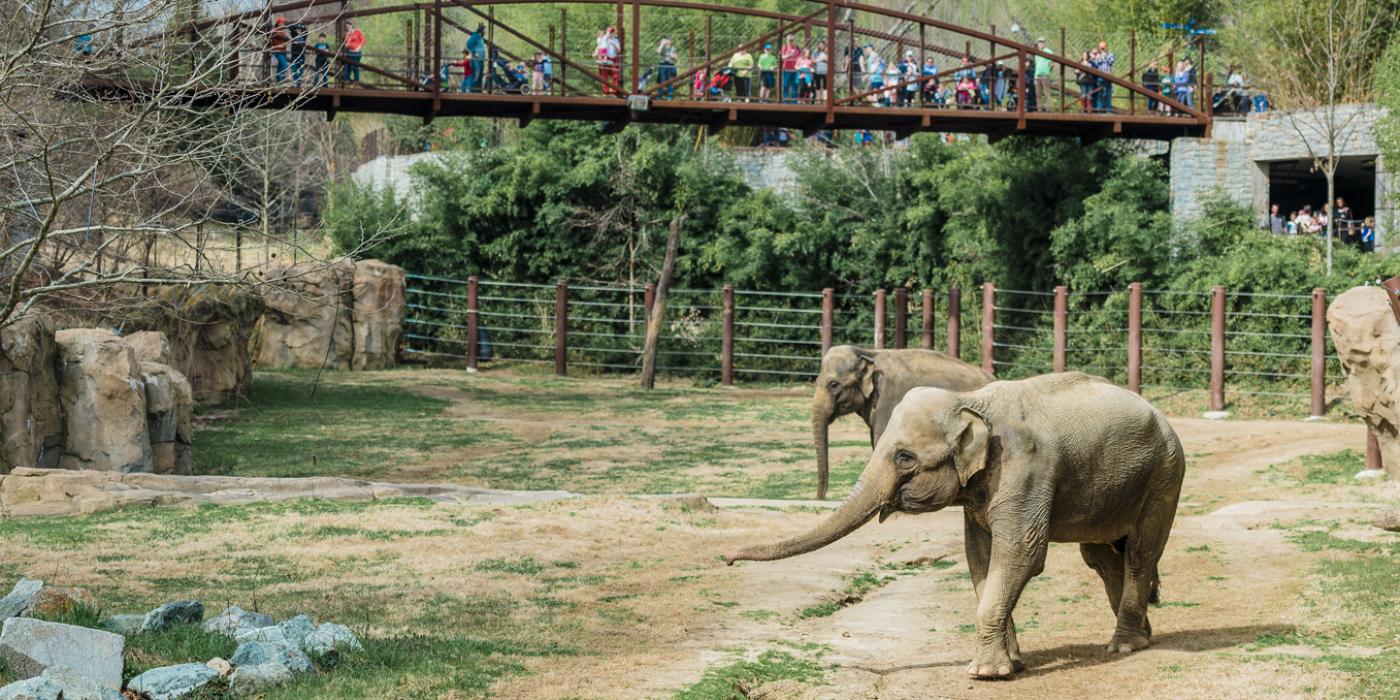
The Asian elephants at the Smithsonian’s National Zoo make their home at Elephant Trails, an expansive natural area that has welcomed millions of visitors since opening in 2013. The habitat contains outdoor walkways, pools, yards, and other activity features designed to keep the elephants healthy — while teaching visitors about the animals' behavior and life cycles.
Seven elephants call Elephant Trails home: females Trong Nhi, Nhi Linh, Bozie, Swarna, Maharani, and male Spike. Nhi Linh gave birth to a female calf named Linh Mai on Feb. 2, 2026.
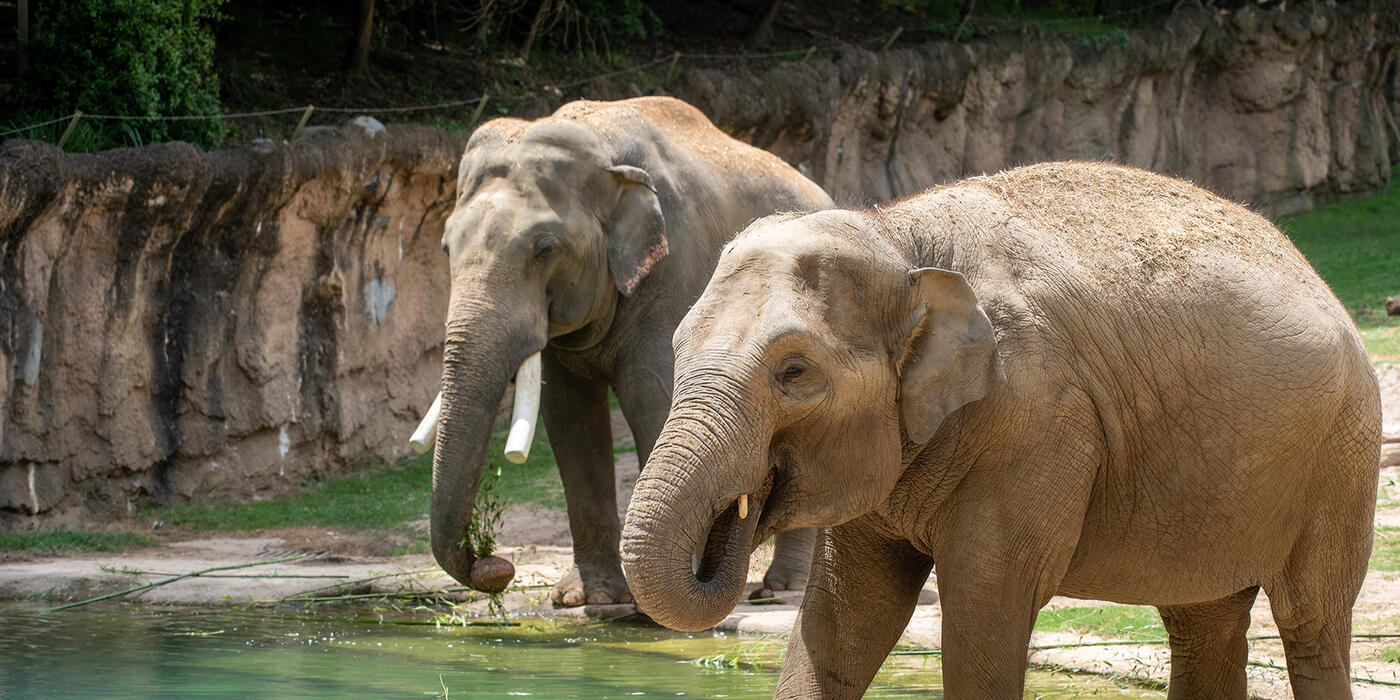
Elephants are highly social, forming close bonds with the members of their herd. You might see them walking in small groups, splashing in a pool, or greeting each other with gentle trunk touches. Keepers develop special relationships with each elephant, providing daily enrichment, training, and veterinary care to support the animals' physical health and emotional well-being.
Read: How to Tell the Elephants Apart
While the Zoo’s Asian elephants thrive in our care, their wild populations are struggling for survival. Smithsonian scientists are partnering with organizations across Asia to provide direct support for elephant conservation programs. As you watch the herd on the Elephant Cam, you’re watching a small piece of our commitment to Asian elephant care — both at the Zoo and in the wild.




About the Cam
The Elephant Cam offers live views of the Zoo’s Elephant Trails, the largest habitat at the Smithsonian’s National Zoo. Cameras show the habitat’s outdoor yards and trails, along with the indoor Elephant Community Center.
In the mornings and afternoons, volunteers help guide the camera system, often following Linh Mai, as she plays with toys, interacts with other elephants, or drinks from her bottle.
The camera streams daily from 7 a.m. to 7 p.m. ET. After 7 p.m., footage is replayed from the previous 12 hours. The camera runs on a 30 minute delay, which allows staff to pause the broadcast in the event that immediate medical care or intervention is required.
What’s Happening on Cam?
The Elephant Cam takes you inside the Zoo’s Elephant Community Center, part of the animals’ indoor habitat. Watch for these common behaviors:
- Eating – Elephants spend much of their day eating. They consume up to 300 pounds of hay, fruits, vegetables, and browse every day. Using their flexible trunks, they can pick up food, strip bark, and grab special treats hidden in enrichment items.
- Ear flapping – Elephants flap their ears to amplify sound, keep themselves cool, swat insects, or show excitement. Can you tell which reason you’re likely seeing?
- Taking a dust bath – On hot days, elephants fling dirt and dust on their bodies. The dust layer acts like a natural sunscreen, protects their skin from insects, and keeps them cool.
- Socializing – Elephants communicate through gentle trunk touches, tail swishes, and low-frequency rumbles. Watch closely to see how they interact.
- Sleeping – Elephants often rest while standing, though they sometimes lie down for the night.
- Pooping – What goes in must come out (up to 16 times a day, in fact).
Looking for even more fun? Download the Animal Cam Bingo Cards and see how many elephant behaviors you can spot. These activities are designed to engage learners of all ages in looking closely and thinking deeply about animals and habitats.

Saving Asian Elephants
The Zoo is leading efforts to save Asia's largest land mammal through cutting-edge science and international collaboration across Asia.
Explore More About Asian Elephants

Asian Elephant Linh Mai Explores the Great Outdoors ›
Baby elephant Linh Mai recently hit a major milestone: she turned two months old!
Stomping Out An Elephant Disease ›
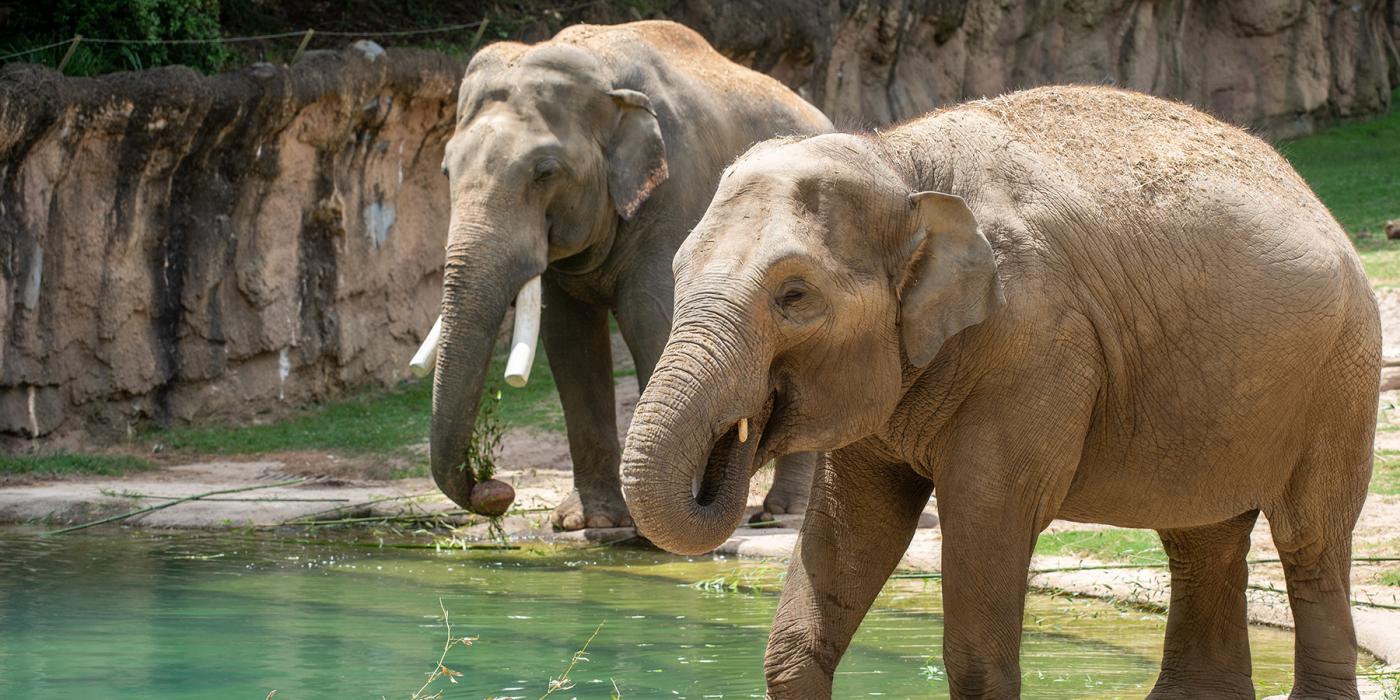
How do you monitor disease in Asian elephants? By building their trust and teaching them to voluntarily participate in medical exams! Get a behind-the-scenes look at what goes into caring for our herd.
How to Care for Asian Elephants ›
Raise your trunks for the world’s largest land mammal: the elephant! Find out how animal keeper, Rebecca Riley, cares for Smithsonian’s National Zoo’s Asian elephant herd.