
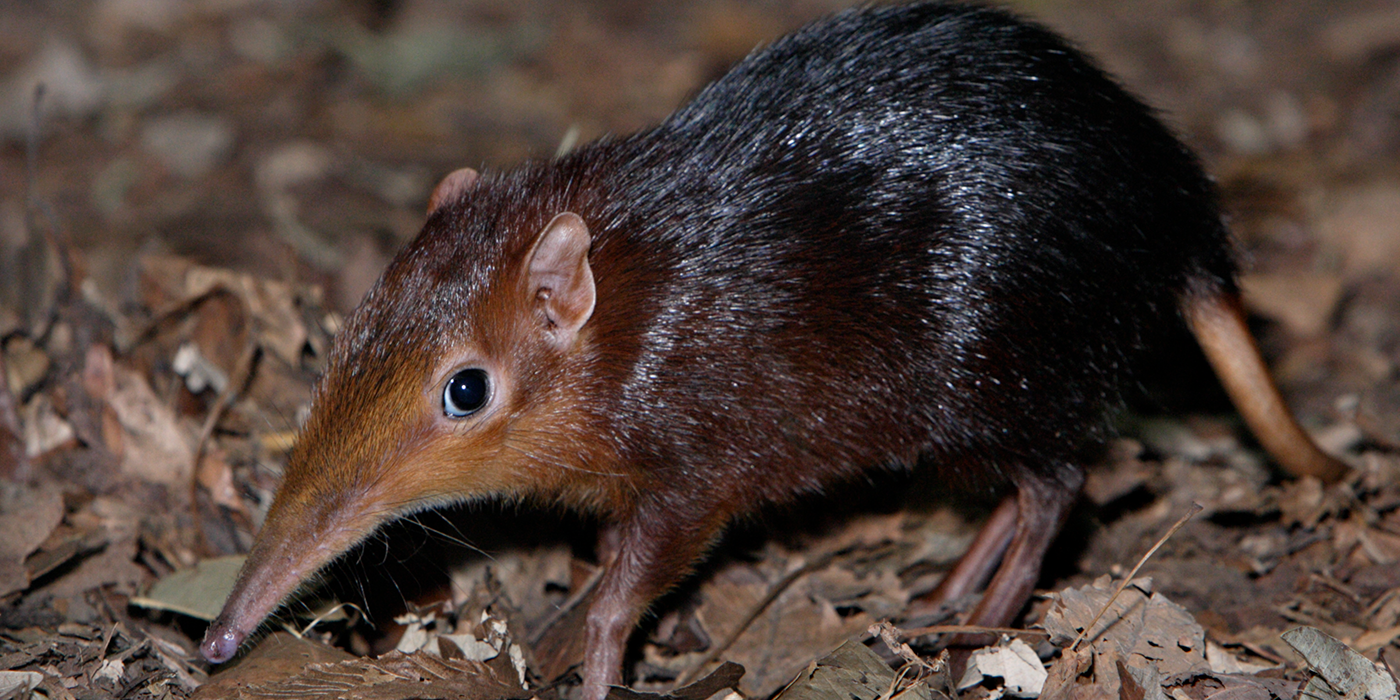
This long-nosed animal darts along the forest floors of east Africa, using its powerful sense of smell to hunt for insects. Scientists argue it should be called the “black and rufous sengi,” as the species is known in local languages, because this animal is not closely related to shrews.
Physical Description
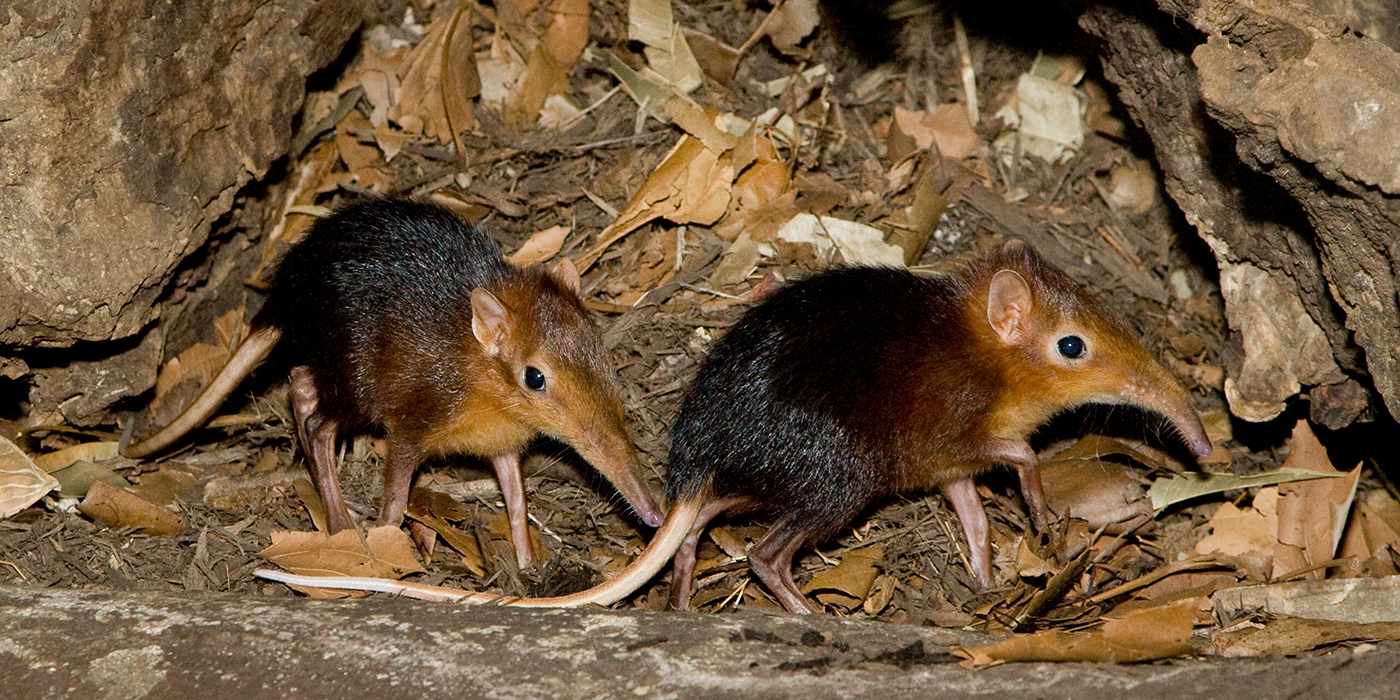
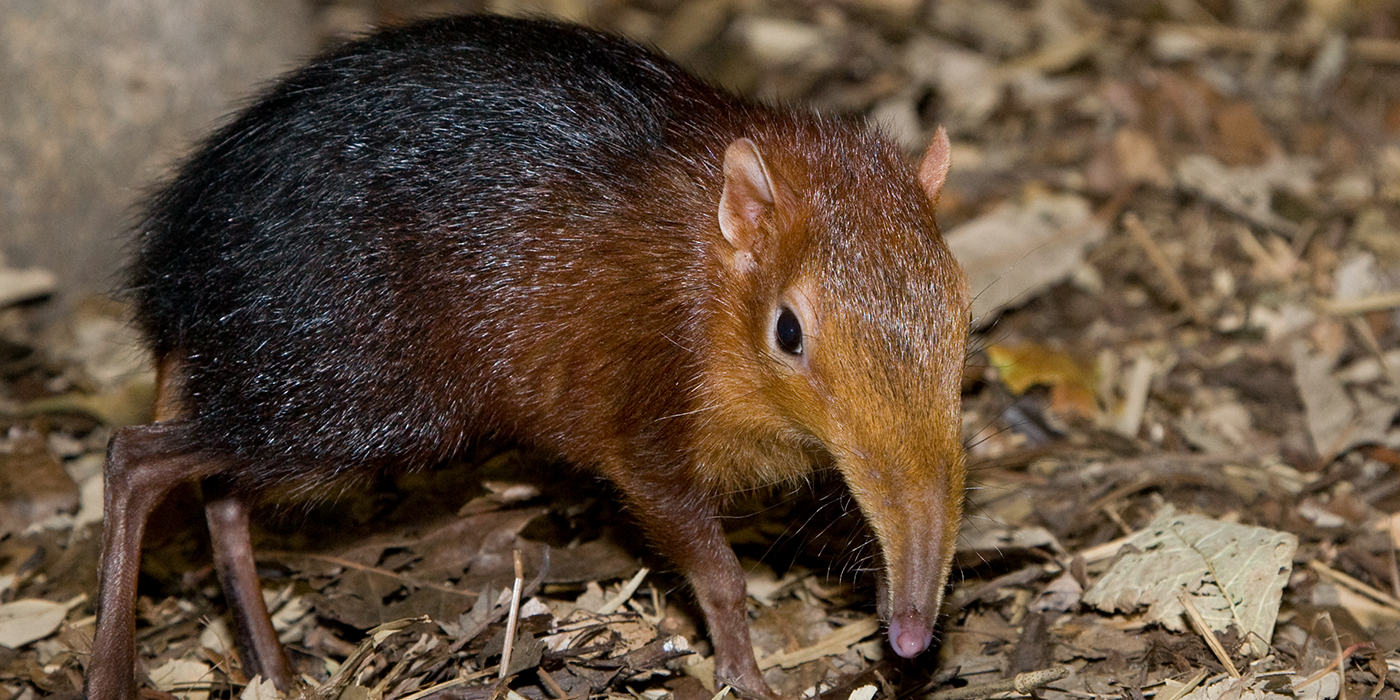
Black and rufous elephant shrews get their name for their long noses, which resemble an elephant’s trunk. They have long heads, round ears, thin tails and compact bodies, with reddish fur on their heads and chests, black fur on their hind parts, and a white ring around their dark eyes. Their hind legs are slightly longer than their front legs, which gives them extra speed and agility.
Size
Adults can reach about 11 inches (28 centimeters) in length, not including their tail, which can span up to 10 inches long. They typically weigh between 1-1.5 pounds (450-700 grams).
Native Habitat
These animals are native to the dense lowland forests and shrublands of southeastern Kenya and eastern Tanzania. Their small, nimble bodies are well-adapted to evade forest predators, like snakes, foxes and birds of prey.
Lifespan
Around 4-5 years.
Communication
Relatively little is known about how black-and rufous elephant shrews communicate. This species uses scent-marking to claim territory and search for mates.
Food/Eating Habits
Insectivores, but also eat fruit and seeds. They use their flexible snouts to root among the leaf litter, and scoop up beetles, centipedes, and ants with their long tongues.
Sleep Habits
Active during the daytime. At nighttime, they sleep in nests created out of leaves and twigs.
Social Structure
Black and rufous elephant shrews can either be solitary or live in monogamous breeding pairs. These pairs will establish home territories and push away any rival elephant shrews that encroach on their turf.
Reproduction and Development
Females are pregnant for 45 to 60 days. Black-and rufous elephant shrews typically give birth to one or two large young, which are weaned at about two weeks old. Near the end of the nursing process, the parents will mash up insects in their mouths and feed them to the babies instead of milk. Babies typically stay in their nest for about a month.
Conservation Efforts
While black and rufous elephant shrew populations are not at immediate risk of extinction, their populations are decreasing in the wild. Habitat loss threatens this species, as their native forests are being destroyed to make room for commercial logging agriculture. Occasionally, these animals are trapped and hunted for food by humans.
Help this Species
Practice ecotourism by being an advocate for the environment when you’re on vacation. During your travels, support, visit or volunteer with organizations that protect wildlife. Shop smart too! Avoid buying products made from animals, which could support poaching and the illegal wildlife trade.
Choose your pets wisely, and do your research before bringing an animal home. Exotic animals don’t always make great pets. Many require special care and live for a long time. Tropical reptiles and small mammals are often traded internationally and may be victims of the illegal pet trade. Never release animals that have been kept as pets into the wild.
Support organizations like the Smithsonian’s National Zoo and Conservation Biology Institute that research better ways to protect and care for this animal and other endangered species. Consider donating your time, money or goods.
Share the story of this animal with others. Simply raising awareness about this species can contribute to its overall protection.
Less is more. Cut down on the demand for resources by consuming less. Buy only what you need, and look for pre-owned or repurposed items before purchasing something brand new.
Smithsonian's National Zoo and Conservation Biology Institute. (n.d.). Black and rufous elephant shrew. Retrieved January 15, 2026, from https://nationalzoo.si.edu/animals/black-and-rufous-elephant-shrew
Animal News


