
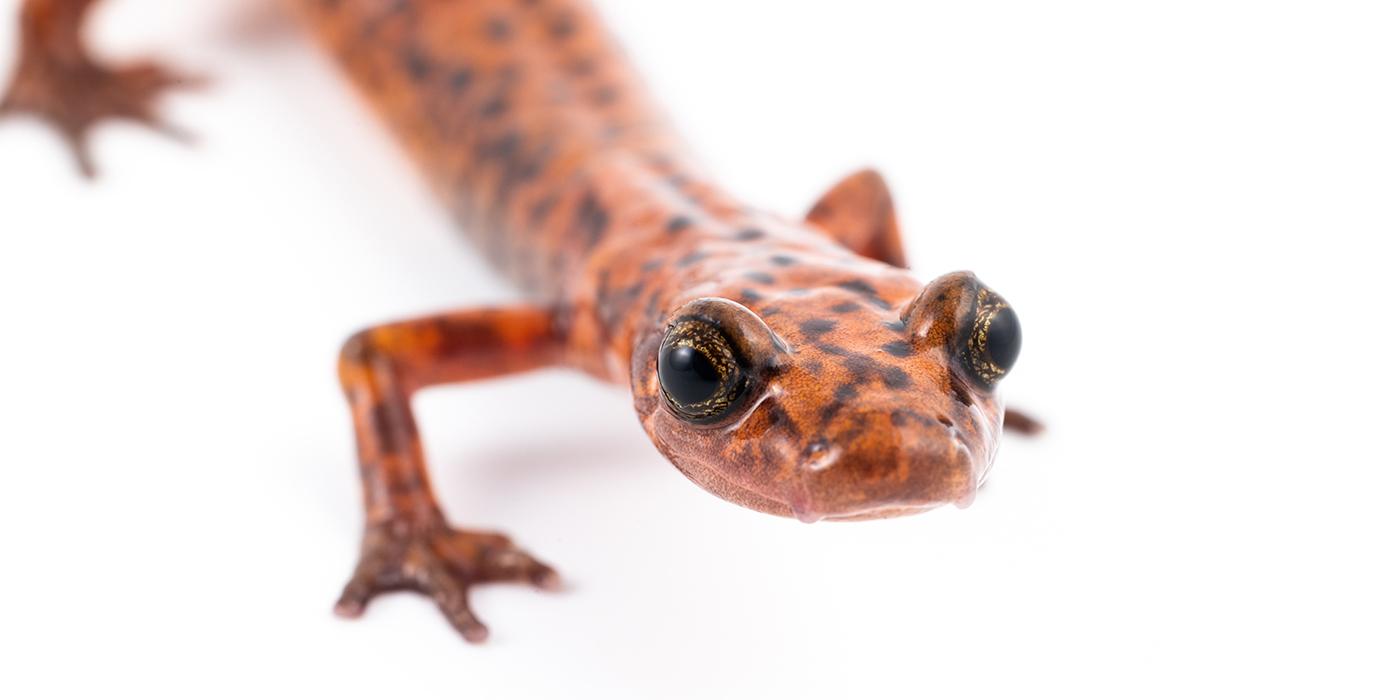
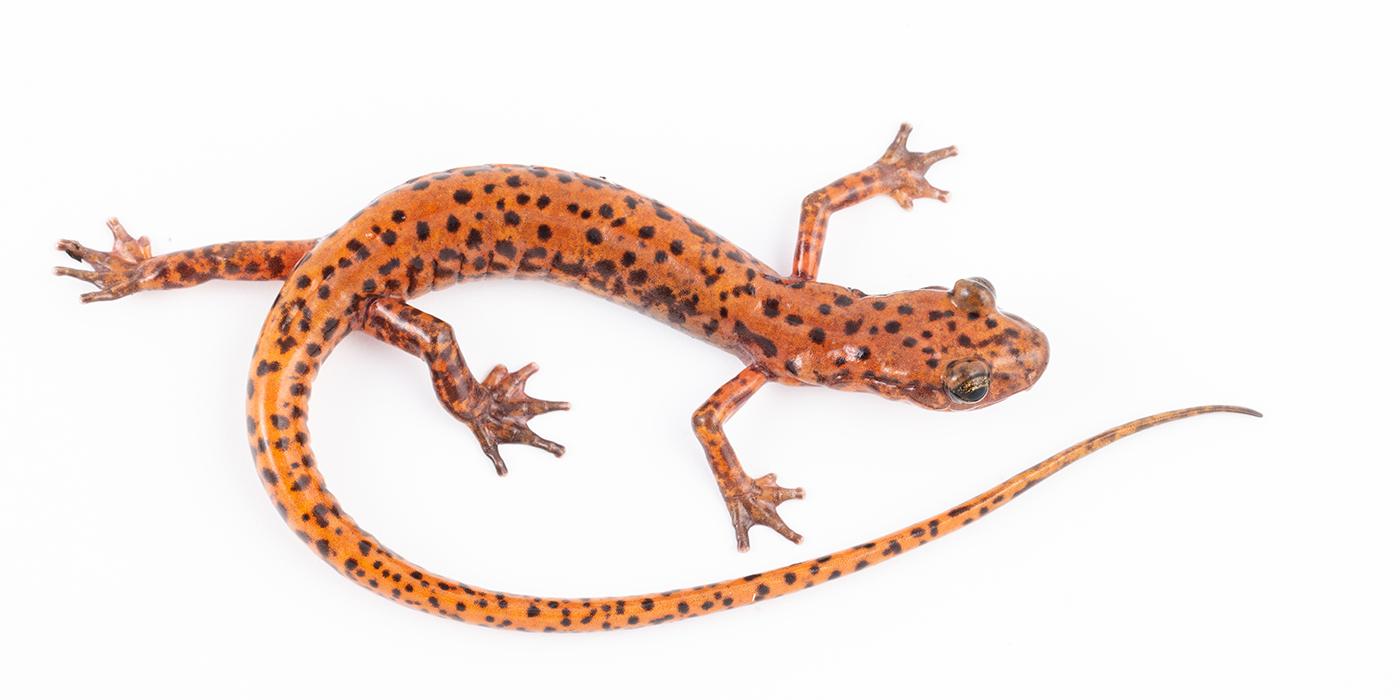
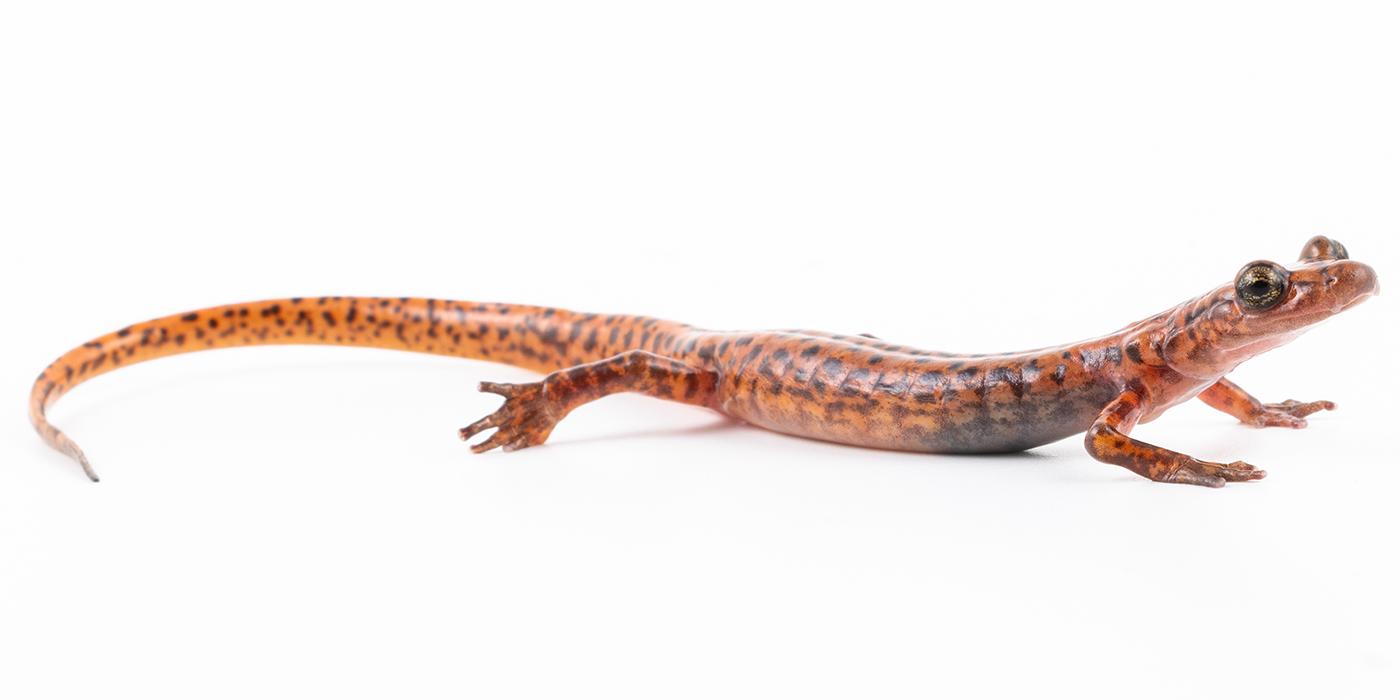
These fascinating little amphibians are adapted to life inside the limestone caves of eastern North America. Many individuals spend most of their lives in the dimly lit sections of these caves, emerging occasionally to forage in the woodlands above.
Physical Description
Cave salamanders are long and slender through their body, legs and tail. Their body coloration varies from yellowish to red with irregular black spots along their head, back and legs while their undersides are white or yellowish in color. Juveniles are paler in color and darken over time. Cave salamanders also have blunt snouts with eyes set close to the front of their heads.
Size
Adults reach between 4-8 inches (10-20 centimeters) in length.
Native Habitat
As their name suggests, cave salamanders make their homes in limestone caves, typically in what is known as the "twilight zone," an area by the mouth of the cave where some light penetrates but not enough for plant life to survive. When outside of their cave habitats, cave salamanders can be found hiding under rocks and logs in wooded areas just outside of the cave mouth.
Cave salamanders are a North American species ranging from eastern Oklahoma to northern Virginia. They can be found as far north as central Indiana and south to central Alabama.
Lifespan
Life span for the cave salamander is approximately nine years in human care.
Food/Eating Habits
In the wild, cave salamanders feed on a wide variety of small invertebrates, including arachnids, worms, snails and insects.
At the Zoo, cave salamanders receive a diet consisting of crickets, fruit flies, bean beetles, isopods, springtails and black worms.
Reproduction and Development
Female cave salamanders can lay an average of 60 eggs twice a year in cave streams or limestone pools. Young enter a larval phase, undergo metamorphosis and reach sexual maturity roughly two to three years later.
Conservation Efforts
Threats to the cave salamander include human activities around caves, groundwater pollution, habitat destruction and the presence of emerging diseases.
Help this Species
Reduce, reuse and recycle — in that order! Cut back on single-use goods, and find creative ways to reuse products at the end of their life cycle. Choose recycling over trash when possible.
Practice ecotourism by being an advocate for the environment when you’re on vacation. During your travels, support, visit or volunteer with organizations that protect wildlife. Shop smart too! Avoid buying products made from animals, which could support poaching and the illegal wildlife trade.
Organize or attend a stream, river, lake or other waterway cleanup in your area to preserve aquatic habitats for local species.
Support organizations like the Smithsonian’s National Zoo and Conservation Biology Institute that research better ways to protect and care for this animal and other endangered species. Consider donating your time, money or goods.
Avoid single-use plastics, such as plastic bottles, bags and utensils. Choosing reusable options instead can help reduce plastic pollution.
Protect local waterways by using fewer pesticides when caring for your garden or lawn. Using fertilizers sparingly, keeping storm drains free of litter and picking up after your pet can also improve watershed health.
Growing, transporting and preparing food uses a lot of resources, so choose local, seasonal produce when possible. A significant amount of food waste also ends up in landfills, so only buy what you can eat.
Smithsonian's National Zoo and Conservation Biology Institute. (n.d.). Cave salamander. Retrieved November 2, 2026, from https://nationalzoo.si.edu/animals/cave-salamander
Animal News

The Smithsonian National Zoo's Cheetah Cub Cam Returns — With Five Adorable Reasons to Tune In ›
Four generations of one cheetah family now live at the Zoo's off-campus research facility. Meet the newest members.

11 Fascinating Facts About North American Porcupines ›
There are plenty of surprises to discover about these prickly creatures.

Watch Meerkats Explore Jack-o'-Lanterns and Cauldrons ›
Seven meerkats got a Halloween-themed surprise from their keepers. See how they dug in.