

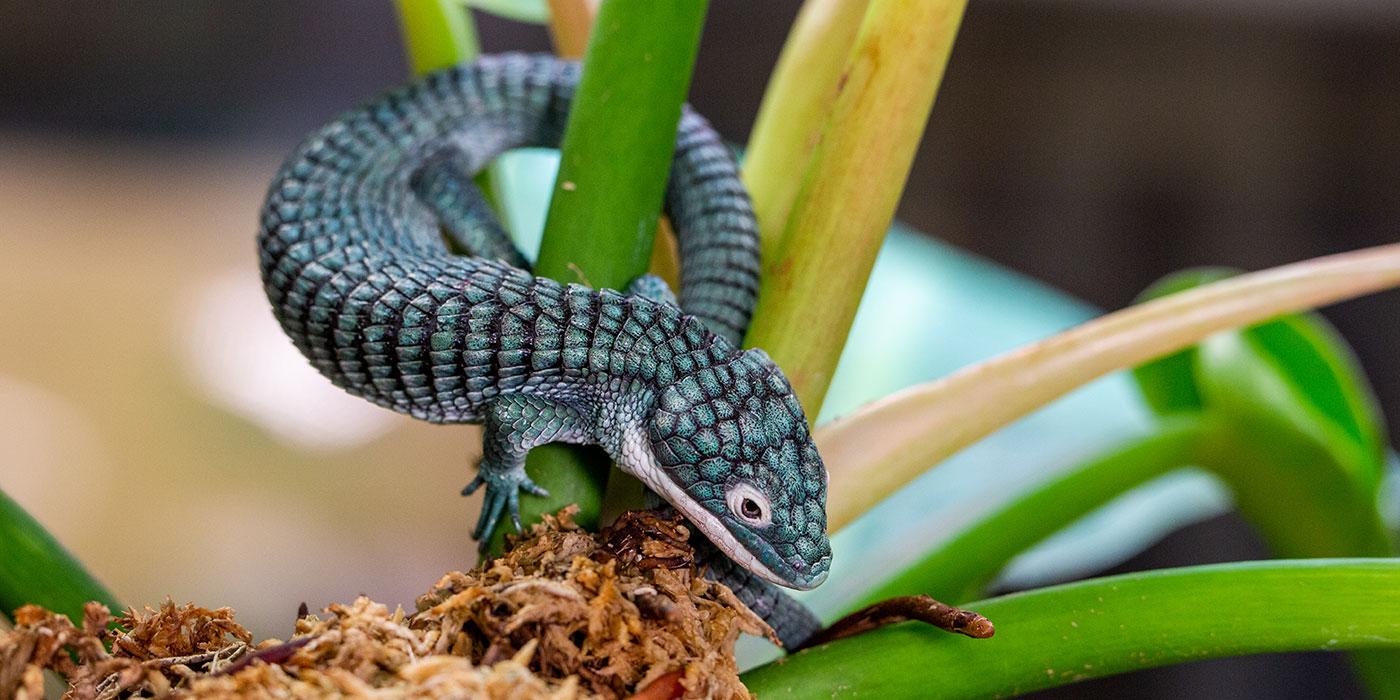
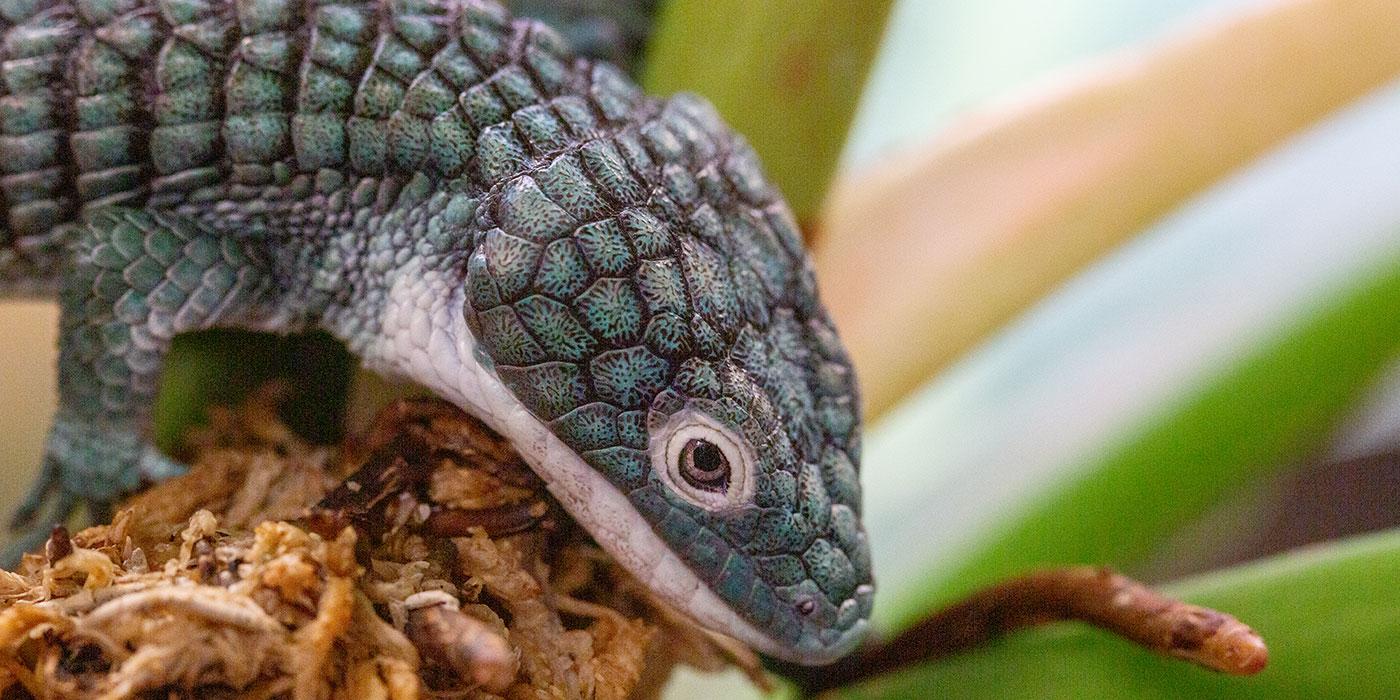

Physical Description
Adults display colors ranging from teal blue to deep green, often with pale yellow bellies and a yellow ring around each eye. Males tend to be more vibrant, while juveniles are paler and commonly display dark, lateral stripes. Their heads are triangular, and their limbs and body are adapted to arboreal life, with a prehensile tail that helps them climb and navigate through treetops.
Size
Native Habitat
These lizards are native to the Mexican states of Veracruz and Pueblo. They are arboreal, meaning they live in trees, and are most commonly found 130 feet (40 meters) above the forest floor.
Their preferred habitat is the humid canopy of cloud forests, among bromeliads and dense vegetation. They are typically found at elevations of 4,500-9,000 feet (1,350-2,740 meters) above sea level.
Lifespan
They can live up to around 10 years in human care.
Food/Eating Habits
They primarily eat insects and other small invertebrates.
Sleep Habits
Reproduction and Development
Alligator lizards are viviparous, meaning they give birth to live young rather than lay eggs. They can give birth to a single litter of seven to 12 offspring each year.
Breeding typically occurs in the fall and young are born between April and June, after six to eight months of gestation. Young are born fully formed, independent from birth, and begin feeding on small insects soon after birth.
Conservation Efforts
The destruction of cloud forests poses the greatest threat to this species, and the growing demand for agriculture drives deforestation within their habitat. Collection for the pet trade is also considered a significant threat.
These lizards can be found in two protected areas within their natural range and have been given special protection under Mexican law. Other species within the Abronia genus are also at risk as a result of habitat destruction due to their restricted range. Because of this, they are considered some of the planet's most threatened lizard species.
Help this Species
Reduce, reuse and recycle — in that order! Cut back on single-use goods, and find creative ways to reuse products at the end of their life cycle. Choose recycling over trash when possible.
Choose your pets wisely, and do your research before bringing an animal home. Exotic animals don’t always make great pets. Many require special care and live for a long time. Tropical reptiles and small mammals are often traded internationally and may be victims of the illegal pet trade. Never release animals that have been kept as pets into the wild.
Share the story of this animal with others. Simply raising awareness about this species can contribute to its overall protection.
Growing, transporting and preparing food uses a lot of resources, so choose local, seasonal produce when possible. A significant amount of food waste also ends up in landfills, so only buy what you can eat.
Smithsonian's National Zoo and Conservation Biology Institute. (n.d.). Emerald alligator lizard. Retrieved October 23, 2026, from https://nationalzoo.si.edu/animals/emerald-alligator-lizard
Animal News

The Smithsonian National Zoo's Cheetah Cub Cam Returns — With Five Adorable Reasons to Tune In ›
Four generations of one cheetah family now live at the Zoo's off-campus research facility. Meet the newest members.

11 Fascinating Facts About North American Porcupines ›
There are plenty of surprises to discover about these prickly creatures.

Watch Meerkats Explore Jack-o'-Lanterns and Cauldrons ›
Seven meerkats got a Halloween-themed surprise from their keepers. See how they dug in.