
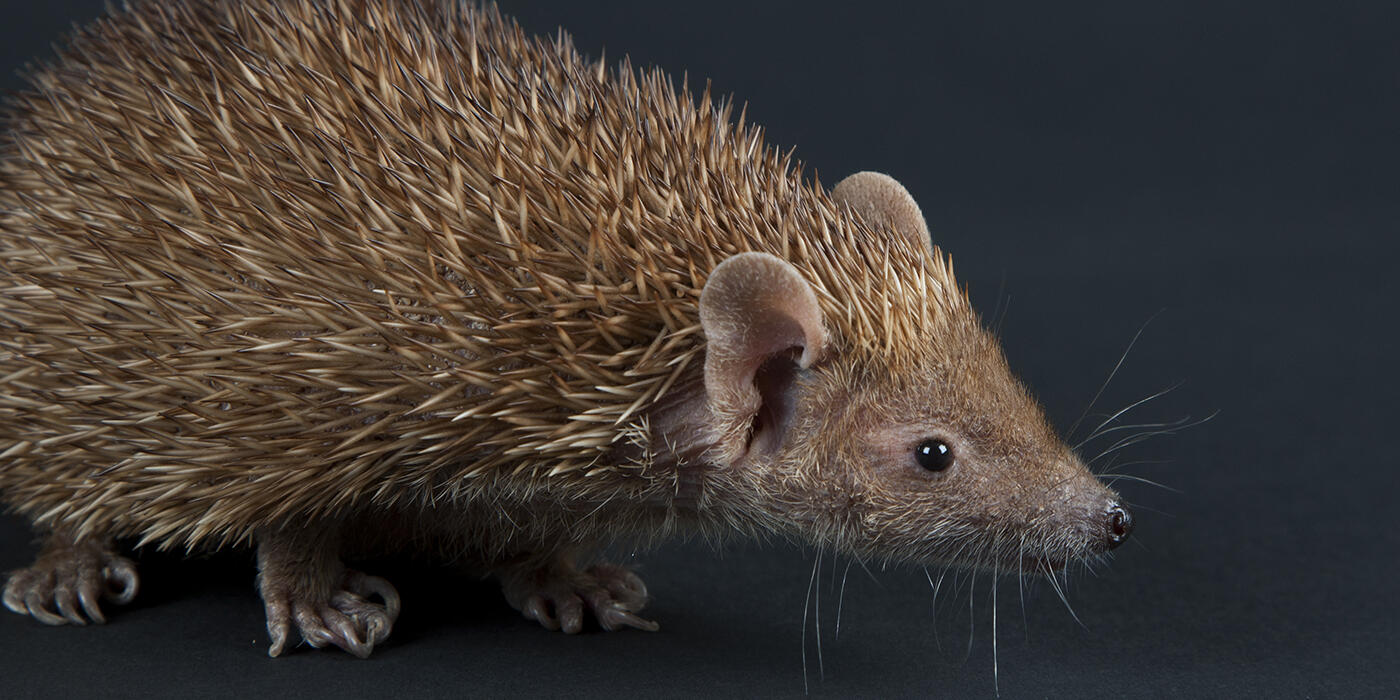
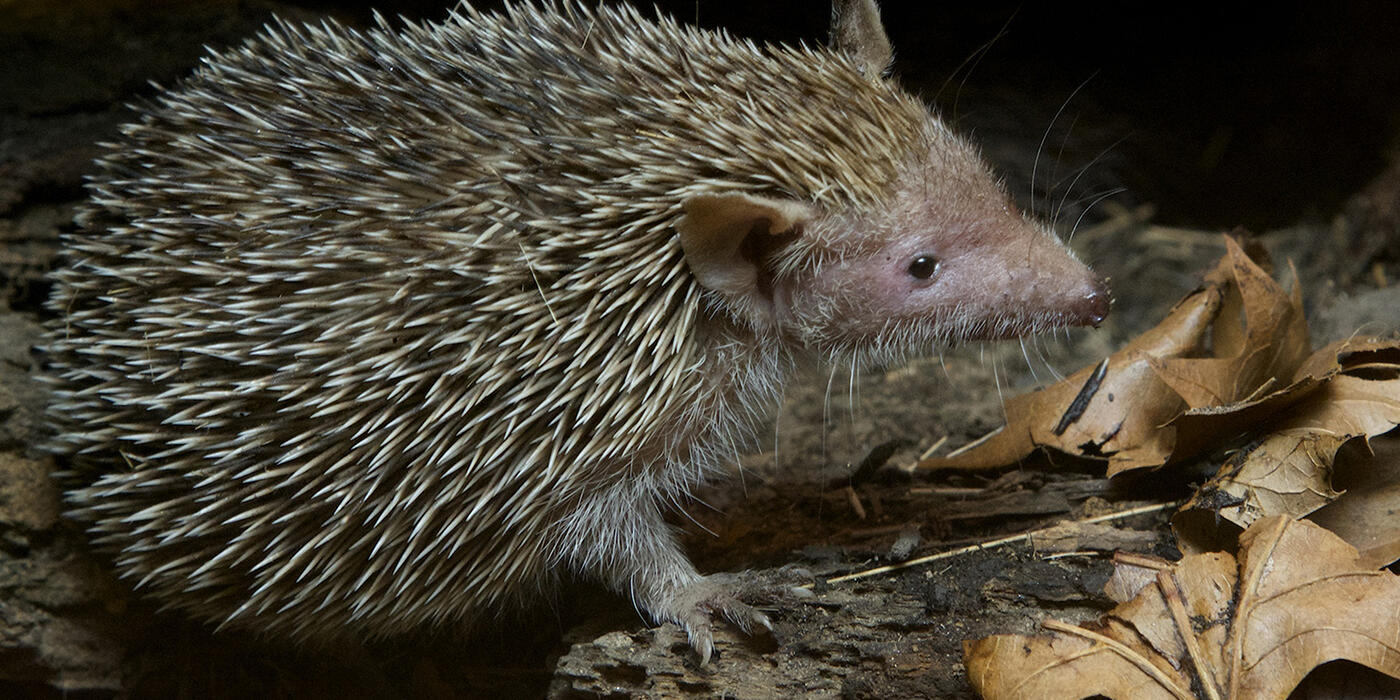
Lesser hedgehog tenrecs, also called lesser Madagascar tenrecs, are small, nocturnal animals covered in spines. Though sometimes confused with hedgehogs, lesser tenrecs are actually members of a different order.
Physical Description
Lesser hedgehog tenrecs are covered with spines, which range in color from white to black. Fine hairs cover their paws and bellies, and their tails are barely visible.
Size
Lesser hedgehog tenrecs weigh 4 to 7 ounces (113 to 255 grams) and grow to between 5.5 and 7 inches (14 to 18 centimeters) in length. Lesser tenrecs are smaller than greater Madagascar tenrecs. In fact, the two species are not closely related.
Native Habitat
These animals are found in the arid regions of southern Madagascar, where they live in dry forests, coastal regions, scrub and semi-desert areas. To seek shelter, tenrecs make dens in tree cavities.
Lifespan
They can live for up to 8 to 10 years in the wild, and about 13 years in human care.
Communication
These tenrecs rely mostly on tactile and chemical communication, but can also make a few noises. When threatened, they roll into balls to protect their soft underbellies. They will also lunge backward to drive their spines into their enemies.
Food/Eating Habits
In the wild, lesser hedgehog tenrecs are opportunistic feeders; they will forage on the ground and in trees for invertebrates. They will also eat some other small animals, such as baby mice.
At the Smithsonian's National Zoo, they are fed dry insectivore diet and insects, such as mealworms.
Sleep Habits
They are primarily active at night.
Reproduction and Development
Lesser hedgehog tenrecs go through torpor for three to five months during the cold season and begin mating when they emerge, usually in October. Torpor is a state of hibernation-like inactivity in the body, in which the animal's temperature, respiration, and heartbeat decrease to conserve energy.
Gestation lasts 61 to 68 days. Babies are usually born in the wet season, which is when the maximum amount of prey is available. Litters consist of one to ten young, though five to seven young are most common. The babies are relatively undeveloped when they are born, but become independent after only one month.
Conservation Efforts
While they are currently a species of least concern, logging has decreased the population of lesser Madagascar tenrecs in some areas of their range.
Help this Species
Share the story of this animal with others. Simply raising awareness about this species can contribute to its overall protection.
Reduce, reuse and recycle — in that order! Cut back on single-use goods, and find creative ways to reuse products at the end of their life cycle. Choose recycling over trash when possible.
Practice ecotourism by being an advocate for the environment when you’re on vacation. During your travels, support, visit or volunteer with organizations that protect wildlife. Shop smart too! Avoid buying products made from animals, which could support poaching and the illegal wildlife trade.
Smithsonian's National Zoo and Conservation Biology Institute. (n.d.). Lesser hedgehog tenrec. Retrieved November 5, 2026, from https://nationalzoo.si.edu/animals/lesser-hedgehog-tenrec
Animal News

The Smithsonian National Zoo's Cheetah Cub Cam Returns — With Five Adorable Reasons to Tune In ›
Four generations of one cheetah family now live at the Zoo's off-campus research facility. Meet the newest members.

11 Fascinating Facts About North American Porcupines ›
There are plenty of surprises to discover about these prickly creatures.

Watch Meerkats Explore Jack-o'-Lanterns and Cauldrons ›
Seven meerkats got a Halloween-themed surprise from their keepers. See how they dug in.