
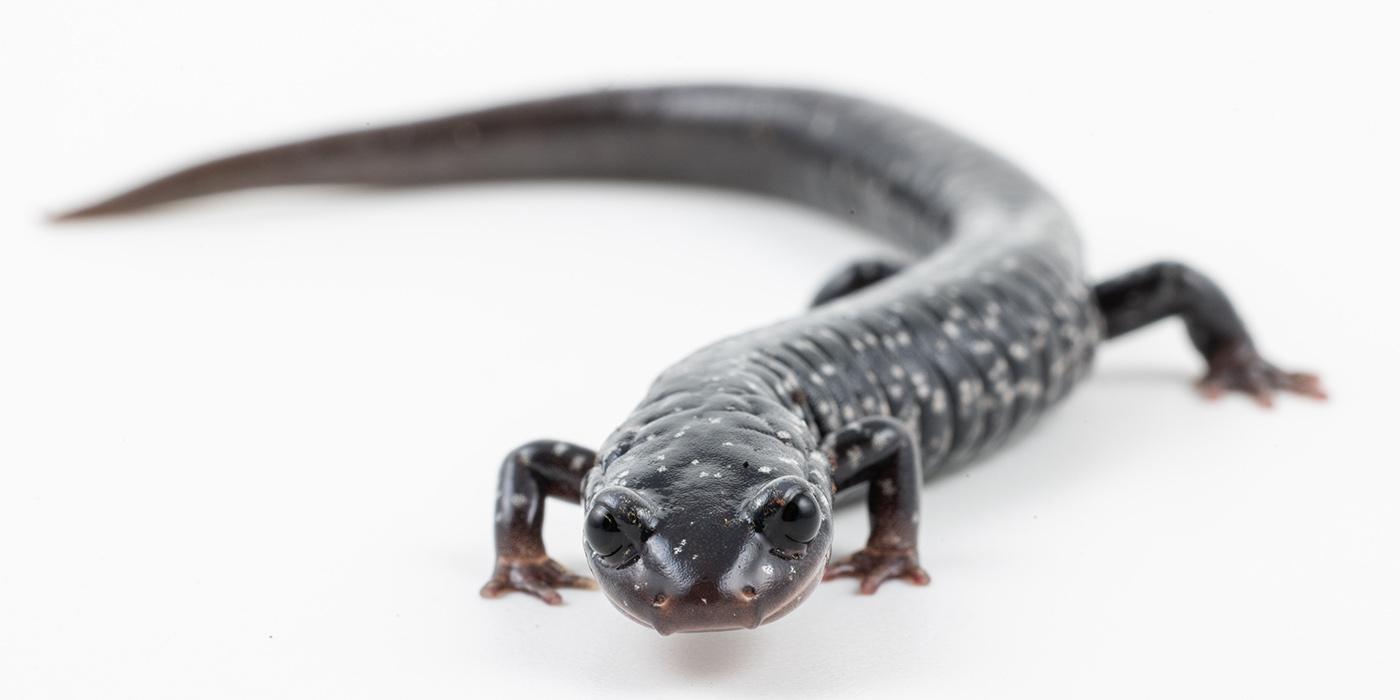
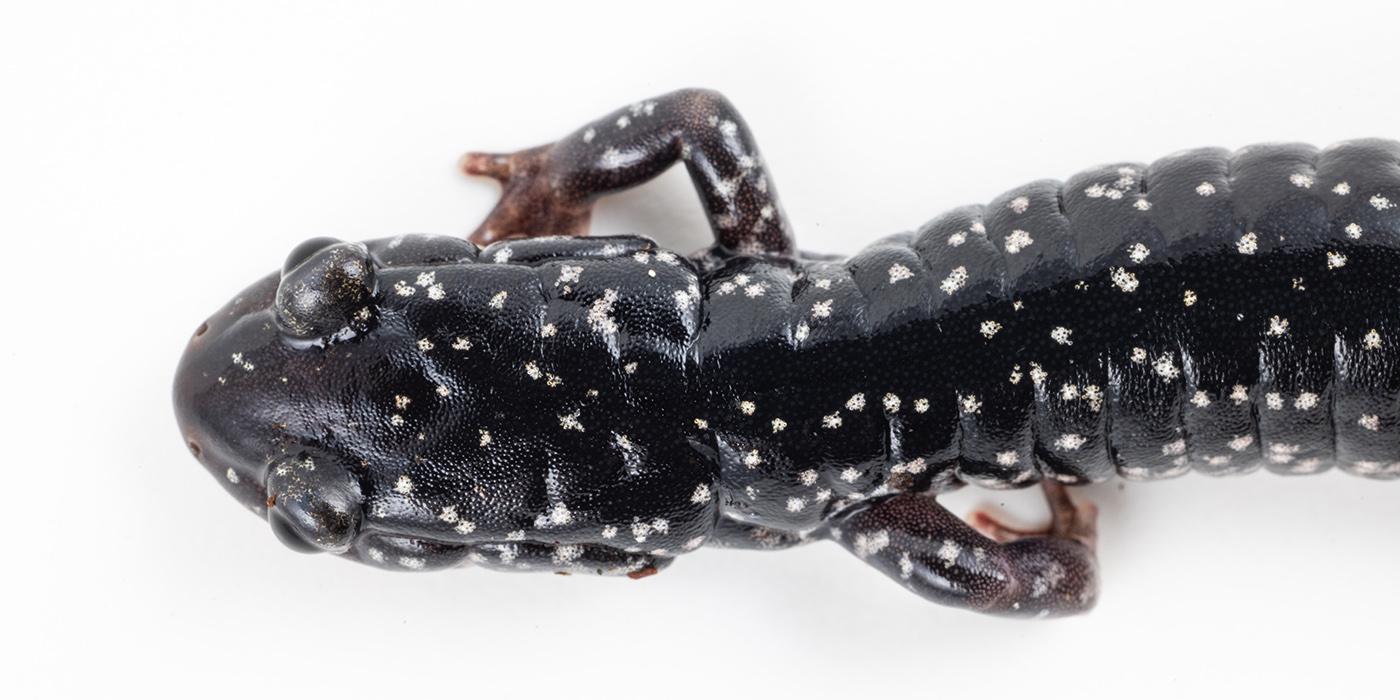
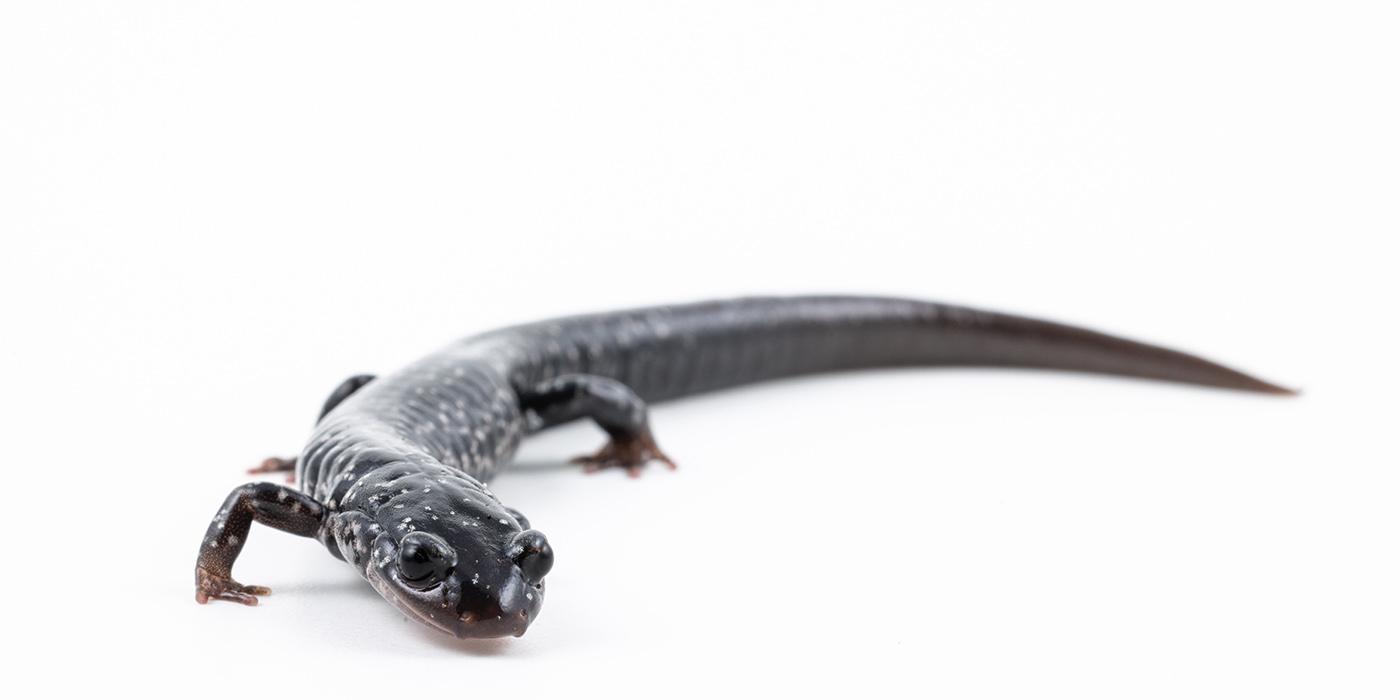
The northern slimy salamander is a widespread amphibian native to eastern North America. It gets its common name from the sticky, protective secretions it produces when threatened.
Physical Description
This species has a dark black or bluish-black body with white or silver spots and splotches scattered across its back and sides. The belly comes in different shades but is generally lighter than the back. Overall, the body shape is long and slender with short legs and a long tail.
Size
Adults range from around 4.7 to 6.7 inches (12 to 17 centimeters) in length.
Native Habitat
Found in mature forests, typically in moist environments under rocks, logs, and leaf litter. They prefer areas with plenty of cover and consistent moisture, often on hillsides or near streams. Native to the eastern and central United States.
Lifespan
Around 5 years on average.
Communication
Primarily chemical communication through pheromones, especially during breeding season. They also use touch and visual cues during courtship. Males perform a mating dance in which he lifts and lowers his legs to woo females.
Food/Eating Habits
These salamanders primarily eat small invertebrates including ants, beetles, and worms which they hunt at night relying on their sense of smell. Through hunting, Northern slimy salamanders help control insect populations in the forest ecosystems they inhabit.
Sleep Habits
This species is mostly nocturnal, meaning it sleeps during the day and hunts at night.
Social Structure
Individual salamanders typically live alone in burrows, root tunnels, or under logs. Adults of both sexes establish and defend small territories around their chosen refuge with biting and tail-lashing. However, if suitable shelter is scarce, multiple salamanders will share the same hiding spot.
Reproduction and Development
Breeding occurs in the fall, and females lay eggs in late spring or early summer. Unlike most salamanders, this species does not require standing water to breed. Most females lay their clutch of around 10 to 40 eggs in moist soil under rocks or logs. This species has no aquatic larval stage, so they hatch from their eggs as miniature adult salamanders after roughly three months of development.
Conservation Efforts
While this species is not considered threatened, they are protected in some of the states they are found in. Protecting mature forests and ensuring good water quality across their range are important steps toward keeping the population sustainable.
Help this Species
Smithsonian's National Zoo and Conservation Biology Institute. (n.d.). Northern slimy salamander. Retrieved January 14, 2026, from https://nationalzoo.si.edu/animals/northern-slimy-salamander
Animal News


