
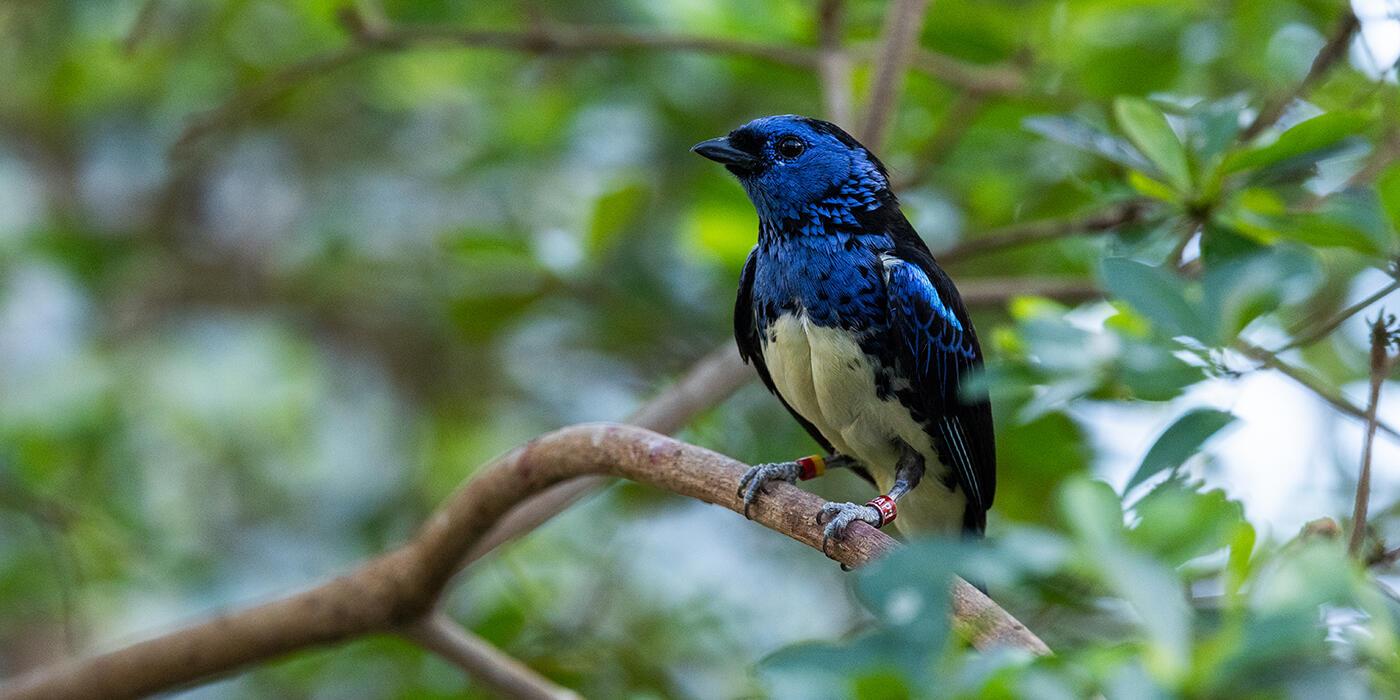
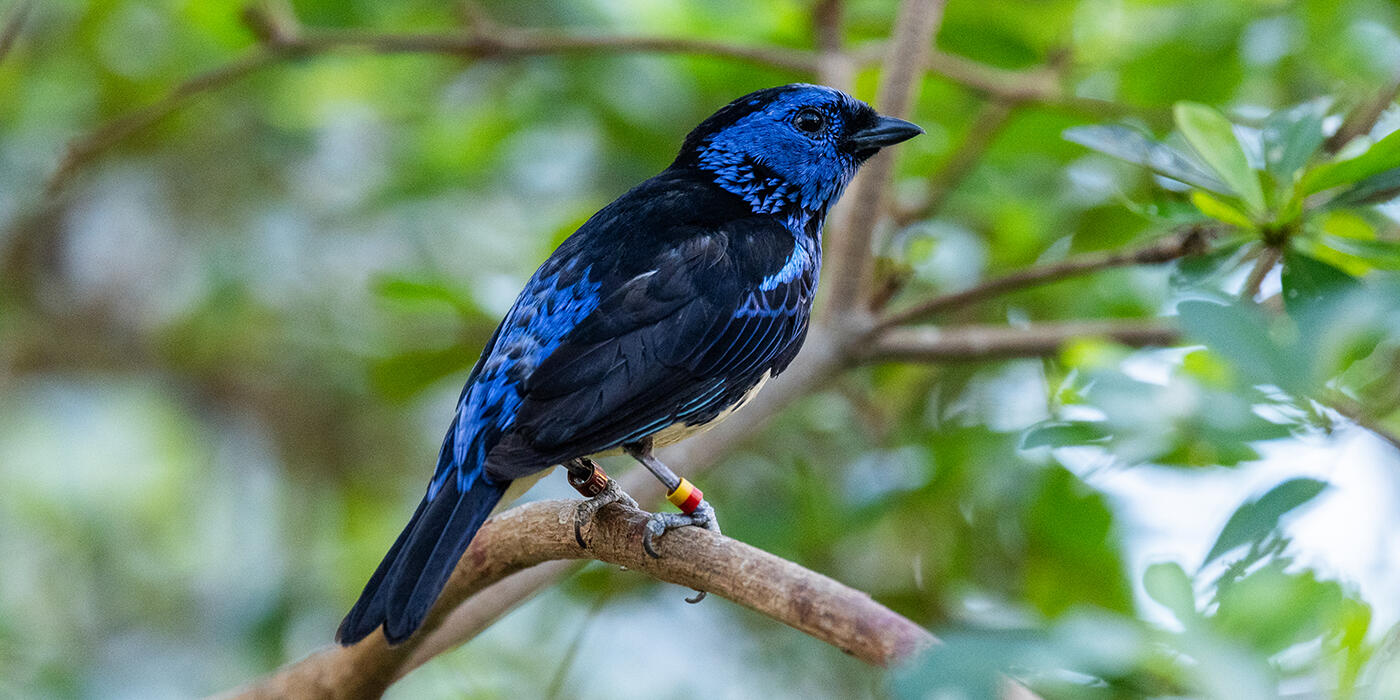
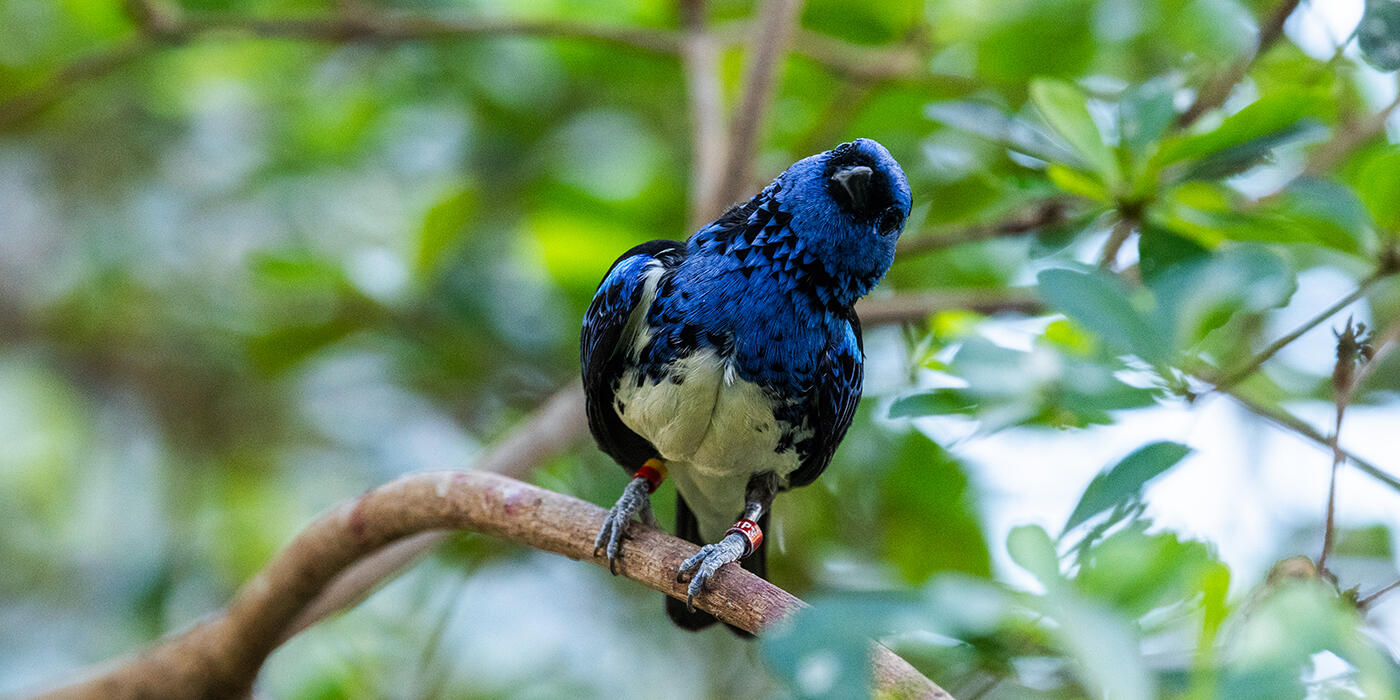
This small, brightly colored bird lives in small flocks that dart through the canopies of South America’s forests. Little is known about the behavior and habits of turquoise tanagers because they are so difficult to find in the wild.
Physical Description
Both males and females share the species’ striking color pattern of metallic blue, turquoise and black plumage, although females often have less vivid coloration. Their faces and sides of their necks are blue, and their upper parts and wings are black. Their underbellies are typically either pale or bright yellow. They have black beaks, black or slate-colored feet, and long tails.
Size
Adults are 5.5 inches (14 centimeters) long and weigh 20 grams—roughly the weight of 4 U.S. nickels.
Native Habitat
This bird is a year-round resident of the humid, tropical forested areas of northeastern South America, including parts of Brazil, Colombia, and the island of Trinidad. They are often observed in partially open habitat areas, like forest edges, riversides, and even agricultural areas like pastures and coffee plantations.
Lifespan
There is not much scientific data on the average lifespan of this bird.
Communication
Like many tanagers, these birds call out to each other with a repertoire of loud, high-pitched chirps.
Mating calls for male turquoise tanagers have been described as a thin ‘tzing’ – females do this too, but at a slightly higher register.
Food/Eating Habits
Turquoise tanagers are mainly frugivores, or fruit eaters. They forage high in the tree canopy, where they perch to pick berries and fruits from slender branches and twigs. They are also known to eat small insects, which they occasionally find on the undersides of leaves.
Social Structure
Turquoise tanagers are relatively social and live in small groups of anywhere between 3 and 10 individuals. Unlike other tanagers, they rarely join mixed-species flocks, and prefer to stay with their own species. Breeding pairs are known to sleep a short distance from each other on high branches.
Reproduction and Development
Mated pairs bond by singing duets and occasionally feeding each other berries. Females build cup-shaped nests high off the ground, and lay clutches of two to three eggs that are white with brown spots. Different subgroups of this species appear to breed at different times of the year.
Conservation Efforts
This species is not considered at immediate risk for extinction. They are widespread throughout their range, and scientists estimate the total population is fairly stable, especially compared to other threatened and endangered birds in the same territory.
Help this Species
Reduce, reuse and recycle — in that order! Cut back on single-use goods, and find creative ways to reuse products at the end of their life cycle. Choose recycling over trash when possible.
Be a smart consumer. Choose products made with sustainable ingredients, such as Smithsonian certified Bird Friendly coffees, which support farmers striving to limit their impact on wildlife and habitat.
Practice ecotourism by being an advocate for the environment when you’re on vacation. During your travels, support, visit or volunteer with organizations that protect wildlife. Shop smart too! Avoid buying products made from animals, which could support poaching and the illegal wildlife trade.
Choose your pets wisely, and do your research before bringing an animal home. Exotic animals don’t always make great pets. Many require special care and live for a long time. Tropical reptiles and small mammals are often traded internationally and may be victims of the illegal pet trade. Never release animals that have been kept as pets into the wild.
Be a responsible cat owner, and keep cats indoors or under restraint when outside. Never release animals that have been kept as pets into the wild.
Support organizations like the Smithsonian’s National Zoo and Conservation Biology Institute that research better ways to protect and care for this animal and other endangered species. Consider donating your time, money or goods.
Smithsonian's National Zoo and Conservation Biology Institute. (n.d.). Turquoise tanager . Retrieved October 24, 2026, from https://nationalzoo.si.edu/animals/turquoise-tanager
Animal News

The Smithsonian National Zoo's Cheetah Cub Cam Returns — With Five Adorable Reasons to Tune In ›
Four generations of one cheetah family now live at the Zoo's off-campus research facility. Meet the newest members.

11 Fascinating Facts About North American Porcupines ›
There are plenty of surprises to discover about these prickly creatures.

Watch Meerkats Explore Jack-o'-Lanterns and Cauldrons ›
Seven meerkats got a Halloween-themed surprise from their keepers. See how they dug in.