
How Smithsonian Science Helped the Lowland Tapir Become the Face of Forest Conversation in Paraguay

This blog post was written by Henry Haney, Giuliana Paredes and Ana María Sánchez, staff members at the Center for Conservation and Sustainability of the Smithsonian’s National Zoo and Conservation Biology Institute.
Deep within the forests of Paraguay, an elusive herbivore the size of a motorcycle plays a quiet but pivotal role in shaping its tropical ecosystem. Known as the “gardener of the forest,” the lowland tapir (Tapirus terrestris) plays a critical role in seed dispersal across several South American habitats. But lowland tapir populations have been disappearing along with the wild places they depend on for survival.
In recent years, an alliance of conservation-minded organizations, including the Smithsonian’s National Zoo and Conservation Biology Institute, has brought the tapir to the center of a groundbreaking, nationwide conservation plan in Paraguay. Their efforts have sparked a push to protect a critical ecoregion – the Upper Paraná Atlantic Forest – and provided hope for wildlife communities under threat.

A lowland tapir in Parque Estadual Encontro das Águas, Brazil.
But how does a conservation plan come to be? This blog retraces the formation of this conservation action plan and explores how scientists from the Smithsonian National Zoo and Conservation Biology Institute’s Center for Conservation and Sustainability (NZCBI-CCS) worked with partners across Paraguay to reposition the tapir and its forest home towards a brighter, more sustainable future.
2021: A First Step: Choosing Four Species That Could Not Be Ignored
Surprisingly, this conservation plan did not begin with just the tapir in mind. Rather, researchers first envisioned a science-driven recovery centered around four priority species, each of which represented some of the most pressing conservation challenges of the Upper Paraná Atlantic Forest.
The Upper Paraná Atlantic Forest is a massive, highly biodiverse ecosystem complex with an original extent of about 470,000 square kilometers, making it roughly the size of California. Here, a mix of tropical and subtropical rainforests hold jaguars, golden lion tamarins, three-toed sloths, and countless species of flora and fauna found nowhere else on Earth.
It is also one of the world’s most threatened ecoregions. In Paraguay, more than 90 percent of the UPAF’s tropical forests have disappeared. While portions of the landscape are under legal protection, much of the remaining forest is patchy and fragmented.
In response to this critical conservation challenge, NZCBI-CCS scientists worked directly with ITAIPU Binacional, the world's second-largest hydropower producer. ITAIPU stands as a regional leader in modeling responsible stewardship of ecosystems through its management of the Itaipu Biosphere Reserve – a 1,000,000-hectare reserve along the banks of the Paraná River that the company has set aside for biodiversity conservation and sustainable development.
NZCBI-CCS scientists and ITAIPU representatives came together to plan actions and strategies for ex situ (conservation of species outside their natural habitats) and in situ (conservation of species in the wild) management in the Upper Paraná Atlantic Forest. At the end of 2021, representatives from both organizations set out to identify the species most in need of urgent and coordinated conservation action. The partners evaluated more than 60 species using 14 ecological, cultural, and management criteria developed by NZCBI-CCS.
At the end of this assessment, four species emerged as priorities:
- Bare-faced curassow (Crax fasciolata)
- Lowland tapir (Tapirus terrestris)
- White-lipped peccary (Tayassu pecari)
- Dwarf brocket deer (Mazama nana)
Although each species faced significant challenges to their long-term survival, the assessment identified the lowland tapir as the leading choice for nationwide conservation. Why? Because the tapir has a unique role as an umbrella species, meaning that efforts to protect the tapir’s habitat would also benefit other animals who need similar habitat conditions to thrive.
“The tapir sits at a unique crossroads for us,” said Smithsonian research scientist Ana María Sanchez-Cuervo. “It represents that rare, perfect alignment where ecological urgency, practical feasibility, cultural roots, and scientific opportunity meet. By protecting this single umbrella species and its vast habitat, we automatically shield countless other plants and animals in the ecosystem, maximizing the impact of our entire strategy."
2025: A Four-Species Workshop Provides the Missing Map
After completing the previous foundational work, NZCBI-CCS scientists worked towards the next major milestone: a workshop called “Ex Situ Conservation Strategies for Priority Species of the Atlantic Forest of Paraguay”, held virtually April 22–25, 2025. The workshop brought together an international coalition of 64 experts from Paraguay, Brazil, Argentina, and the United States who could make a significant impact on wildlife conservation in the region, including government officials, zoo and conservation scientists, and representatives from private-sector and nonprofit organizations.
To add scientific rigor to their plan, experts used the One Plan Approach developed by the Conservation Planning Specialist Group (CPSG) of the International Union for Conservation of Nature (IUCN), which integrates in situ and ex situ conservation into a single coherent strategy.
Over the four-day workshop, the attendees conducted a structured evaluation of each species’ distribution, population status, biology, threats, in situ and ex situ management considerations, and conservation needs. Participants also discussed recommendations related to IUCN Red List assessments based on each species’ status within the UPAF.
How the tapir became a conservation priority in Paraguay
- Ecologically essential: As the largest terrestrial mammal in South America, the tapir is a key seed disperser, contributing to forest regeneration.
- Severely declining: In the eastern part of the Upper Paraná Atlantic Forest, tapir populations have declined by more than 90% due to habitat loss, hunting, roads, and pressure from domestic animals.
- Culturally meaningful: Known nationally as mboreví, the tapir holds a meaningful place in Paraguayan culture and identity. The Guaraní people and language are central to Paraguay’s national culture, a factor that could shape perspectives of coexistence with the tapir.
- Supported by regional experience: Brazil and Argentina have active tapir conservation programs that could provide data and partnership opportunities.
- Technically feasible: Zoos and wildlife facilities already held populations of tapirs, and sufficient knowledge existed to build and implement an effective ex situ national plan.
By considering each of the four conservation-priority species under a common framework, the conservationists now had the data to understand how all four fit into a broader, integrated picture—with the lowland tapir offering the structure necessary for the plan to succeed.
2026: Paraguay Commits Fully

Attendees of the 2026 Tapir National Conservation Plan workshop discuss conservation strategies for the lowland tapir.
In a first-of-its-kind milestone, an alliance of organizations, including ITAIPU Binacional, the Ministry of Environment and Sustainable Development (MADES), NZCBI-CCS, and the Fundación Botánica y Zoológica de Barranquilla (FUNDAZOO), held a dedicated tapir conservation planning workshop in Hernandarias, Paraguay on Feb. 11–13, 2026. Nearly 50 participants from 19 institutions joined the workshop, including representatives from government, academia, NGOs, the private sector, and international partners. They applied the same CPSG-IUCN methodology as in the previous workshop, but now with a clear focus on giving the tapir a fighting chance.
Together, workshop participants developed a comprehensive plan to protect the tapir, including:
- The crafting of a shared national vision that aims to increase tapir populations, reduce threats, and secure strong public support.
- A compilation of 607 records of tapir occurrences, along with a broad habitat assessment, that better defined the species’ current distribution in Paraguay.
- Seven strategic goals that address habitat conservation, hunting pressure, road mortality, invasive species, research needs, ex situ collaboration, and public awareness.
- 105 concrete conservation actions, each with indicators and institutional responsibilities.
- Lessons from Argentina’s tapir plan, incorporated to help shape governance and continuity strategies.
- The development of the One Tapir Management Committee, which ensures long-term oversight and coordinated action.
Where the Story Stands
Today, Paraguay’s tapir conservation program reflects a five-year journey of scientific collaboration, planning, and commitment, beginning in 2021 with a prioritization of species and culminating in 2026 with a unified, actionable, country-wide plan for the tapir. Although NZCBI-CCS scientists provided support along the way, this five-year, multi-institutional effort exemplified a national, shared commitment to helping this unique species.
Although tapir populations are now on firmer footing in Paraguay, the story is still unfolding. The program continues to make strides, with each action bolstered by the collective efforts of scientists, conservation practitioners, government agencies, and local partners committed to protecting biodiversity. And as Paraguayan officials and wildlife managers begin to formally implement the plan, the tapir stands as a living symbol of hope that recovery is possible when institutions work together toward a shared vision for conservation.
Continue Exploring
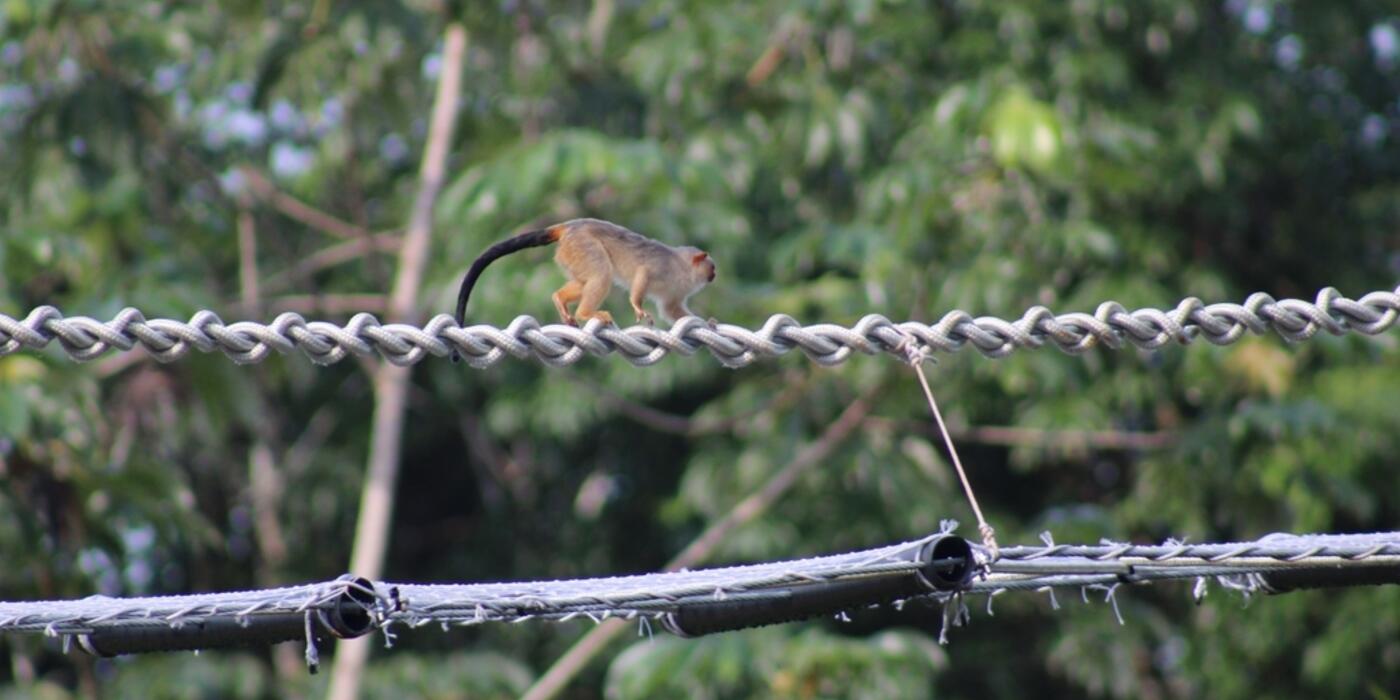
How Brazil’s Unique Canopy Bridges Are Saving Species
In this blog update, Dr. Fernanda Abra describes how a new system of canopy crossings is reducing road mortality among endangered primates in the Brazilian Amazon.
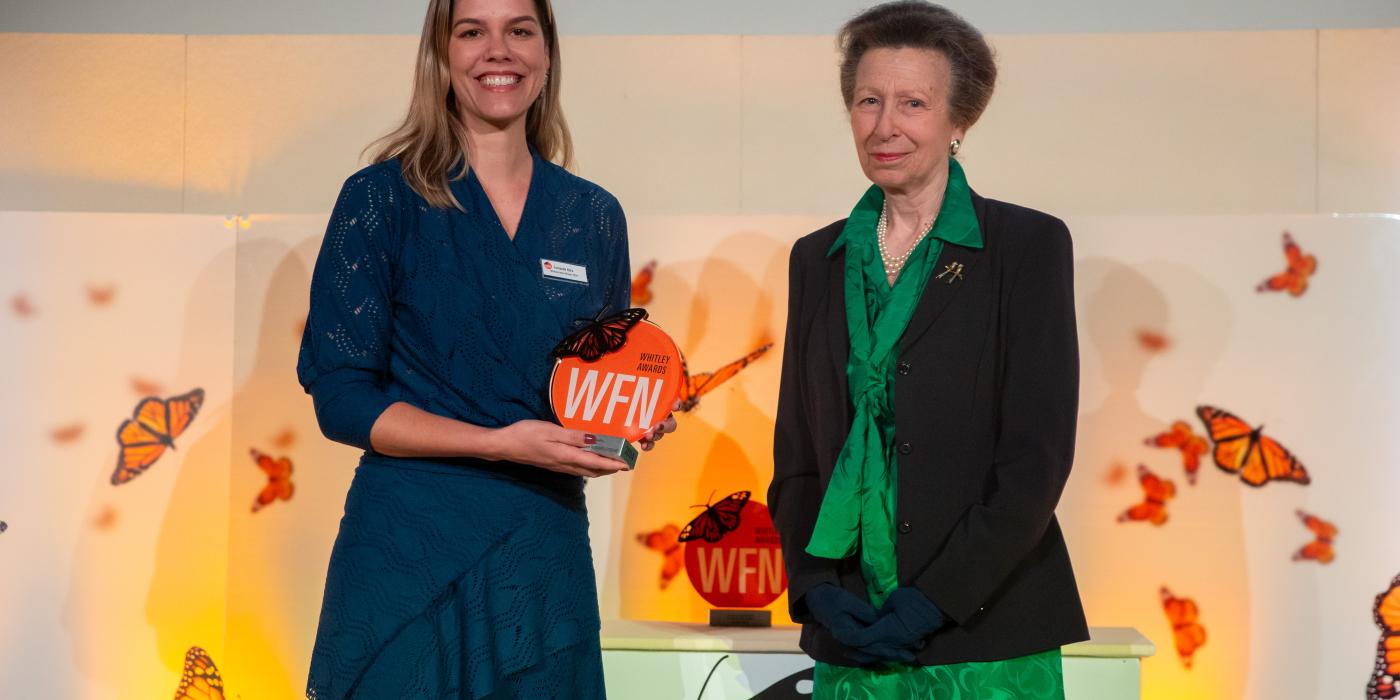
Smithsonian Project to Save Amazonian Primates from Road Impacts Wins U.K. Whitley Award
Smithsonian postdoctoral fellow Fernanda Abra was recognized for her pioneering work to build and monitor low-cost canopy bridges over Highway BR-174 in the Amazon rainforest, protecting tree-dwelling mammals from road...
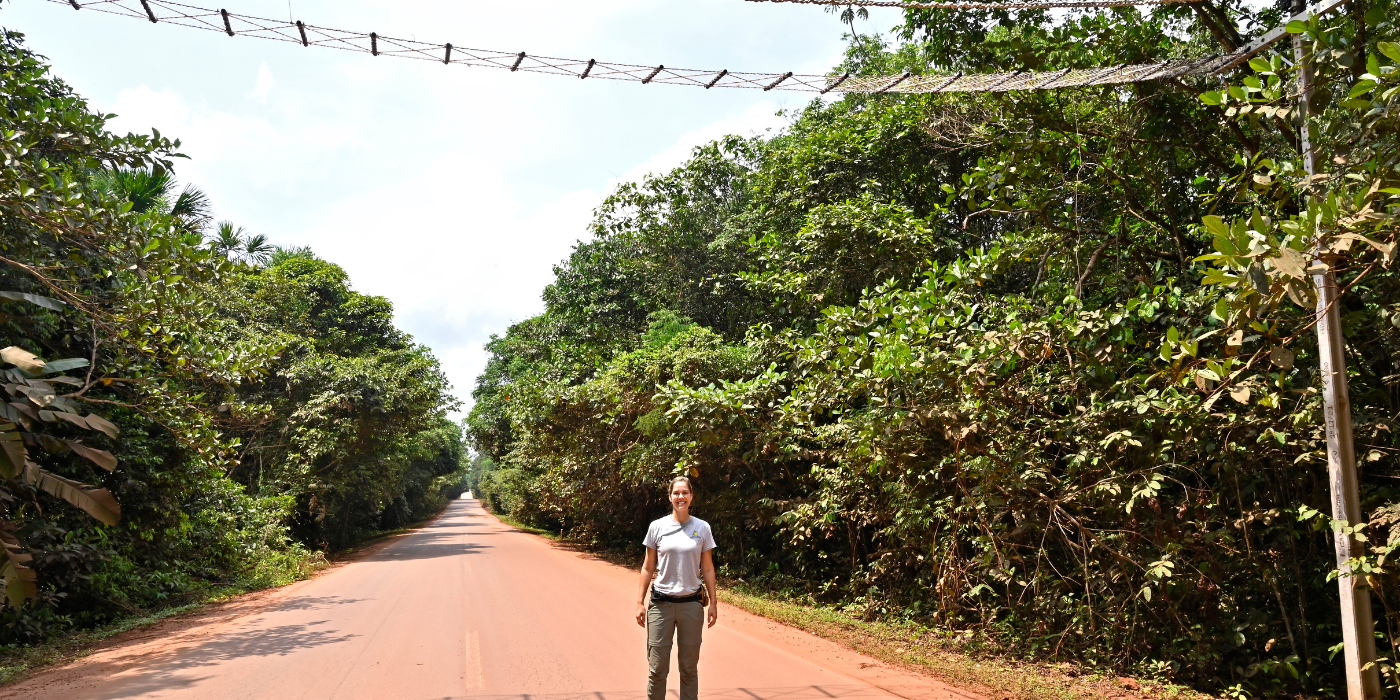
Focus on the Future Fernanda Abra
Roads can be a dangerous challenge for terrestrial and arboreal wildlife. One scientist is trying to change that.