

Physical Description
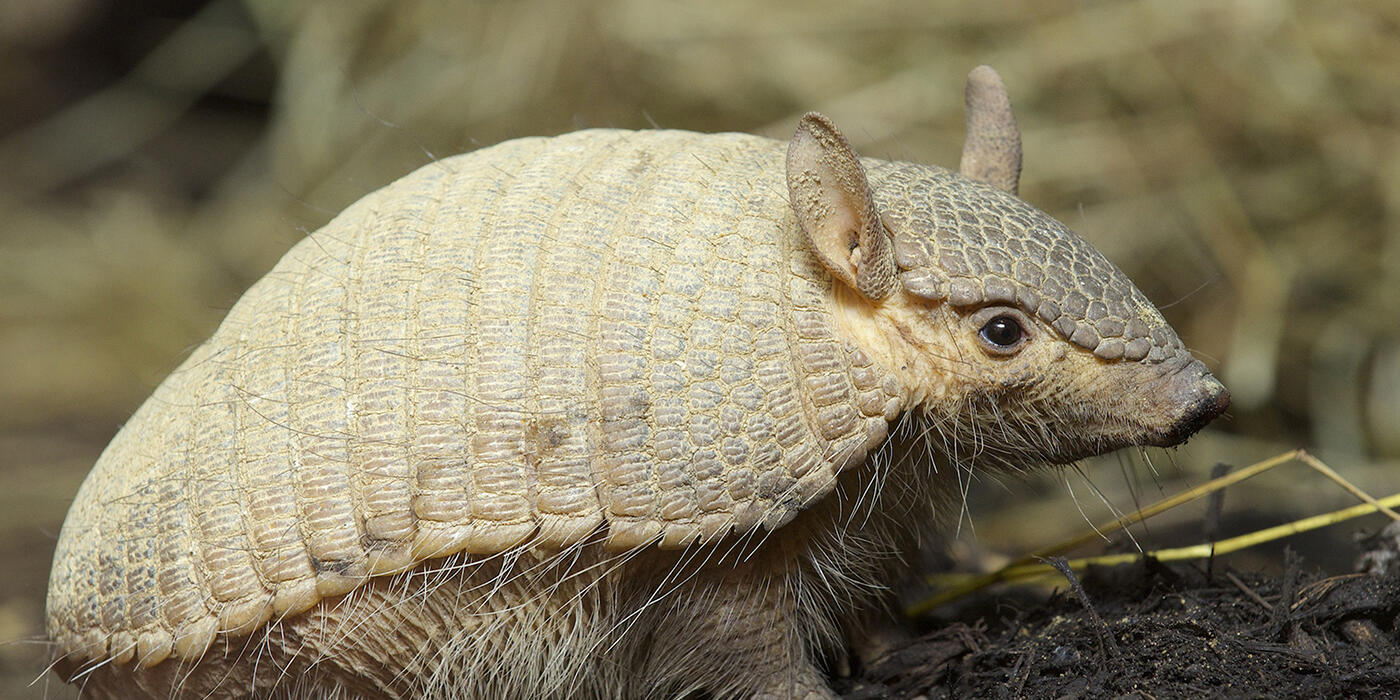
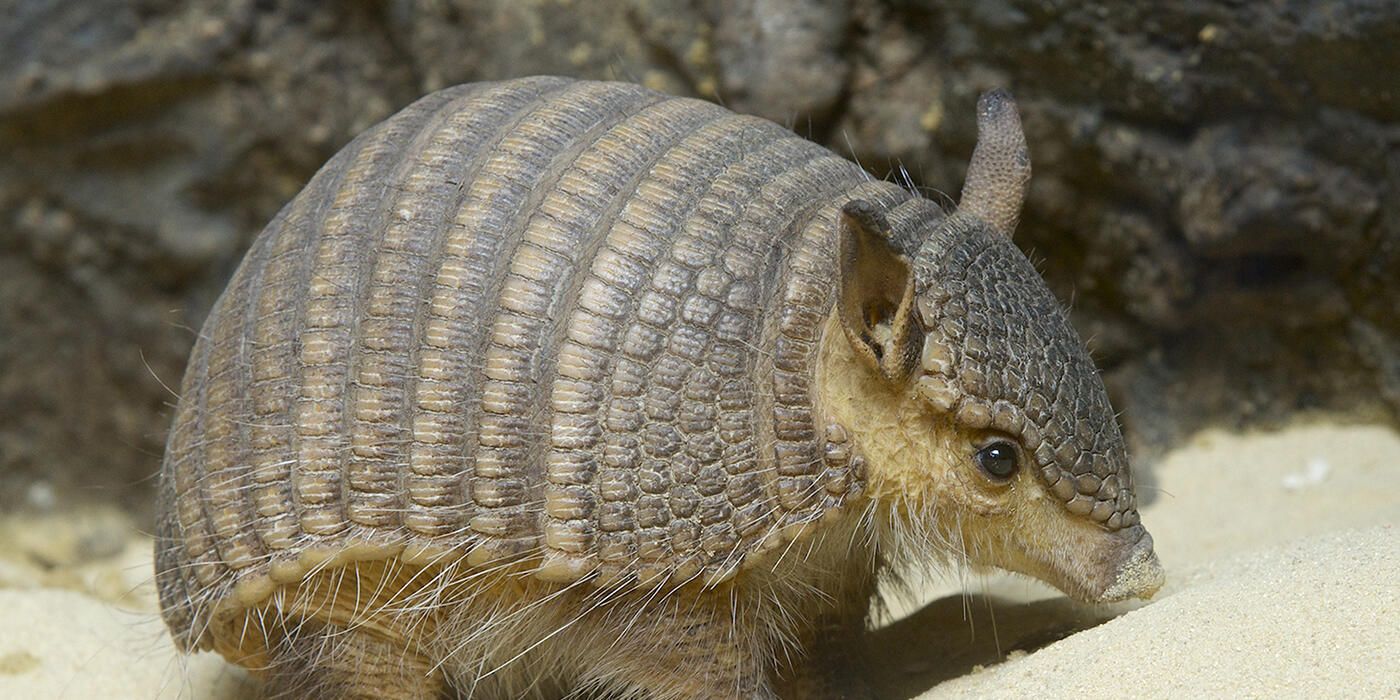
Like all armadillos, much of this animal's body is covered with a thick armor, which is comprised of bony plates covered in small, overlapping scales called scutes. Their armor consists of a shield covering the head, a small band between the ears on the animal's neck, and the carapace, which covers the rest of the body.
About 18 bands make up the carapace, six to eight of which are movable, allowing the armadillo to curl up if threatened. As their name suggests, armadillos in this genus have more hair than other armadillos: white and light brown hair protrudes from between scutes and covers the limbs and belly.
Size
Screaming hairy armadillos are the smallest of the three species of hairy armadillo, averaging less than 1.9 pounds (0.86 kilograms) and growing to between 8.7 and 15.7 inches (22 to 40 centimeters), with another 3.5 to 6.9 inches (9 to 17.5 centimeters) in tail length. Males are generally larger than females.
Native Habitat
Found just east of the Andes Mountains in the Monte Desert, screaming hairy armadillos inhabit parts of Argentina, Bolivia and Paraguay.
They prefer a dry habitat with loose, sandy soil which allows for easier burrowing—an important part of this animal's survival. These armadillos have been observed living in open areas such as sand dunes, savannas, pastures and agricultural areas at altitudes up to 3,280 feet (1,000 meters).
Lifespan
Screaming hairy armadillos can live up to 8 or 9 years in human care.
Communication
Like other armadillos, they have a good sense of smell and relatively good vision and hearing. If threatened, they will emit a loud squealing noise.
Food/Eating Habits
Omnivorous animals, screaming hairy armadillos will eat primarily plants, insects and small vertebrates such as frogs, toads, lizards, birds and rodents. Their diet fluctuates seasonally, with insects in the beetle family being the primary part of their diet in summer months and plant material—especially seed pods from Prosopis trees—making up much of their winter diet. They will also occasionally scavenge for food.
Screaming hairy armadillos have a few unique methods of hunting; they regularly burrow under and sometimes into carcasses in search of invertebrates to consume. This species has also been observed digging in an unusual fashion—instead of using their legs and claws to expose grubs and insects, screaming hairy armadillos will force their heads into the ground, then turn in a circle to create a cone-shaped hole. There have also been recorded instances of these armadillos throwing themselves upon small snakes, which are then cut by the edges of the carapace.
Screaming hairy armadillos do not need to drink water regularly; efficient kidneys and the ability to retain moisture in the plants that they consume allow screaming hairy armadillos to go long periods without drinking.
The Smithsonian's National Zoo's screaming hair armadillo receives insectivore diet, insect forage, banana and sweet potato.
Sleep Habits
Screaming hairy armadillos alter their periods of activity seasonally; in warmer months, they are primarily nocturnal creatures. However, this behavior shifts to diurnal activity in winter months when desert heat becomes less of a threat.
Social Structure
They are a solitary species, and when inactive will spend much of their time in burrows that they create.
Reproduction and Development
This species typically breeds in the fall months, and gives birth after a gestation period of 60 to 75 days.
Female screaming hairy armadillos give birth to one litter of offspring each year, typically consisting of two to three young. Newborn armadillos weigh just over 5 ounces (155 grams). Their eyes remain shut for about 16 to 30 days, and they wean from their mother when they are about 2 months old. Screaming hairy armadillos reach sexual maturity at 9 months.
Conservation Efforts
Primary threats to screaming hairy armadillos include population fragmentation and isolation due to mining activity, hunting dogs, vehicles and being viewed as an agricultural pest. Screaming hairy armadillos are hunted both for their meat, which is high in protein, and their carapace, which is used by native Bolivians to create a stringed musical instrument called a charango.
Currently, screaming hairy armadillos live in a series of protected areas within their native range, including the 8.4 million acre Kaa-lya National Park in Bolivia.
Help this Species
Share the story of this animal with others. Simply raising awareness about this species can contribute to its overall protection.
Meet the Animals
Smithsonian's National Zoo and Conservation Biology Institute. (n.d.). Screaming hairy armadillo. Retrieved September 24, 2026, from https://nationalzoo.si.edu/animals/screaming-hairy-armadillo
Animal News

Happy 5th Birthday, Qing Bao ›
To celebrate giant panda Qing Bao's birthday, keepers went "far out" and created a 1970s-themed fête full of bright colors and iconic pop culture slogans.

See These 5 New Animals at Your Next Visit to the Smithsonian's National Zoo ›
From a spunky new sloth to a dazzling electric eel, get ready to meet the newest residents making themselves at home.

Happy 50th 'Zooniversary' to Chyna and Rulon, the Zoo’s Aldabra Giant Tortoises ›
There are plenty of objects and artifacts at the Smithsonian that are old. But at the National Zoo, there's not much older than Rulon and Chyna.