
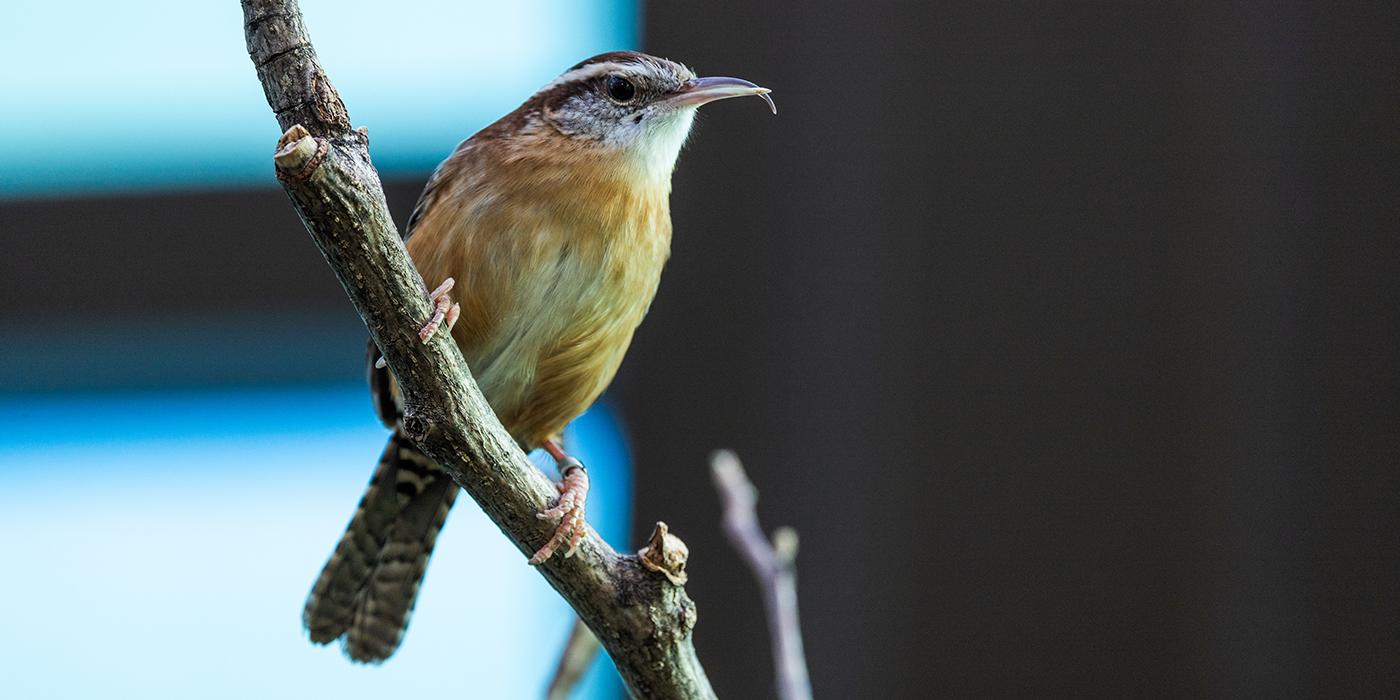
If you are in the eastern United States and encounter a bird that looks like a little brown check-mark with a loud voice, it’s probably a Carolina wren. These charismatic little birds are frequent visitors to backyards and bird feeders.
Physical Description
Size
Native Habitat
Lifespan
Communication
Food/Eating Habits
Sleep Habits
Social Structure
Reproduction and Development
Conservation Efforts
Help this Species
Be a smart consumer. Choose products made with sustainable ingredients, such as Smithsonian certified Bird Friendly coffees, which support farmers striving to limit their impact on wildlife and habitat.
Be a responsible cat owner, and keep cats indoors or under restraint when outside. Never release animals that have been kept as pets into the wild.
Avoid single-use plastics, such as plastic bottles, bags and utensils. Choosing reusable options instead can help reduce plastic pollution.
Conservation starts with you! Join a citizen science project where you can help collect valuable data for scientists. Encourage your friends and family to get involved too.
Plant native flowers in your garden to help feed resident and migrating pollinators. You'll make your lawn beautiful and help wildlife at the same time!
Smithsonian's National Zoo and Conservation Biology Institute. (n.d.). Carolina wren. Retrieved September 23, 2026, from https://nationalzoo.si.edu/animals/carolina-wren
Animal News

Happy 5th Birthday, Qing Bao ›
To celebrate giant panda Qing Bao's birthday, keepers went "far out" and created a 1970s-themed fête full of bright colors and iconic pop culture slogans.

See These 5 New Animals at Your Next Visit to the Smithsonian's National Zoo ›
From a spunky new sloth to a dazzling electric eel, get ready to meet the newest residents making themselves at home.

Happy 50th 'Zooniversary' to Chyna and Rulon, the Zoo’s Aldabra Giant Tortoises ›
There are plenty of objects and artifacts at the Smithsonian that are old. But at the National Zoo, there's not much older than Rulon and Chyna.