
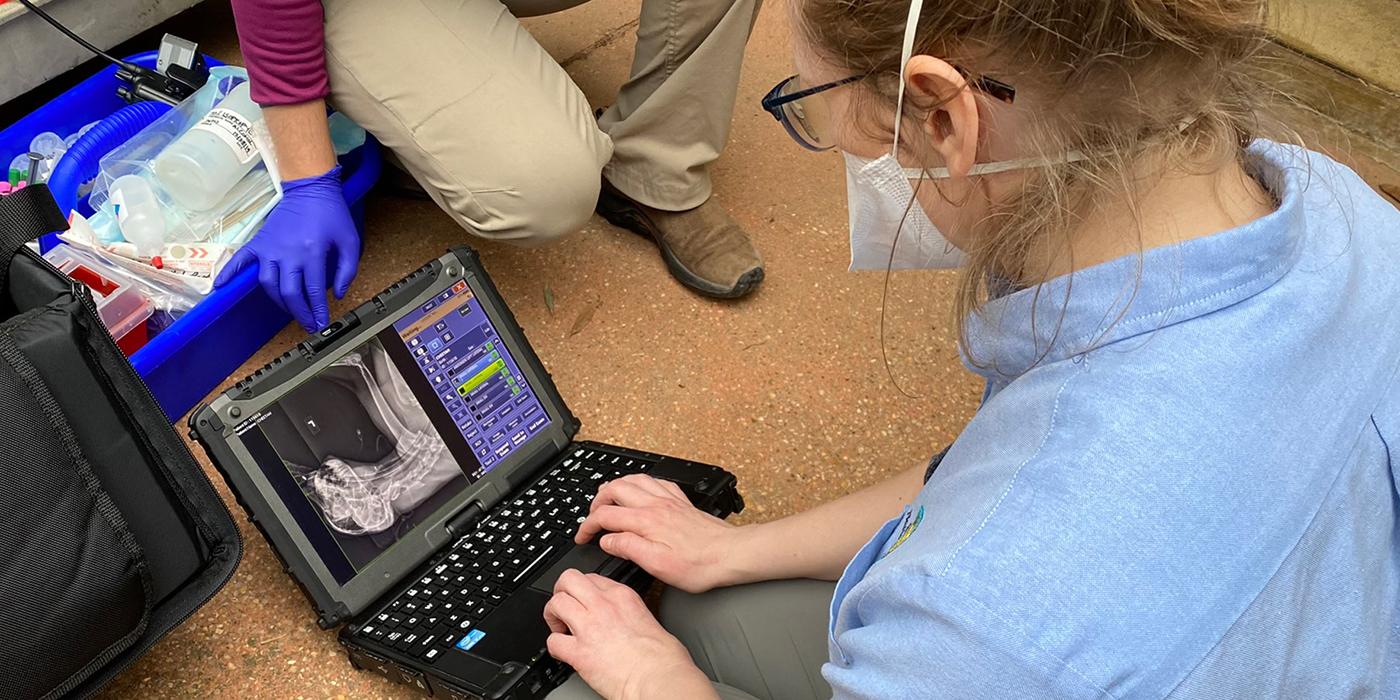
What happens to a seal who has a toothache? How does an orangutan get a checkup? Wild Medicine invites students to Join our team of veterinarians and other animal health professionals to explore how animals go to the doctor, just like us!
This virtual school program is part of Conservation Classroom, a collection of monthly lessons for K-5 students. Each lesson has four elements: wonder (video), engage (live virtual program), act (activities), and connect (video). Follow along with all four parts or pick and choose the videos and activities you want to explore.
K-5
Supports NGSS K-LS1-1, 3-LS1-1, 4-LS1-1
Health, animal care, veterinary medicine
Patterns, cause and effect, systems and system models, structure and function
Free
Wonder ›
I wonder... Do animals at the Zoo go to the doctor? Bring your curiosity along on an exploration of the Zoo's animal hospital.
Click "watch video" to view!
Preguntarse
Me pregunto... ¿Los animales del Zoológico van al médico? Traiga su curiosidad a explorar el hospital de animales del zoológico.
¡Haga clic en "ver video" para verlo!
Engage ›
March 10, 2027 at 2:00 p.m. Eastern
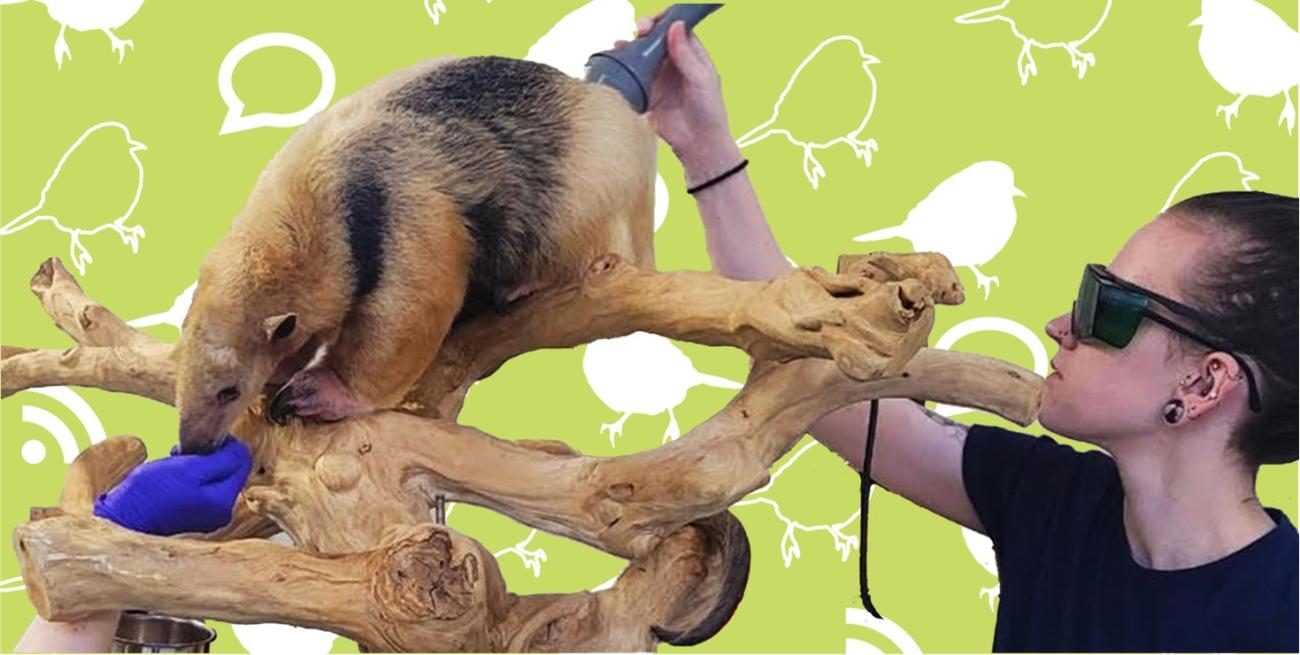
In this free, live virtual program, students will learn about animal health while watching an animal get a check-up and be able to ask questions to our veterinary team!
Program recording will be shared with all registered participants. If you'd like to watch sooner, please view our past recordings from 2024 and 2025.
Language & Access: English, Spanish (simulcast), American Sign Language interpretation, and live English captions.
Click "Register Now" to join us!
Comprometerse
10 de marzo de 2027 a las 14:00 horas. hora del Este
En este programa virtual gratuito y en directo, los estudiantes aprenderán sobre la salud animal mientras observan a un animal hacerse una revisión y podrán hacer preguntas a nuestro equipo veterinario.
La grabación del programa se compartirá con todos los participantes registrados. Si prefieres verla antes, por favor consulta nuestras grabaciones anteriores de 2024 y 2025.
Idioma y acceso: inglés, español (transmisión simultánea), interpretación en lenguaje de señas americano y subtítulos en inglés en vivo.
¡Haz clic en "Register Now" para unirte a nosotros!
Act ›
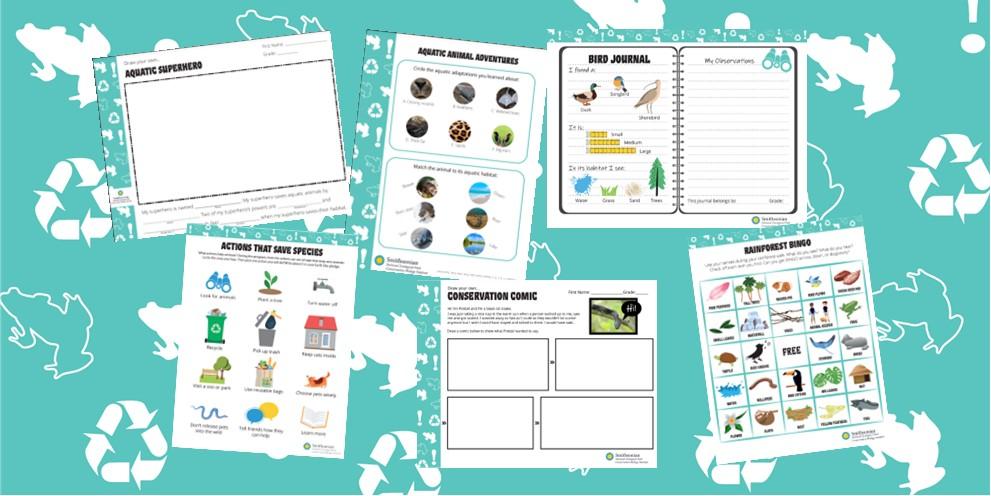
During the program, take doctor's notes on the two animals we will be viewing. Use one exam sheet for each animal. After the program, draw yourself as a veterinarian conducting an animal exam.
Share your drawings or pictures of you completing the activities with us at [email protected].
Extra Activities: You can also compare medical tools, practice reading radiographs and learn new vocabulary.
Click the "Activities" or "Early Learners" buttons below to view the activity packet!
Acto
Durante el programa, tome notas médicas sobre los dos animales que veremos. Utilice una hoja de examen para cada animal. Después del programa, dibújate como un veterinario realizando un examen de animales.
Comparta sus dibujos o fotografías de usted completando las actividades con nosotros en [email protected].
Actividades adicionales: también puede comparar herramientas médicas, practicar la lectura de radiografías, y aprender vocabulario nuevo en inglés.
¡Haga clic en el botón "Actividades" o "Aprendices Tempranos" a continuación para ver el paquete de actividades!

Connect ›
Meet Veterinarian, Dr. Katharine, and Veterinary Technician, Dave, whose patients include animals big and small throughout the Zoo. Their "unZOOsual" careers use biology and technology to keep animals at the Zoo heathy!
Click the "Meet the Vet Team" button to view!
Meet Dr. Kali, a Veterinary Pathologist who investigates diseases by looking at cells, tissues, and organs under a microscope. As part of her "unZOOsual" career, Dr. Kali uses her discoveries to improve the health of animals that live at the zoo and in the wild.
Click the "Meet Kali" button to view!
Meet Jessica, a manager who is in charge of running the Zoo's veterinary hospital. As part of her career, Jessica uses her organizational skills to make sure the hospital operates smoothly and has all the equipment and supplies needed to give the animals medical care.
Click the "Meet Jessica" button to view!
Conectar
Conozca a la veterinaria, Dra. Katharine, y al técnico veterinario, Dave, cuyos pacientes incluyen animales grandes y pequeños en todo el zoológico. ¡Sus carreras "inusuales" utilizan la biología y la tecnología para mantener sanos a los animales del zoológico!
¡Haz clic en el botón "Meet the Vet Team" para ver!
Conozca a la Dra. Kali, una patóloga veterinaria que investiga enfermedades observando células, tejidos y órganos bajo un microscopio. Como parte de su carrera "unZOOsual", la Dra. Kali utiliza sus descubrimientos para mejorar la salud de los animales que viven en el zoológico y en la naturaleza.
¡Haz clic en el botón "Meet Kali" para ver!
Conoce a Jessica, una encargada encargada de gestionar el hospital veterinario del zoológico. Como parte de su carrera, Jessica utiliza sus habilidades organizativas para asegurarse de que el hospital funcione sin problemas y disponga de todo el equipo y suministros necesarios para brindar atención médica a los animales.
¡Haz clic en el botón "Meet Jessica" para ver!
For Educators
Educator's Materials
Conservation Classroom: Wild Medicine is best suited for grades K-5. The full lesson consists of two videos, a live program, and two activities. Refer to the Smithsonian Learning Lab collection to help teach this lesson.
Letter to Guardians
After participating in the live program, print or send the following letter to guardians, explaining what their student learned in this lesson and how they can continue to engage from home.
Carta para el tutor
Después de participar en el programa en vivo, imprima o envíe la siguiente carta a los tutores, explicando lo que su estudiante aprendió en esta lección y cómo pueden continuar participando desde casa.