News Archive
Filter By
- Abyssinian ground hornbill
- Addax
- Aldabra tortoise
- Allen's swamp monkey
- Alpaca
- American alligator
- American avocet
- American bison
- American flamingo
- American wigeon
- Andean bear
- Aquatic caecilian
- Arapaima
- Asian elephant
- Asian small-clawed otter
- Asian water dragon
- Australian snake-necked turtle
- Bald eagle
- Baltimore oriole
- Barred owl
- Bearded emperor tamarin
- Beaver
- Bennett's wallaby
- Binturong
- Black-and-white ruffed lemur
- Black-crowned night heron
- Black-footed ferret
- Black-tailed prairie dog
- Black-throated blue warbler
- Blue-billed curassow
- Blue crane
- Bobcat
- Brown pelican
- Bufflehead
- California sea lion
- Canvasback
- Cedar waxwing
- Channel catfish
- Cheetah
- Chicken
- Chinese alligator
- Chinese three-striped box turtle
- Clouded leopard
- Collared brown lemur
- Common raven
- Common yellowthroat
- Corals and sea anemones (anthozoa)
- Cow
- Crocodile monitor
- Cuban crocodile
- Dama gazelle
- Degu
- Dunlin
- Eastern corn snake
- Eastern indigo snake
- Eastern newt
- Eastern red-backed salamander
- Eastern screech-owl
- Eld's deer
- Electric eel
- Emperor newt
- Fennec fox
- Fishing cat
- Gaboon viper
- Geoffroy's marmoset
- Gharial
- Giant leaf-tailed gecko
- Giant panda
- Goat
- Golden-headed lion tamarin
- Golden lion tamarin
- Gray seal
- Gray wolf
- Green tree python
- Grevy's zebra
- Guam kingfisher (sihek)
- Guam rail (ko’ko’)
- Guinea pig
- Harbor seal
- Hartmann's mountain zebra
- Hawk-headed parrot
- Hellbender
- Home's hinge-back tortoise
- Hooded crane
- Iranian fat-tailed gecko
- Japanese giant salamander
- King vulture
- Komodo dragon
- Kori bustard
- Kunekune pig
- Land hermit crab
- Larger Malay mouse-deer
- Lemur leaf frog
- Lesser hedgehog tenrec
- Lesser kudu
- Lion
- Loggerhead shrike
- Long-tailed chinchilla
- Long-tailed salamander
- Maned wolf
- Meerkat
- Miniature donkey
- Naked mole-rat
- North American porcupine
- North American river otter
- Northern Luzon giant cloud rat
- Northern pine snake
- Northern pintail
- Northern red salamander
- Northern shoveler
- Northern snakehead fish
- Northern tree shrew
- North Island brown kiwi
- Norway rat
- Orangutan
- Orchard oriole
- Ossabaw Island hog
- Ostrich
- Ovenbird
- Pallas's cat
- Panamanian golden frog
- Patagonian mara
- Persian onager
- Philippine crocodile
- Prehensile-tailed porcupine
- Prevost's squirrel
- Przewalski's horse
- Pygmy slow loris
- Red-crowned crane
- Red-fronted lemur
- Red-rumped agouti
- Red-winged blackbird
- Red knot
- Red panda
- Red River hog
- Red ruffed lemur
- Red wolf
- Ring-tailed lemur
- Ruddy duck
- Schmidt's red-tailed monkey
- Scimitar-horned oryx
- Screaming hairy armadillo
- Semipalmated plover
- Semipalmated sandpiper
- Siamang
- Sitatunga
- Sloth bear
- Southern lesser galago
- Southern swamp sparrow
- Southern tamandua
- Spider tortoise
- Striped skunk
- Tanagers
- Tentacled snake
- Tiger
- Titi monkey
- Turkey
- Twig catfish
- Two-toed sloth
- Vietnamese mossy frog
- Virginia opossum
- Von der Decken's hornbill
- Western lowland gorilla
- White-cheeked gibbon
- White-faced saki
- White-naped crane
- White-nosed coati
- Whooping crane
Displaying 626 - 650 of 2401 articles.
Media Advisory: Giant Panda Cub Birth Interviews at Smithsonian’s National Zoo ›
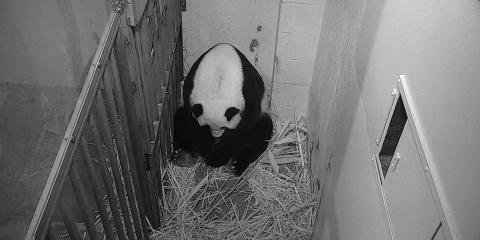
Smithsonian’s National Zoo staff will be available to discuss the recent giant panda cub birth.
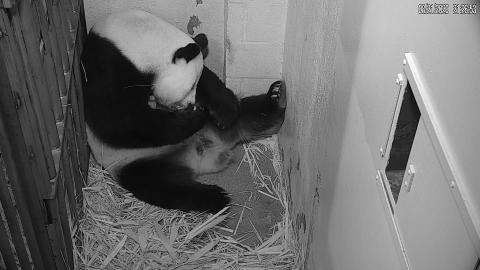
Giant Panda Cub Born at Smithsonian’s National Zoo ›
Giant panda Mei Xiang (may-SHONG) gave birth to a cub at Smithsonian’s National Zoo today, Aug. 21 at 6:35 p.m.
Genomic Analysis Reveals Many Animal Species May Be Vulnerable to SARS-CoV-2 Infection ›
A new genomic study ranks the potential of the SARS-CoV-2 spike protein to bind to the ACE2 receptor site in 410 vertebrate animals. Old World primates and great apes, which have identical amino acids at the binding site as humans, are predicted to have a very high propensity for binding ACE2 and...
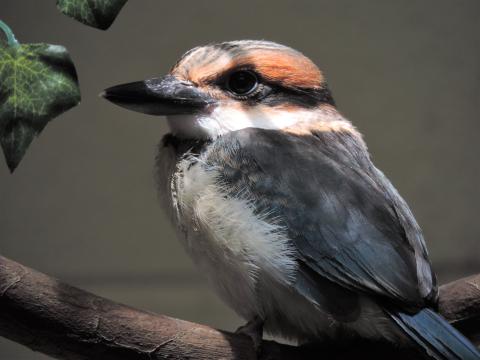
Growing Up Guam Kingfisher ›
Breeding season is the most demanding time of year for the bird team at the Smithsonian Conservation Biology Institute, but it can also be the most rewarding.
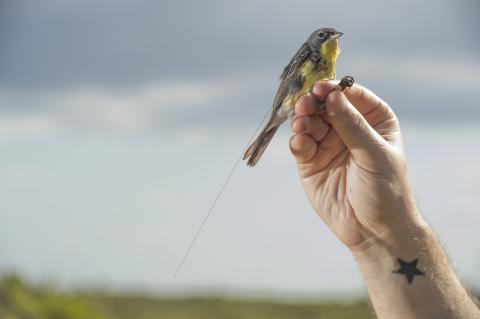
Tracking Technology Exposes Secretive Long-distance Movement of Kirtland’s Warblers ›
State-of-the-art tracking technology reveals previously unknown long-distance movements of Kirtland’s warblers during the mating season that have important conservation implications for North American birds.
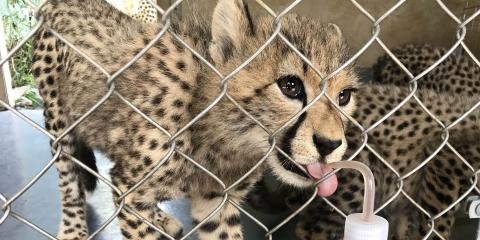
Cheetah Cubdate #11: Building Relationships ›
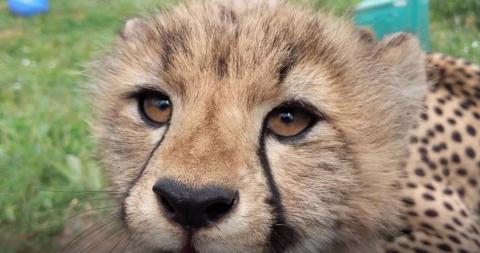
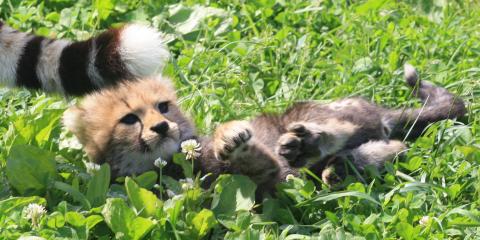
It is hard to believe that cheetah cubs Amabala, Jabari, Hasani and Erindi are already four months old! As the cubs grow, we want to ensure that they have a strong relationship with us.
Veterinarians Find Fetal Tissue on Giant Panda Ultrasound ›
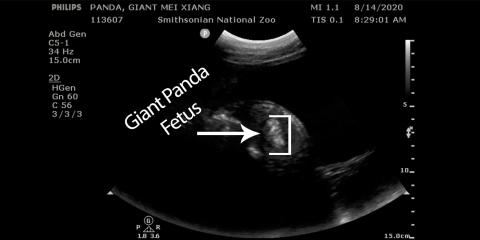
Veterinarians at the Smithsonian’s National Zoo detected tissue consistent with fetal development during Mei Xiang’s ultrasound this morning, Aug. 14.
Smithsonian’s National Zoo and Conservation Biology Institute and JumpStart Games Launch “Zoo Guardians” Mobile Game ›
The furry, feathered and scaly world of zoos, animal care and conservation comes to life in “Zoo Guardians,” a new mobile game launched today. Players are invited to build their own zoos, care for animals, complete quests and interact with realistic 3D representations of wildlife via augmented...
Cheetah Cubdate #10: Weights and Water ›
Smithsonian Conservation Biology Institute carnivore keeper Adri Kopp and intern Shannon Richard share the latest news on Echo's cheetah cubs, from weigh-ins to water play.
Featured Creature: Hartmann’s Mountain Zebra ›
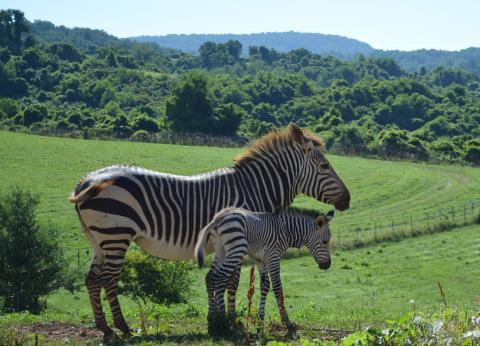
What’s black, white and adorable all over? Our new Hartmann’s mountain zebra colt! Born July 2 at the Smithsonian Conservation Biology Institute, he already is melting our ungulate team’s hearts with his playfulness and curiosity. Get to know him in this Q+A with SCBI animal keepers Morgan Vance and...
Summer is for the Birds ›
Behind the scenes at the Smithsonian’s National Zoo, the sweet tweets of chirping chicks are music to the Bird House team’s ears. While their homestead exhibit is under renovation, the team has been busy researching, perfecting and literally writing the book of North American songbird and shorebird...
Bringing the Zoo to You: July 2020 ›
Grab a delicious snack with prehensile-tailed porcupine Quilliam, have a ball watching our cheetah cubs play and behold beaver Aspen as he fells a tree. July brought about many exciting moments, not the least of which was the reopening of the Smithsonian’s National Zoo! Before you plan your visit...
Just How Big are Tigers? What Does Tiger Poop Look Like? And More Tiger Facts ›
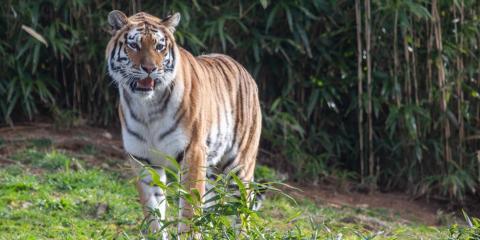
Just how big are tigers? How far can they jump? And what does tiger poop look like? July 29 is International Tiger Day, so sink your teeth into these fun facts about big cats.
Research Breakthrough in Fight Against Chytrid Fungus ›
For frogs dying of the invasive chytridiomycosis disease, the leading cause of amphibian deaths worldwide, the genes responsible for protecting them may actually be leading to their demise, according to a new study published today in the journal Molecular Ecology by Smithsonian Conservation Biology...
Smithsonian’s National Zoo Public Opening ›
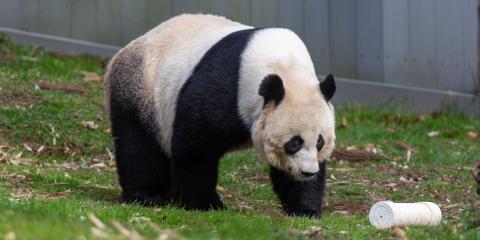
The Smithsonian’s National Zoo opens to the public on July 24. There will be two media opportunities. All media must register to attend. Parking is limited and television crews will be prioritized.
Giant Panda Update: From Bamboo Shoots to Training Chutes ›
Summer is in full swing at the David M. Rubenstein Family Giant Panda Habitat. Read the latest update on Mei Xiang and Tian Tian from Laurie Thompson, assistant curator of giant pandas.
Smithsonian’s National Zoo and Udvar-Hazy Center To Reopen July 24 With New Safety Measures ›
The Smithsonian will reopen two of its facilities to the public Friday, July 24: the National Zoo in Northwest Washington, D.C., and the National Air and Space Museum’s Steven F. Udvar-Hazy Center in Chantilly, Virginia, near Washington Dulles International Airport. These locations will reopen with...
Zoo Neighborhood Council Update: July 2020 ›
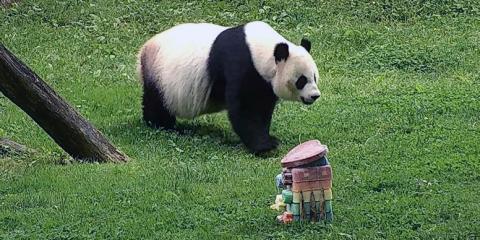
Today, the Smithsonian announced that the Smithsonian’s National Zoo and the National Air and Space Museum’s Steven F. Udvar-Hazy Center in Chantilly, Virginia, will reopen to the public on Friday, July 24. All other Smithsonian museums will remain temporarily closed to the public.
Smithsonian’s National Zoo Welcomes Two New Bison ›
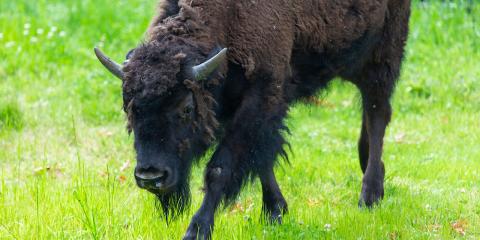
The Smithsonian’s National Zoo and Conservation Biology Institute has welcomed “Lucy” and “Gally,” two juvenile female American bison.
Cheetah Cubdate #9: Treats and Toys ›
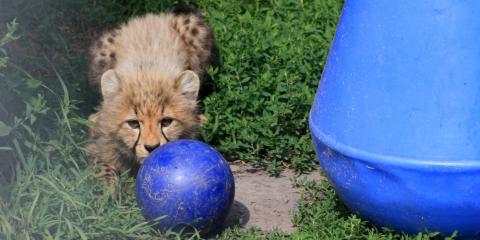
SCBI carnivore keeper intern Shannon Richard shows how keepers are enriching the lives of our 3-month-old cheetah cubs.
Hartmann’s Mountain Zebra Born at the Smithsonian Conservation Biology Institute ›
For the first time in the Smithsonian Conservation Biology Institute’s (SCBI) history, ungulate keepers celebrated the birth of a male Hartmann’s mountain zebra at the Front Royal, Virginia, facility. The colt was born overnight July 2 to 6-year-old mother Mackenzie and 5-year-old father Rogan.
Catching Up with the Cheetah Cubs: July 2020 ›
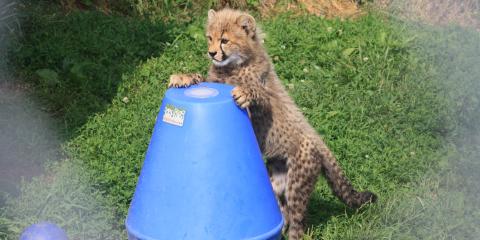
Romping through grassy pathways, taking a taste of meat and exploring exciting new places to play made June a jolly good month for the Smithsonian Conservation Biology Institute’s cheetah family.
Featured Creature: Black-Footed Ferrets ›
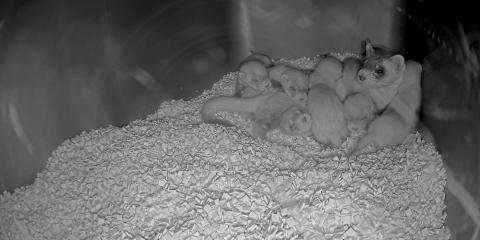
Celebrate the Fourth of July with one of America's most precious national treasures: the black-footed ferret! SCBI carnivore keeper Vicki Lake shares the story of mom Potpie and her six kits as they grow, play and prepare to help save their species from extinction.
Bringing the Zoo To You: June 2020 ›
A family meal among prairie dogs, the soothing sounds of a cheetah’s purr and a Pride cake fit for a giant panda. As summer kicks off at the Smithsonian’s National Zoo and Conservation Biology Institute, we’re sharing some moments from June that sparked joy.